
Companion Plants
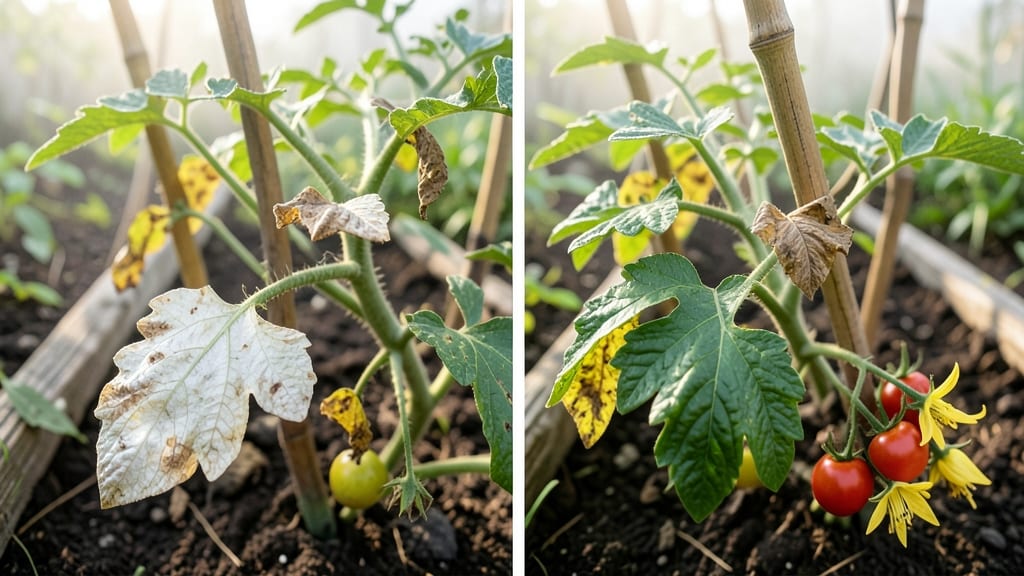
When your tomato plant leaves are going white overnight, it’s usually powdery mildew—but don’t panic. 🌱 I’ve saved dozens of plants from this fungal foe by acting fast, and I’ll show you exactly how.
The key is catching it early, before the white dust spreads to every leaf and stunts your harvest.
The culprit thrives in humid, shaded spots where airflow is poor. My first mistake was ignoring the early speckles, thinking they’d disappear. Spoiler: they didn’t. Now I check plants weekly, especially after rain, and prune leaves to improve circulation.
A simple spray of baking soda mix (1 tsp per quart of water) stops it in its tracks.
Within a week, you’ll see new growth pushing through, and the white fuzz will vanish. The plants stay productive, and you’ll avoid the heartbreak of blighted tomatoes. Just keep an eye out for those first telltale spots—early action makes all the difference.
This works for backyard gardens, containers, or even greenhouse tomatoes. The same principles apply whether you’re growing heirlooms or hybrids. Let’s get those plants back to their vibrant green selves!
Root Causes Behind White Leaves
When your tomato plant’s leaves start turning white, it’s rarely a coincidence—it’s usually a cry for help from the plant itself. Understanding the why behind this symptom is the first step to saving your harvest.
Below, we break down the most common culprits, from fungal invaders to environmental stressors, and explain the science behind each one.
The most notorious offender behind white, powdery leaves is powdery mildew, a fungal disease caused by pathogens like Oidium or Leveillula. This fungus thrives in warm, humid conditions and spreads via wind, water splashes, or contaminated tools.
- How it works: The fungus forms a white, talcum-powder-like coating on leaves, blocking sunlight and stunting photosynthesis. Over time, infected leaves yellow, crisp, and fall off.
- Tell-tale signs: White patches on top surfaces of leaves (unlike downy mildew, which appears fuzzy on the underside). Leaves may also develop brown spots or distort in shape.
- Why tomatoes are vulnerable: Tomato plants are susceptible due to their dense foliage, which traps moisture. Varieties like Roma or Cherry tomatoes are particularly prone.
Pro tip: 🌡️ Check for mildew in the morning when humidity is highest—this is when spores are most active.
Too much love (in the form of water) can drown your tomato plant—literally. When soil stays soggy, roots suffocate, and leaves may develop white, mushy patches or a bleached appearance due to root rot or nutrient leaching.
- How it works:
- Root rot (often caused by Phytophthora or Pythium fungi) cuts off water and nutrient uptake, leading to white, wilted leaves.
- Nutrient imbalance: Overwatering flushes out essential minerals like nitrogen and potassium, causing leaves to lose chlorophyll and turn pale.
- Tell-tale signs:
- White or grayish leaves paired with yellowing at the edges.
- Mushy stems or soil that smells rotten.
- Leaves that crisp easily when touched.
- Why it happens: Tomatoes hate "wet feet." Containers without drainage holes or clay-heavy soil that stays compacted trap excess moisture.
Pro tip: ✨ Stick your finger 2 inches into the soil—if it’s damp, wait before watering. Use a moisture meter for precision!
Too much sun can scorch tomato leaves, leaving them white or bleached—especially in hot, dry climates or when plants are suddenly exposed to intense sunlight (like after transplanting). This is called sunscald.
- How it works: Excessive UV radiation breaks down chlorophyll, causing leaves to bleach or develop white, papery patches. Young leaves are most vulnerable.
- Tell-tale signs:
- White or silvery patches on upper leaf surfaces.
- Leaves may feel crispy or dry to the touch.
- Often occurs on south-facing or western sides of plants.
- Why tomatoes are at risk: Their broad leaves act like solar panels, absorbing too much energy when shaded suddenly (e.g., moving from indoors to full sun).
Pro tip: 🌿 Provide 30% shade cloth during peak afternoon sun (12 PM–4 PM) in extreme heat. Mulch with straw to reflect sunlight away from leaves.
Less common but devastating, viral or bacterial infections can cause white mottling, streaking, or even necrotic (dead) patches on tomato leaves. These pathogens often hitchhike on insects or contaminated tools.
- Common culprits:
- Tomato mosaic virus (ToMV): Causes white/yellow mosaic patterns and stunted growth.
- Bacterial spot (Xanthomonas): Creates white/yellow water-soaked spots with dark borders.
- Cucumber mosaic virus (CMV): Leads to white speckling and distorted leaves.
- How they spread:
- Insects like aphids or whiteflies transmit viruses.
- Contaminated pruners or hands can spread bacteria.
- Weeds or nearby infected plants act as reservoirs.
- Why it’s dangerous: Viruses have no cure—infected plants must be removed to prevent spread.
Pro tip: 🔥 Isolate new plants for 2 weeks and inspect for pests. Use soapy water to wipe down tools between uses.
White leaves can also signal a nutrient deficiency, particularly magnesium (causing interveinal chlorosis) or zinc (leading to white banding on young leaves).
- Magnesium deficiency:
- Causes white/yellow patches between veins (older leaves first).
- Common in alkaline soil (pH > 7.0) or over-fertilized plants.
- Zinc deficiency:
- Results in white bands or spots on new growth.
- Often seen in cool, wet soils or after transplant shock.
- How to test: Send a soil sample to a local extension office for a pH and micronutrient analysis.
Pro tip: 💡 For quick fixes, spray leaves with a diluted Epsom salt solution (1 tbsp/gallon) for magnesium or zinc sulfate (1/4 tsp/gallon) for zinc.
Now that you know the why, the next step is action. Stay tuned for our diagnostic guide to identify which issue is plaguing your tomato plant—and how to treat it fast!
Quick Fixes for White Tomato Leaves
Now that you’ve identified the cause behind your tomato plant’s white leaves—whether it’s powdery mildew, nutrient deficiency, or environmental stress—it’s time to take action! The good news? Most issues are reversible with the right care.
Below, we’ll break down practical, step-by-step solutions tailored to each problem, plus prevention tips to keep your plants thriving. Let’s restore your tomatoes to their vibrant, productive selves!
Powdery mildew may look harmless, but it weakens plants and spreads fast. Act quickly to stop it in its tracks!
🔥 Step 1: Remove Infected Foliage
- 👨🍳 Snip it out: Use sterilized pruners (wipe with rubbing alcohol) to cut off white, powdery leaves—don’t compost them!
Toss them in the trash or burn them to prevent reinfection. - ⏰ Timing matters: Do this on a dry, sunny day so the plant can heal faster.
🍳 Step 2: Apply Natural Fungicides
Skip harsh chemicals—these DIY sprays work just as well (or better!) and are safer for your garden: - 🥘 Baking soda spray: Mix 1 tsp baking soda + 1 tbsp vegetable oil + 1 tsp mild soap + 1 gallon water.
Spray both sides of leaves every 5–7 days until mildew disappears. - 🔪 Neem oil solution: Combine 1 tbsp neem oil + 1 tsp dish soap + 1 quart water.
Shake well and spray early in the morning (avoid direct sunlight for 24 hours). - 🌿 Horticultural oil or sulfur spray: Follow label instructions for preventive applications (great for severe cases).
🌡️ Step 3: Improve Airflow & Light
- ✨ Space plants: Give tomatoes at least 18–24 inches of space between plants for better airflow.
- 🎯 Prune strategically: Remove crowded or lower leaves touching the soil to reduce humidity buildup.
- 💡 Boost sunlight: If your tomatoes are shaded, relocate them to a sunnier spot (6–8 hours of direct sun daily).
💡 Prevention Pro Tips
- 🌿 Companion plants: Interplant with marigolds, basil, or garlic—they repel fungal spores!
- 🌧️ Water wisely: Water at the base (not overhead) early in the day so leaves dry quickly.
- 🍂 Clean up debris: Remove fallen leaves and old mulch where spores hide.
White leaves from magnesium, nitrogen, or calcium deficiencies need a targeted boost. Here’s how to correct them:
📊 Magnesium Deficiency (Yellow Edges, White Veins)
- 🥗 Epsom salt soak: Dissolve 1 tbsp Epsom salt (magnesium sulfate) in 1 gallon water and water the soil once a week for 4–6 weeks.
- 🍎 Organic fix: Mix crushed eggshells (calcium + magnesium) into the soil around the base.
💪 Nitrogen Deficiency (Pale, Weak Leaves)
- 🥘 Quick fix: Use a balanced fertilizer (10-10-10) or fish emulsion (high in nitrogen). Apply every 2–3 weeks during growing season.
- 🌿 Green manure: Plant clover or alfalfa nearby as a nitrogen-fixing cover crop.
🍎 Calcium Deficiency (Blossom End Rot + White Spots)
- 🥛 Calcium boost: Sprinkle crushed eggshells or oyster shell grit around the base.
For faster results, use calcium nitrate (follow package rates). - 🌡️ Mulch smart: Use straw or wood chips (not fresh grass clippings) to retain calcium in the soil.
🎯 Prevention Tips
- 🔥 Test your soil: Use a DIY soil test kit (or send a sample to a local extension office) to check pH and nutrient levels.
- 🌿 Rotate crops: Avoid planting tomatoes in the same spot yearly—they deplete soil nutrients.
- 💡 Balance is key: Over-fertilizing can burn roots—follow package instructions!
If heat, cold, or pests are causing white leaves, adjust your growing conditions to help your tomatoes bounce back.
🔥 Heat Stress (Bleached or Wilting Leaves)
- 💡 Shade cloth: Use 30–50% shade cloth during peak afternoon sun (especially in hot climates).
- 🌿 Mulch heavily: Straw or grass clippings keep roots cool and retain moisture.
- 🍂 Water deeply: Drip irrigation (not sprinklers) early morning or late evening prevents leaf scorch.
❄️ Cold Stress (White or Frost-Damaged Leaves)
- 🌡️ Protect from frost: Cover plants with frost blankets or old bedsheets if temps drop below 50°F (10°C).
- 🍳 Move potted tomatoes: Bring containers indoors or to a garage/shed during cold snaps.
🐜 Pest Pressure (Sap-Sucking Bugs Causing Discoloration)
- 🔪 Blast pests off: Spray leaves with soapy water (1 tsp mild soap + 1 quart water) to remove aphids, spider mites, or whiteflies.
- 🌿 Introduce predators: Ladybugs and lacewings eat pests naturally—buy them or attract them with dill or fennel nearby.
💡 Prevention Tips
- 🌿 Monitor weather: Use a garden thermometer to track heat/cold extremes.
- 🍂 Choose heat-tolerant varieties: Try ‘Heatmaster’ or ‘Solar Fire’ tomatoes if you live in a hot climate.
- 🎯 Inspect regularly: Check undersides of leaves weekly for early signs of pests.
No matter the issue, these universal fixes will help your tomato plants recover faster:
- 🌿 Trim back severely: If more than 50% of leaves are white/damaged, prune aggressively to redirect energy to healthy growth.
- 🍳 Boost immunity: Feed with compost tea or liquid seaweed (rich in growth hormones and antioxidants).
- 🌡️ Stay patient: Some leaves won’t recover—focus on new growth from the bottom of the plant.
Remember: The key to long-term success is prevention—once your tomatoes are back in shape, keep an eye on spacing, watering, and soil health to avoid future white leaf woes. Happy gardening! 🍅✨
Frequently asked questions
Why do tomato leaves turn white in patches but not all at once?
This is almost always powdery mildew—a fungal infection that starts on individual leaves before spreading. The white powdery coating blocks sunlight, causing affected areas to lose their green color first. Check for fuzzy white spots on top leaf surfaces and brown patches underneath. This disease thrives in humid conditions with poor airflow.
Can I save my tomato plant if most leaves are already white?
Yes, but act fast! Prune away 70-80% of infected leaves to redirect energy to healthy growth. Use a baking soda spray (1 tsp baking soda + 1 tbsp oil + 1 gallon water) every 5 days for 2 weeks. If the plant is still producing fruit, focus on protecting those leaves by improving airflow and avoiding overhead watering.
Will chemical fungicides work better than home remedies?
Chemical fungicides like copper-based sprays or sulfur treatments can be more effective for severe cases, but they're not always necessary. Organic options like neem oil or hydrogen peroxide (3%) work well for most gardeners. The key is consistency—apply treatments every 5-7 days until new growth appears. Always test sprays on a small leaf first.
Can white tomato leaves affect fruit production?
When leaves turn white from powdery mildew or nutrient deficiencies, the plant can't photosynthesize properly. This reduces energy available for fruit development, often leading to smaller tomatoes or poor flavor. Severe cases may cause blossoms to drop. Focus on treating the leaves first—healthy foliage means better fruit later in the season.
How can I prevent white leaves next growing season?
Start with proper spacing (18-24 inches between plants) for good airflow. Use drip irrigation instead of overhead watering, and water early in the day so leaves dry quickly. Add companion plants like marigolds or basil to repel fungal spores. At season's end, remove all plant debris and rotate crops—don't plant tomatoes in the same spot next year.