
Pests and Diseases
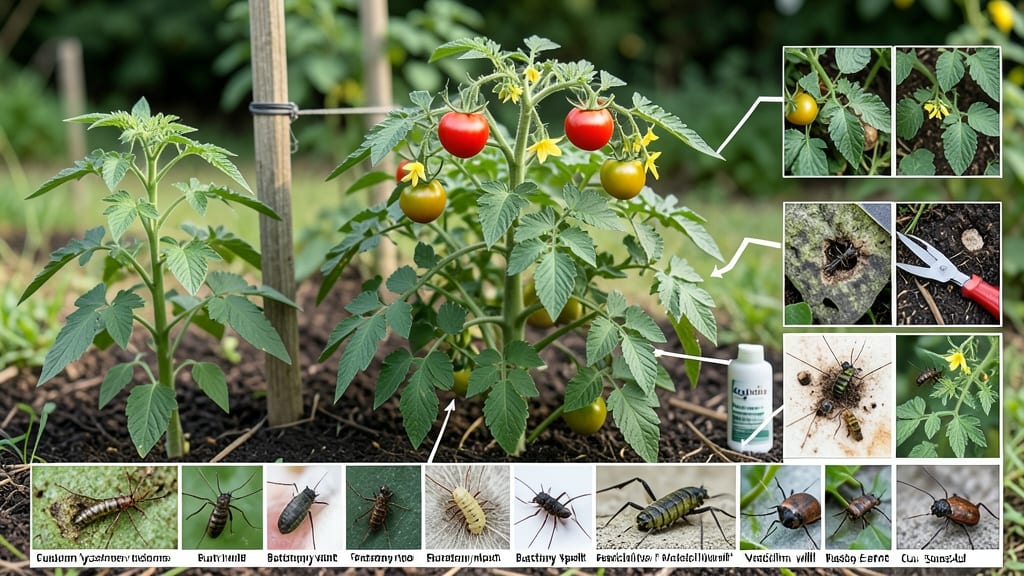
Tomato plant pests and diseases with pictures can turn your thriving garden into a battleground—until you know what to watch for. 🌱 I’ve spent years fighting everything from chewed leaves to mysterious spots, and the key is always early detection. A single aphid colony or early blight spot can spiral if ignored, but with the right visual cues, you can stop them before they take over.
The most common culprits—aphids, hornworms, early blight, and powdery mildew—each leave telltale signs. Aphids cluster on new growth, hornworms leave skeletonized leaves, blight shows as brown spots, and mildew appears as white powder.
Knowing these patterns means you can act fast with organic sprays, pruning, or even a simple soap solution before the problem spreads.
By the end of this guide, you’ll recognize these pests and diseases in seconds, saving your tomatoes from ruin. No more guessing whether those holes are bugs or disease—just clear visuals and straightforward fixes. Your harvest will thank you.
Whether you’re growing in backyard beds, containers, or a community plot, these solutions work everywhere. Let’s get those plants thriving again—starting with what’s wrong now.
Root Causes Behind Tomato Troubles
Tomato plants are resilient, but they’re not invincible. When pests and diseases strike, they rarely appear out of nowhere—there’s almost always a trigger. Understanding these root causes helps you prevent problems before they start. Here’s why your tomatoes might be under siege, broken down by the most common culprits.
---
Tomato plants thrive when their leaves and stems have space to breathe, but their roots need the same freedom. When plants are too close together, humidity levels rise near the foliage, creating a cozy environment for fungal diseases like early blight and powdery mildew.
Poor airflow also slows evaporation, keeping leaves damp longer—fungi love moisture.
Why it happens: - Competition for nutrients weakens plants, making them more susceptible to stress-related pests (like spider mites). - Shaded, damp conditions discourage beneficial insects (like ladybugs) that prey on pests. - Root-bound stress can attract aphids and whiteflies, which thrive in crowded, nutrient-starved environments.
Actionable fix: Space tomato plants 18–24 inches apart (or use trellises for vertical growth). Prune lower leaves to improve airflow at the base.
---
Tomatoes hate soggy feet. Overwatering or poor drainage creates the perfect storm for root rot (caused by Phytophthora fungi) and bacterial wilt. Even underwatering stresses plants, making them vulnerable to hornworms and stink bugs, which target weakened foliage.
Why it happens: - Waterlogged soil cuts off oxygen to roots, inviting fungal infections like Fusarium wilt. - Surface moisture on leaves (from overhead watering) gives late blight (Phytophthora infestans) a foothold. - Drought stress triggers plants to produce more sugars, attracting sap-sucking pests like aphids.
Actionable fix: Water deeply at the base (1–2 inches per week) and avoid wetting leaves. Use mulch to retain moisture without drowning roots.
---
A tomato plant’s immune system relies on balanced nutrition. Too much nitrogen (lush green growth) or too little potassium (weak stems) leaves them defenseless. Pests like cutworms and fruitworms target plants that can’t fight back.
Why it happens: - Nitrogen overload = soft, tender leaves = hornworm buffet. - Potassium deficiency = weak cell walls = blossom end rot (and easier entry for bacteria). - Zinc or magnesium deficiencies stunt growth, making plants less resistant to viruses like tomato mosaic virus.
Actionable fix: Use a balanced fertilizer (10-10-10 or 5-10-10) and supplement with compost for micronutrients. Test soil pH—tomatoes prefer 6.2–6.8.
---
Many tomato pests don’t just appear—they travel. Aphids, whiteflies, and even colorado potato beetles can jump from nearby plants (like peppers, eggplants, or weeds). Birds and wildlife also spread diseases like tomato spotted wilt virus.
Why it happens: - Polyphagous pests (e.g., stink bugs) feed on multiple crops, spreading as they go. - Wind or water carries fungal spores (e.g., late blight) from infected plants. - Poor garden hygiene leaves old plant debris, where pests overwinter and re-emerge.
Actionable fix: Rotate crops annually and remove all plant debris after harvest. Use row covers early in the season to block flying pests.
--- Tomatoes are warm-season plants, and sudden temperature swings throw them off balance. Heatwaves stress plants, while cool nights encourage disease spores to germinate. Frost damage also weakens roots, inviting root-knot nematodes.
Why it happens: - High humidity + warm nights = powdery mildew explosion. - Cold snaps slow growth, making plants more attractive to pests like tomato fruitworms. - Drought followed by heavy rain = fruit cracking and bacterial spot outbreaks.
Actionable fix: Use shade cloth in extreme heat and mulch to regulate soil temperature. Choose heat-tolerant varieties (e.g., ‘Solar Fire’ or ‘Heatmaster’).
--- Sometimes, the problem isn’t nature—it’s us. Over-fertilizing, using contaminated tools, or ignoring early signs turns small issues into full-blown disasters.
Why it happens: - Reusing infected soil or tools spreads diseases like verticillium wilt. - Pruning with dirty shears can transmit bacterial leaf spot. - Ignoring early pest signs (e.g., aphid trails) lets infestations spiral.
Actionable fix: Sterilize tools with rubbing alcohol, quarantine new plants, and inspect regularly (every 3–5 days).
--- Pro Tip: 💡 Keep a garden journal! Track watering, weather, and pest appearances to spot patterns—your tomatoes will thank you.*
Fixing Tomato Plant Troubles Fast
Got a tomato plant under siege? Don’t panic—most pests and diseases have simple, effective fixes. Below, we’ve mapped the most common culprits to practical solutions, so you can act fast and keep your harvest thriving. 🚀🌱 Plus, we’ll share prevention tips to stop future outbreaks before they start.
---
Fix: 🔥 Handpick them early—these striped caterpillars grow fast! Check leaves daily (especially at dawn) and drop them into soapy water. 🍳 👨🍳 Encourage predators: Ladybugs and parasitic wasps love hornworms. Plant dill, fennel, or marigolds nearby to attract them. ⏰ Neem oil spray (1 tsp per quart of water + a drop of dish soap) as a last resort—it disrupts their feeding but won’t harm your plants.
Prevent: ✨ Rotate crops—avoid planting tomatoes in the same spot yearly. 🌡️ Use row covers early in the season to block egg-laying moths.
---
Fix: 🔪 Prune infected leaves immediately—remove any with brown/yellow spots (early blight) or white fuzz (powdery mildew). Dispose of them in the trash (not compost!). 💡 Improve airflow: Space plants 18–24 inches apart and stake them to avoid humidity buildup. 🌧️ Copper fungicide spray (for late blight) or baking soda mix (1 tbsp baking soda + 1 quart water + a drop of soap) for powdery mildew. Spray under leaves too!
Prevent: 🎯 Water at the base—never overhead (fungi love damp leaves!). 💪 Strengthen plants: Use compost-rich soil and avoid over-fertilizing with nitrogen.
---
Fix: 🚿 Blast them off with a strong stream of water (aphids hate this!). 🍎 Introduce beneficial insects: Lacewings and ladybugs devour these pests. Buy them online or attract them with aphis-perfume (yes, real thing!). 🌿 Homemade spray: Mix 1 tsp cayenne pepper + 1 tsp dish soap + 1 quart water. Spray directly on pests (reapply every 3–4 days).
Prevent: 🔥 Yellow sticky traps catch whiteflies before they multiply. 🌱 Interplant with basil or garlic—their scents repel aphids.
---
Fix: 🍺 Beer traps work—bury a shallow dish filled with beer near plants. Slugs crawl in and drown. 🍻 🥬 Copper barriers: Bend copper tape around pots or garden beds—slugs get a mild electric shock and avoid it. 🌙 Handpick at night with a flashlight (they’re slow but destructive!).
Prevent: ✨ Crushed eggshells or diatomaceous earth create a gritty barrier they hate. 🌡️ Mulch with sharp materials (like pine needles) to deter them.
--- Fix: 🔄 Remove infected plants ASAP—burn or bag them (don’t compost!). These diseases (like bacterial spot or mosaic virus) spread fast. 🌱 Sterilize tools with rubbing alcohol between uses to avoid cross-contamination.
Prevent: 💡 Buy disease-resistant varieties (e.g., ‘Celebrity’ or ‘Mountain Merit’ tomatoes). 🌿 Rotate crops and avoid working in wet soil (bacteria thrive in moisture).
--- Pro Tip: 🌡️ Morning care is key—pests and diseases are easiest to spot when plants are dry. Check your tomatoes every 2–3 days for early signs!
--- Remember: The faster you act, the healthier your tomatoes stay. Most fixes take less than 10 minutes—so grab your gloves and get to work! 🛡️🍅
Frequently asked questions
What’s the fastest way to tell if my tomato plant has early blight vs. powdery mildew?
Early blight shows as brown, concentric rings on lower leaves, while powdery mildew appears as white, powdery patches on upper leaves. Check the leaf undersides too—early blight often spreads there first. If you see both, you’ve got a fungal double threat!
Can I still eat tomatoes from a plant with hornworms if I remove the caterpillars?
Yes, but only if you remove all visible hornworms before fruit sets. These pests rarely damage ripe tomatoes, but they’ll chew young fruit if left unchecked. Just monitor daily—dawn and dusk are prime hunting times for these striped bandits!
How do I know if my tomato plant’s problems are from pests or disease?
Pests usually leave physical damage (holes, chewed leaves, or sticky residue), while diseases show as spots, discoloration, or unusual growth. Look for: holes = pests, spots = disease. Aphids leave trails, hornworms skeletonize leaves, and fungi create fuzzy or oily patches.
Will neem oil work on tomato diseases like early blight?
Neem oil is best for pests and fungal prevention, but it won’t cure established blight. For active infections, use copper fungicide (for blight) or baking soda spray (for mildew). Apply neem oil preventively every 7–10 days during humid weather.
Why do my tomato plants keep getting slugs, even after I set out beer traps?
Slugs are sneaky—they avoid beer traps if they’re hidden under mulch or plants. Try copper tape barriers around pots or beds, or sprinkle crushed eggshells (they hate the sharp edges). Check traps at dawn when slugs are most active!