
Planting
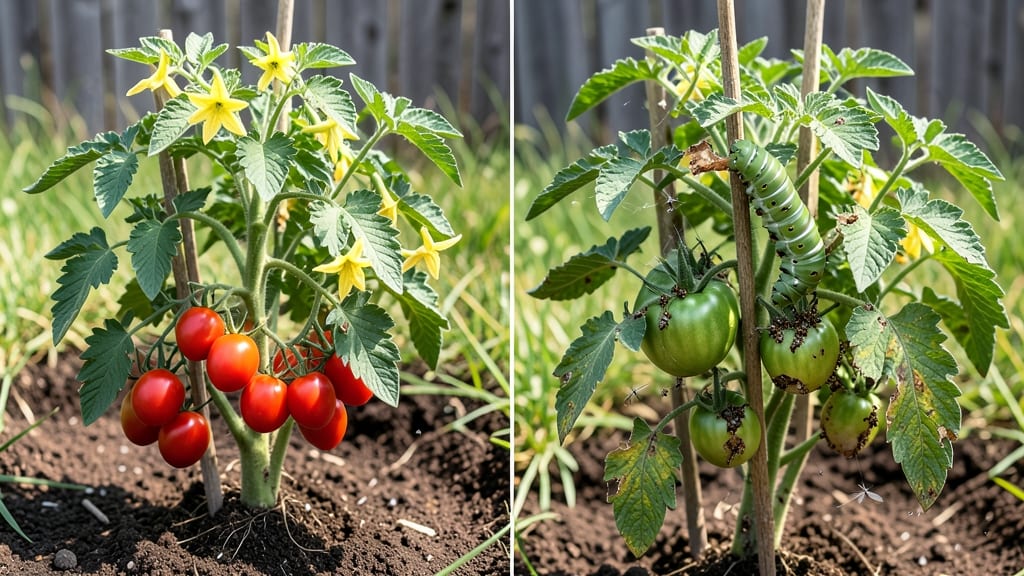
Seeing tomato plant pests with pictures of tiny holes in your tomato leaves or sticky residue on the stems? 🌱 Those are the first signs your plants are under siege—and this guide shows you exactly what’s attacking them and how to stop it before your harvest disappears.
I’ve spent years tracking pests from aphids to hornworms, and the visual clues make all the difference between saving your plants or losing them to silent damage.
The worst part? Many pests start small and spread fast. A single hornworm can devour a plant in days, while aphids weaken vines by sucking sap. But here’s the good news: knowing what to look for lets you act before the damage gets out of control.
We’ll cover the most common tomato pests, their telltale signs, and the fastest ways to remove them—no harsh chemicals needed.
By the end, you’ll recognize pests instantly and keep your tomatoes thriving. The key is acting early: crush those eggs, handpick the caterpillars, or spray soapy water before the infestation takes over. Your garden will thank you with bigger, healthier fruit all season.
Works for backyard gardens, containers, or even a single plant on your patio. Let’s get your tomatoes back on track—fast.
Root Causes of Tomato Plant Pests
Understanding why pests target your tomato plants is the first step to protecting your harvest. These tiny invaders don’t just appear out of nowhere—they’re drawn by specific conditions in your garden.
Let’s break down the key reasons your tomatoes might be under siege, so you can take action before damage sets in.
Tomato plants, like all living organisms, rely on natural defenses to fend off pests. When these defenses are compromised, insects and diseases move in like uninvited guests at a buffet. Here’s why your plants might be vulnerable:
- Nutrient Deficiencies 🌱 Plants low in nitrogen, phosphorus, or potassium struggle to grow strong stems, leaves, and roots—making them easier targets. For example, aphids and whiteflies thrive on stressed plants because their weakened sap is easier to access.
A quick soil test can reveal if your tomatoes are starving for essential nutrients.
- Overcrowding 🏡 When tomato plants are too close together, airflow is restricted, and humidity rises. This creates a cozy environment for fungal pests like blight and bacterial spots, as well as soft-bodied insects such as spider mites.
Overcrowding also makes it harder for you to spot early signs of infestation.
- Water Stress 💧 Both overwatering and underwatering stress tomato plants. Overwatering leads to soggy soil, inviting fungal pests like slugs and snails, while underwatering weakens the plant’s ability to produce natural pest-repellent compounds. Aim for 1–1.5 inches of water per week, adjusting for your climate.
Pests don’t just like tomatoes—they’re often drawn by the perfect storm of environmental factors. Here’s what’s making your garden a pest magnet:
- Warm, Humid Climates 🌞 Many tomato pests, such as hornworms, Colorado potato beetles, and fungal diseases, thrive in warm, humid conditions. If your garden is consistently above 75°F (24°C), you’re rolling out the welcome mat for these critters.
Use shade cloth or mulch to regulate temperature and reduce humidity around the base of plants.
- Poor Garden Hygiene 🧹 Debris, fallen leaves, and plant residues create hiding spots for pests like earwigs, cutworms, and even rodent pests. These areas also trap moisture, accelerating fungal growth. Clear out weeds and old plant matter regularly, especially after harvest, to break the pest cycle.
- Monoculture Planting 🌿 Growing only tomatoes (or other nightshades like peppers and eggplants) in the same spot year after year exhausts the soil and attracts specialized pests that have evolved to target these plants. Crop rotation disrupts pest life cycles and reduces their numbers over time.
Some pests are drawn to tomatoes because of their smell, color, or chemical signals. Here’s what’s luring them in:
- Sweet Smells and Bright Colors 🌈 Tomatoes emit volatile organic compounds (VOCs) that attract fruit flies, hornworms, and even some beetles.
The red color of ripe tomatoes also signals to pests like stink bugs and aphids that a meal is ready. Prune lower leaves to reduce contact with soil-borne pests and harvest early to avoid overripe fruit.
- Sap and Soft Tissue 🍃 Young, tender tomato leaves and stems are a feast for chewing insects like grasshoppers and flea beetles.
These pests are drawn to the high water content and soft texture of new growth. Apply a light layer of diatomaceous earth around the base of plants to deter crawling pests without harming the plant.
- Pollinator Confusion 🐝 Some pests, like whiteflies and aphids, mistake tomato plants for desirable hosts because of their flowering structures. These insects are often drawn to gardens with high floral diversity, so interplant tomatoes with pest-repelling herbs like basil, marigolds, or nasturtiums to confuse them.
Pro Tip: Keep a garden journal to track pest appearances. Note weather patterns, planting dates, and soil conditions—this helps you identify trends and adjust your approach before pests become a problem. 📝✨
Practical fixes for tomato plant pests
Now that you’ve identified the culprits wreaking havoc on your tomato plants, it’s time to take action! Below are targeted solutions for each common pest, along with preventive measures to keep your garden thriving. These fixes are easy to implement, budget-friendly, and effective—no fancy tools required.
Fix: Handpick and destroy them—fast! These caterpillars grow fast and can defoliate a plant in days.
- 🔍 Scout for Damage: Look for stripped leaves, black droppings, and green, 3-inch caterpillars with white stripes.
- 👨🍳 Drop Them in Soapy Water: Wear gloves, pluck them off, and dunk them in a bucket of soapy water (they drown instantly).
- 🐝 Encourage Predators: Ladybugs and parasitic wasps love hornworms. Plant dill, fennel, or marigolds nearby to attract them.
- 🌱 Use BT (Bacillus thuringiensis): A natural bacterial spray that kills hornworms without harming bees. Reapply after rain.
💡 Prevention Tip:
- Rotate crops yearly to disrupt their life cycle.
- Plant basil near tomatoes—its scent repels hornworms!
Fix: These tiny green/black bugs cluster on new growth, leaving sticky honeydew (which attracts mold).
- 💦 Blast Them Off: Use a strong stream of water from a hose to knock them off.
- 🧼 Soap Spray: Mix 1 tbsp mild dish soap + 1 quart water in a spray bottle. Apply early morning (avoids harming bees).
- 🐝 Introduce Ladybugs: Release 25-50 ladybugs per plant—they’ll feast on aphids for weeks.
- 🌿 Neem Oil (Last Resort): Mix 1 tbsp neem oil + 1 tsp soap + 1 quart water. Spray every 5-7 days until gone.
💡 Prevention Tip:
- Interplant with garlic or chives—aphids hate the smell!
- Check undersides of leaves daily (they love hiding there).
Fix: These red/yellow mites thrive in dry heat, sucking plant juices and causing yellowing leaves.
- 🌧️ Increase Humidity: Spider mites hate moisture. Mist plants daily or use a hose spray.
- 🧼 Neem Oil Spray: Mix 1 tbsp neem oil + 1 tsp soap + 1 quart water. Spray both sides of leaves (they’re sneaky!).
- 🕷️ Predatory Mites: Release phytoseiulus persimilis (sold online)—they only eat spider mites.
- 🧽 Remove Infested Leaves: If a leaf is heavily webbed, snip it off and burn or compost (don’t reuse soil).
💡 Prevention Tip:
- Avoid over-fertilizing (too much nitrogen attracts mites).
- Yellow sticky traps catch them early—place near plants.
Fix: These tiny white moths flutter when disturbed and weaken plants with their sap-sucking.
- 🕯️ Yellow Sticky Traps: Hang yellow cards coated in petroleum jelly near plants—they get stuck.
- 💦 Water Spray: Knock them off with a hose (early morning) before they fly away.
- 🧼 Insecticidal Soap: Spray undersides of leaves (where they hide) with soapy water.
- 🌿 Beneficial Wasps: Encarsia formosa wasps parasitize whitefly pupae. Release them in greenhouses.
💡 Prevention Tip:
- Reflective mulch (aluminum foil) confuses them—try wrapping it around plant bases.
- Avoid overwatering (they love damp soil).
Fix: These striped beetles and their larvae devour leaves, leaving skeletons behind.
- 🔪 Handpick Adults: Crush them early in the day (they’re slow-moving).
- 🧽 Remove Eggs: Check undersides of leaves for orange egg clusters. Scrape them into soapy water.
- 🌿 Row Covers: Use floating row covers (lightweight fabric) to block adults from laying eggs.
- 🌱 Crop Rotation: Never plant tomatoes, potatoes, or eggplants in the same spot two years in a row.
💡 Prevention Tip:
- Plant trap crops like nasturtiums—beetles prefer them over tomatoes!
Fix: These green/brown caterpillars cut stems at night, toppling young plants.
- 🌙 Check at Dusk: Use a flashlight to spot them hiding in soil or folded leaves.
- 🔪 Collar Barrier: Wrap cardboard or aluminum foil around stems 2 inches deep—they can’t crawl over it.
- 🌿 Beer Trap: Bury a small cup filled with beer near plants—cutworms drown in it.
- 🐦 Encourage Birds: They love eating cutworms. Install a bird feeder nearby.
💡 Prevention Tip:
- Avoid late planting—they’re most active in warm evenings.
Fix: While not insects, fungal infections (like early blight) mimic pest damage with spots and wilting.
- 🌿 Prune for Airflow: Remove crowded leaves to reduce humidity (fungi love dampness).
- 🌡️ Copper Fungicide: Spray copper-based fungicide every 7-10 days (prevents spread).
- 🌱 Resistant Varieties: Plant ‘Mountain Merit’ or ‘Celebrity’ tomatoes—they’re blight-resistant.
- 🧽 Remove Infested Plants: If 50% of leaves are spotted, pull and destroy the plant to stop spores.
💡 Prevention Tip:
- Water at the base (never overhead)—keeps leaves dry.
- Rotate crops—don’t plant tomatoes in the same spot year after year.
Final Pro Tip: 🎯 Combine methods for best results!
- Handpick + soap spray + beneficial insects = stronger defense.
- Prevention > Cure—healthy plants resist pests better!
Now grab your gloves and get that garden back in shape! 🍅💪
Frequently asked questions
How do I tell if the damage is from pests or disease?
Pest damage usually has distinctive holes, chew marks, or sticky residue (like honeydew from aphids). Disease symptoms include spots, wilting, or mold without visible insects. Check leaf undersides for eggs or tiny bugs—if you find them, it’s pests. For fungal issues, look for powdery white growth or dark concentric rings.
Can I use these pest control methods on organic tomato gardens?
All methods here are organic-compliant, including soapy water sprays, neem oil, handpicking, and beneficial insects. Avoid synthetic pesticides—stick to BT (Bacillus thuringiensis) for caterpillars or copper fungicides for blight, both certified organic.
Why do some pests appear suddenly after my tomatoes start flowering?
Flowering signals to pests like hornworms, whiteflies, and aphids that your plant is producing energy-rich sap and fruit—like a dinner bell! Warm weather during flowering also speeds up pest reproduction. Check leaves daily and remove spent blooms to reduce attractants.
What’s the fastest way to identify pests without pictures?
Use the 3-second test: Look for:
- Holes = Chewing pests (hornworms, beetles)
- Sticky leaves = Sap-suckers (aphids, whiteflies)
- Webbing = Spider mites
- Yellow spots = Disease (blight) or mites Grab a magnifying glass for tiny eggs or larvae!
Will my tomato plants recover if I remove all the pests?
Yes, but early action is key! Young plants bounce back quickly if you remove pests before 50% leaf loss. For mature plants, prune damaged foliage and focus on root health—stressed roots slow recovery. Expect new growth in 7-14 days with proper care and no new pests.