
Planting
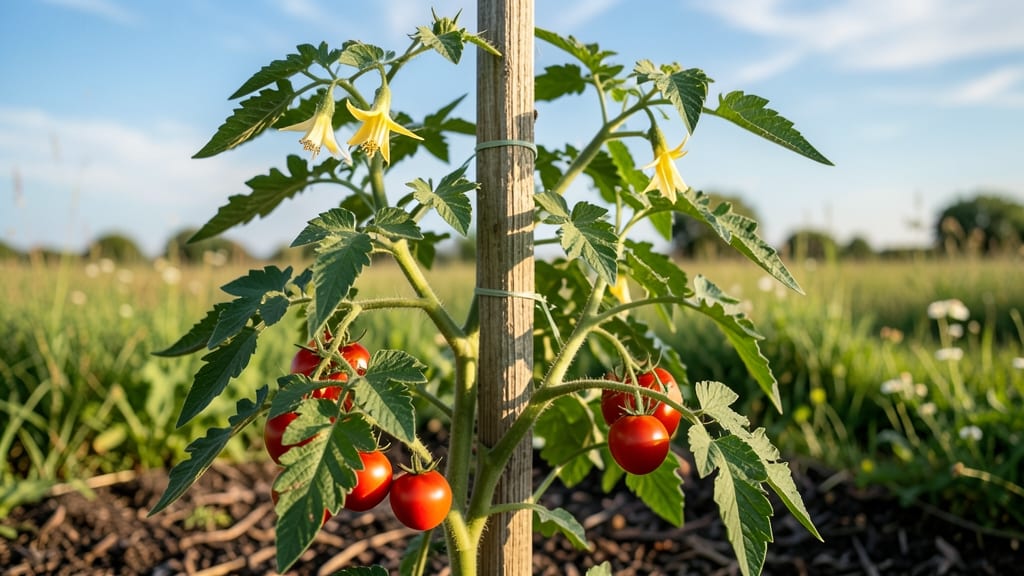
Tomato plants grow to sizes that range from compact 1-foot dwarfs to towering 10-foot vines—and knowing the difference is the key to planning your garden layout.
If you’ve ever wondered whether your tomato plants will sprawl across your garden or stay compact in a pot, understanding their mature size is the first step to successful cultivation—and avoiding a tangled mess in your backyard.
Determinate varieties like Roma tomatoes stay neat and bushy, rarely exceeding 4 feet, while indeterminate types like Sungold can climb indefinitely if left unchecked. Without proper spacing or support, even a small garden can become a jungle of tangled vines.
In this guide, I’ll break down the height ranges of popular varieties, how pruning and training can control growth, and the best ways to maximize space—whether you’re working with a tiny balcony or a sprawling backyard.

Tomato plant size by variety: determinate vs indeterminate growth habits
Understanding whether your tomato plants will grow compact and bushy or tall and sprawling is key to planning your garden layout. The two main growth habits—determinate and indeterminate—dictate everything from spacing to support needs.
Determinate varieties stop growing at a set height, typically between 3 to 5 feet, while indeterminate types keep growing until frost, often reaching 6 to 12 feet or more. This difference directly impacts how you’ll prune, stake, and even harvest your tomatoes.
For example, my Roma tomatoes (a determinate variety) stay under 4 feet and produce all their fruit at once, making them perfect for sauces and canning. Meanwhile, my Sungold cherry tomatoes (indeterminate) climb endlessly, yielding continuous harvests throughout the season.
Choosing the right type for your space—and your patience—can mean the difference between a manageable bush and a jungle of vines.
Why does this matter? Determinate plants need less support and minimal pruning, while indeterminate varieties require stakes, trellises, or cages to prevent sprawling. Indeterminate types also benefit from regular pruning to improve air circulation and fruit quality. Let’s break down the key differences so you can pick the perfect variety for your garden.
If you’re working with limited garden space, determinate varieties like Tiny Tim or Patio Princess are ideal—they top out at 18–24 inches and thrive in containers. These compact plants also ripen faster (around 60 days), making them perfect for short growing seasons.
On the other hand, if you have vertical space or want a longer harvest, indeterminate varieties like Brandywine or Black Krim will reward you with heirloom-quality fruit well into fall.
For container gardening, stick to determinate or bush-type indeterminates like Micro Tom (a dwarf indeterminate that stays under 1 foot). These varieties are bred to handle pot life without outgrowing their containers.
Just ensure your pots are at least 5 gallons to accommodate root growth and water needs. I’ve grown Cherry Tomatoes in hanging baskets with great success—just add a small trellis to support the vines.
One common mistake I see is underestimating indeterminate growth. These plants can easily double in height from spring to summer, so if you’re planting near a fence or roof, leave at least 6 feet of clearance.
I once let a Beefsteak tomato sprawl unchecked, and by August, it had climbed over my deck railing—requiring a last-minute trellis to save the harvest! Always plan for the worst-case scenario with indeterminate types.
Pruning plays a huge role in managing size and yield. With determinate tomatoes, pruning is mostly about removing suckers (the shoots that grow in the leaf axils) to improve air flow and reduce disease risk.
For indeterminate varieties, you’ll need to prune suckers regularly (every 1–2 weeks) and trim lower leaves to keep the plant’s energy
How to control tomato plant size: pruning and training techniques
Managing tomato plant size starts with understanding your variety’s growth habit. Indeterminate types like Sungold can reach 6+ feet without control, while determinate varieties like Roma max out at 3-4 feet. The key? Strategic pruning and support systems to direct energy toward fruit production—not just foliage.
I’ve learned that skipping these steps often leads to sprawling vines, crowded fruit, and poor air circulation—all of which invite pests and disease.
For small gardens or container growing, controlling height isn’t just about aesthetics—it’s about maximizing yield in limited space. A well-trained tomato plant can produce 20-30% more fruit by focusing energy upward rather than outward.
Whether you’re using cages, stakes, or trellises, the right approach depends on your plant’s growth type and your garden’s layout. Let’s break it down step by step.
Step-by-Step Guide to Pruning & Training
- 1 Choose the right support: Use cages (4-6 ft) for determinate types or stakes/trellises (6+ ft) for indeterminate varieties. For containers, opt for mini cages or bamboo stakes.
- 2 Prune indeterminate types: Remove suckers (side shoots) weekly starting at 6 inches tall. Focus on keeping the main stem and fruit-bearing branches to improve airflow and sunlight penetration.
- 3 Train determinate varieties: Skip heavy pruning—just remove lower leaves to prevent soil-borne diseases. Use low cages (3-4 ft) to support their bushy growth without overcrowding.
- 4 Space plants properly: 18-24 inches apart for determinate types; 24-36 inches apart for indeterminate. In containers, use 1 plant per 5-gallon pot to avoid root competition.
- 5 Harvest regularly: Pick fruit every 3-5 days to encourage more production. Overripe tomatoes signal the plant to stop flowering, so stay on top of it!
One of my biggest mistakes was ignoring sucker removal in my first year of growing indeterminate tomatoes. The plants grew wild, shading each other and producing small, underripe fruit.
After switching to a weekly pruning schedule, my plants stayed upright, and my yield doubled. Pro tip: Use sterilized pruners to avoid spreading disease between cuts.
For vertical gardening, consider floral wire trellises or A-frame cages to save space. These systems work especially well for cherry tomatoes like Sweet 100, which thrive when trained upward. Just ensure your trellis can support 10+ pounds per plant at peak ripeness—nothing’s worse than a collapsed tomato tower mid-harvest!
If you’re short on space, try espalier training against a fence or wall. This method flattens the plant horizontally, making it ideal for balconies or small patios. Pair it with dwarf varieties like Tiny Tim (18 inches tall) for a compact, high-yielding setup.
Just remember: Prune aggressively to maintain the flat shape and redirect energy to fruit production.
Finally, don’t forget to rotate plants annually to prevent soil depletion. Tomatoes are heavy feeders, and over time, they’ll exhaust nutrients in the same spot. Pair them with companion plants like basil or marigolds to deter pests and improve growth.
With these techniques, you’ll transform a sprawling mess into a neat, productive tomato powerhouse—no matter how small your garden. 🌱