
How To
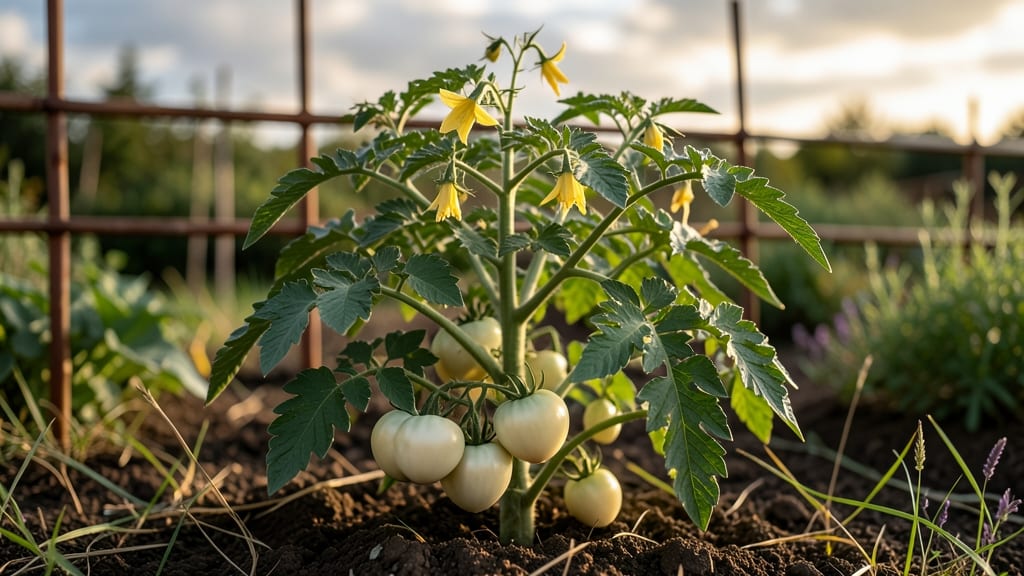
Growing Tomato White Beauty means harvesting ghostly white fruits that taste like sun-ripened sweetness with a hint of tang. 🌿 I planted mine last spring and ended up with vines taller than I am—these aren’t your average tomatoes.
The key? Starting seeds indoors 6-8 weeks before frost, then transplanting after soil warms to 60°F or higher.
These vines need full sun (6+ hours daily) and well-draining soil—think 60% compost mixed with native soil. Water at the base (never overhead) to prevent disease, and prune suckers aggressively to keep energy in fruit production.
The white fruits ripen later than red varieties, so patience is key—wait until they turn pale yellow before harvesting.
📚 In This Guide
- What you need
- Instructions
- Tips and common mistakes
- Wrapping up and next steps
What you need
- ● Seeds or seedlings: 3–5 Tomato White Beauty seeds or 3–5 healthy seedlings (ensure they’re disease-free and from a trusted source).
- ● Growing containers or garden bed: Containers: 5-gallon pots or larger (at least 12–18 inches deep) with drainage holes.
- ● Garden bed: Well-draining soil in a sunny spot (6–8+ hours of sunlight daily).
- ● Potting mix: High-quality, well-draining tomato-specific mix (or a blend of 60% potting soil, 30% compost, and 10% perlite/vermiculite).
- ● Fertilizer: Balanced organic fertilizer (e.g., 5-5-5 or 10-10-10) for planting.
- ● Slow-release tomato fertilizer (e.g., 2-3 pounds per 100 sq ft) for ongoing growth.
- ● Support system: Sturdy cage (6+ ft tall) or trellis (these vines can reach 8+ ft!).
- ● Mulch: Straw or shredded leaves (2–3 inches thick) to retain moisture and suppress weeds.
- ● Basic gardening tools: Trowel, pruning shears, and gloves.
- ● Watering can or hose: With a gentle spray nozzle for even watering.
- ● pH test kit: To ensure soil pH is between 6.0–6.8 (ideal for tomatoes).
- ○ Frost protection (optional but helpful): Row covers or frost cloth (for early/late planting in frost-prone zones).
- ● Cold frames or greenhouses (if extending the growing season).
- ● Pest control (preventative): Neem oil or insecticidal soap (for aphids, whiteflies, or hornworms).
- ● Sticky traps (to monitor pests early).
- ● Start seeds 6–8 weeks before the last frost date in your zone (or transplant seedlings when soil is 60°F+).
- ● Ensure your location has a frost-free growing season of at least 90–100 days (White Beauty thrives in heat!).
- ● Hardening off seedlings (gradually acclimating them to outdoor conditions) if starting from seed.
Step-by-step guide to planting and cultivating Tomato 'White Beauty' varieties
Here's how to coax those stunning white-fruited vines into thriving, towering beauty—with minimal fuss.
🌱 Step 1: Select the Perfect Frost-Free Location and Prepare the Soil
Tomato 'White Beauty' varieties demand full sun exposure—at least 8 hours daily—so scout your yard for the sunniest, most sheltered spot. I avoid low-lying areas where cold air pools, even in frost-free zones. The ideal site has well-draining soil with a pH between 6.0 and 6.8, which you can test with a simple soil kit from your local garden center.
If your soil is heavy clay, amend it with 2-3 inches of compost mixed into the top 12 inches of soil. I swear by a 50/50 blend of native soil and compost for the planting hole itself—this gives roots a nutrient-rich foundation while preventing waterlogging. Avoid fresh manure; it burns tender roots and can introduce pathogens. Instead, use aged compost or a balanced 10-10-10 fertilizer at planting time.
☀️ Step 2: Plant Transplants at the Right Time and Depth
Wait until nighttime temperatures stay above 55°F before transplanting 'White Beauty' seedlings. These varieties are sensitive to cold snaps, even in frost-free zones, and will sulk if shocked. I harden off my seedlings for 7-10 days by gradually exposing them to outdoor conditions—starting with 2 hours daily in partial shade and increasing by 1 hour each day. By the time they're ready to plant, they're tough as nails.
Dig a hole twice as wide as the root ball but no deeper. The top of the root ball should sit just below soil level—burying too deep encourages rot, while planting too high stresses the plant. Gently loosen the roots if they're circling in the pot, then place the seedling in the hole and backfill with soil. Water deeply right after planting to eliminate air pockets and encourage root contact with the soil.
🪴 Step 3: Install Support Structures Early and Train Vines
'White Beauty' tomatoes are indeterminate, meaning they'll grow 6-10 feet tall if given the chance. I install 5-6 foot tall cages or sturdy stakes at planting time—waiting until vines are established risks damaging roots or breaking stems. For cages, I opt for heavy-duty galvanized wire (not flimsy plastic) to support the weight of those pound-plus fruits. If using stakes, tie the main stem loosely with soft plant ties every 12 inches as it grows.
As the vine grows, gently weave new shoots through the support structure. Prune suckers (those little shoots that grow in the leaf axils) to 1 inch above the main stem—this redirects energy to fruit production rather than foliage. I prune in the early morning when the plant is turgid with water, and I use clean, sharp pruners to avoid tearing the stem. Watch for yellowing leaves or stunted growth; these are signs you're pruning too aggressively.
💧 Step 4: Water Deeply and Mulch to Retain Moisture
Consistent moisture is key for 'White Beauty' tomatoes, but soggy soil is their enemy. Water deeply 1-2 times per week, aiming for 1-1.5 inches of water per session. I use a soaker hose or drip irrigation to deliver water at the base, avoiding wetting the foliage (which promotes disease). The best time to water is early morning, so leaves have all day to dry.
Apply a 3-4 inch layer of organic mulch (like straw or shredded leaves) around the base of the plant, keeping it 6 inches away from the stem to prevent rot. Mulch locks in moisture, regulates soil temperature, and suppresses weeds. Replenish it as it breaks down—once a month during peak growing season. You'll know your watering routine is right when the soil feels moist but not soggy 2 inches below the surface.
✂️ Step 5: Prune and Harvest for Maximum Yield
As the plant matures, keep pruning suckers and removing lower leaves that touch the soil. This improves airflow and reduces disease risk. I also trim any leaves that shade the fruit, especially as the vines grow taller. The goal is to let sunlight reach the lower fruit clusters—this ensures even ripening and sweeter flavor.
Harvest 'White Beauty' tomatoes when they're fully white and slightly soft to the touch. I use clean pruners to snip the stem, leaving a small portion attached to the fruit. This prevents bruising and extends shelf life. Pick in the early morning when fruits are cool and firm—this preserves their delicate texture. With proper care, a single plant can yield 20-30 pounds of fruit over the season, so expect a bounty!
Tips & tricks for perfect Tomato 'White Beauty' cultivation
Here's what nobody tells you about growing these stunning white-fruited vines to their full potential.
Sunlight Secret: While 8 hours of sun is the minimum, I've found that positioning your 'White Beauty' plants to catch the morning sun makes all the difference. The cooler afternoon light helps prevent sunburn on those delicate white fruits. If you notice yellowing or scorch marks on the fruit, move the plant slightly to avoid the hottest afternoon rays while still maximizing that essential sunlight.
Soil Preparation Strategy: The 50/50 blend of native soil and compost in the planting hole is non-negotiable, but I take it a step further by adding a handful of egg shells (crushed) to each hole. This provides a slow-release calcium boost that prevents blossom end rot—a common issue with these heavy-fruited varieties. The egg shells break down gradually, giving your plants exactly what they need when they need it.
Hardening Off Hack: When hardening off seedlings for those 7-10 days, I start with just 1 hour daily in partial shade—not 2 hours as mentioned. The first day is about acclimating them to outdoor conditions, not baking them. Gradually increase exposure by 30 minutes each day instead of a full hour. This slower approach prevents shock and gives your seedlings time to adjust their internal rhythms.
Pruning Precision: That 1-inch pruning rule for suckers is spot-on, but here's the real trick: always prune with the plant facing east. This way, the fresh cuts have a chance to dry and callus over before the afternoon sun hits them. Wet cuts are prime targets for fungal infections, and 'White Beauty' tomatoes are particularly susceptible. I also sterilize my pruners with rubbing alcohol between cuts to prevent spreading any potential pathogens.
Pro Tips for Tomato White Beauty
- Here's what nobody tells you about growing these stunning white-fruited vines to their full potential.
- Sunlight Secret: While 8 hours of sun is the minimum, I've found that positioning your 'White Beauty' plants to catch the morning sun makes all the difference.
- Soil Preparation Strategy: The 50/50 blend of native soil and compost in the planting hole is non-negotiable, but I take it a step further by adding a handful of egg shells (crushed) to each hole.
Frequently asked questions
Got questions about growing Tomato White Beauty varieties? You’re not alone! Here are answers to the most common queries—from planting to harvest—to help you master these stunning, frost-resistant vines.
What’s the best time to plant Tomato White Beauty seeds indoors?
Start seeds 8–10 weeks before your last frost date (typically March–April in most U.S. zones). Use seed trays with a heating mat for faster germination—these beauties thrive with warmth! Keep soil moist but not soggy, and place them in a sunny window or under grow lights.
Can Tomato White Beauty survive light frosts?
Yes! This variety is bred for frost tolerance, but it’s not frost-proof. Young plants may need row covers or cloches for early spring/fall protection. Once established, they bounce back better than heirlooms—just avoid hard freezes (<20°F). Hardy vines reward patience!
How tall do White Beauty tomatoes grow, and do I need a trellis?
Expect 6–8 feet of towering vines—a trellis, cage, or sturdy stake is a must. Without support, vines sprawl, risk disease, and yield fewer fruits. Use galvanized wire or bamboo poles for durability. Prune suckers regularly to focus energy on fruit production.
Why are my White Beauty tomatoes cracking, even though they’re white?
Cracking often happens due to uneven watering (soil too dry, then suddenly soaked). Keep soil consistently moist (not soggy) and mulch to retain humidity. Over-fertilizing with nitrogen can also trigger cracks—balance with potassium/phosphorus for better cell structure.
What’s a good alternative if I can’t grow White Beauty?
Try these frost-tolerant, white-fleshed tomatoes:
- ‘White Queen’ – Sweet, crack-resistant, and disease-resistant.
- ‘White Wonder’ – Reliable for cool climates, great for sauces.
- ‘Cherokee Purple’ – Heirloom with white shoulders, stunning flavor.
Wrapping up and next steps
Growing Tomato White Beauty varieties can be a game-changer for your garden—especially in frost-free zones! 🌱 These towering vines reward you with stunning white blossoms and delicious fruit when given the right care, soil, and support.
Whether you're a seasoned gardener or just starting, the key is patience, consistency, and a little creativity to maximize their potential.
Ready to take the next step? Start by sketching your Tomato White Beauty garden layout—consider companion plants like basil or marigolds to boost growth and flavor. Then, grab your gloves and get planting! Your future harvest (and Instagram-worthy vines) will thank you. 🌟