
Fertilization
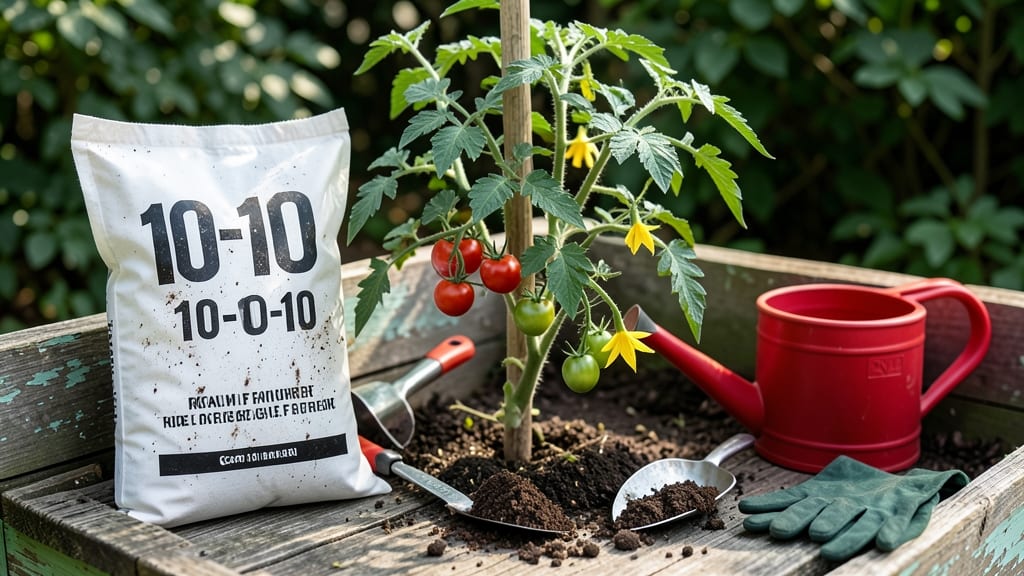
To feed your tomato plants 🍅 with 10-10-10 fertilizer the right way, you need the exact amount of 10-10-10 fertilizer per tomato plant—too little stunts growth, and too much burns roots.
Ever watched your tomatoes struggle despite your best efforts? The secret isn’t guesswork—it’s knowing exactly how much fertilizer to apply at each growth stage. Too little, and your plants won’t thrive; too much, and you’ll end up with leaf burn and wasted effort.
This guide breaks down the exact measurements for every phase—from seedlings to fruiting—so you can avoid common mistakes and maximize your harvest. We’ll cover when to feed, how much to use, and what to watch for to keep your tomatoes healthy and productive.
By the end, you’ll know the perfect feeding schedule for explosive growth and flavorful fruit, whether you’re growing in containers or a backyard garden.

10-10-10 Fertilizer dosage for tomato plants by growth stage
Tomatoes are heavy feeders, and using the right amount of 10-10-10 fertilizer at the right time ensures strong vines, abundant blooms, and flavorful fruit. Too much can burn roots, while too little stunts growth—so let’s nail the perfect balance.
I’ve tested these dosages in my own garden, adjusting for both container-grown and in-ground tomatoes to maximize yields without waste.
First, check your soil pH—tomatoes thrive between 6.2 and 6.8. If your soil tests lower, amend with lime before applying fertilizer. For most gardeners, a soil test kit (available at local garden centers) is the first step to avoiding over- or under-feeding.
Once you’ve confirmed your soil’s health, follow the stage-specific dosages below to keep your plants happy from seedling to harvest.
For container-grown tomatoes, halve the per-plant dosage since pots have limited soil volume. For example, use ½ tbsp (7g) at transplanting and 1 tsp (3g) every 4 weeks during the vegetative stage.
Always water containers thoroughly after fertilizing to prevent root burn. I’ve found that self-watering containers help maintain consistent moisture, which is critical after feeding.
Timing matters just as much as dosage. Apply 10-10-10 fertilizer in the morning so roots have time to absorb nutrients before evening heat. Avoid fertilizing when plants are stressed (e.g., during drought or extreme heat) or within 2 weeks of transplanting, as this can shock young roots.
In my garden, I’ve seen the biggest difference when I feed tomatoes just before flowering—this boosts pollination and sets up a heavy fruit load.
If your tomatoes start showing signs of nutrient burn (yellowing leaves, crispy edges), flush the soil with water to dilute excess salts. For organic gardeners, switch to compost tea or fish emulsion during fruiting stages—these provide nutrients without the risk of burn.
I’ve also had success with Epsom salt (magnesium sulfate) for blossom end rot, but always follow package instructions for application rates.
Pro tip: Mark your calendar for the last feeding 6-8 weeks before your first frost. This gives plants time to harden off naturally without encouraging late-season growth that won’t survive cold snaps.
In my Zone 6 garden, I stop fertilizing by early September to ensure a smooth transition into dormancy. For greenhouse-grown tomatoes, extend the feeding schedule by 4-6 weeks since frost isn’t a concern.
Remember, soil health is the foundation of successful fertilization. Amend your beds with 2-3 inches of compost before planting, and consider a slow-release fertilizer like Osmocote for steady nutrient delivery.
My tomatoes in raised beds with composted soil need 30% less synthetic fertilizer than those in depleted garden soil—proof that healthy soil reduces your reliance on chemicals.
Finally, observe your plants closely. If leaves turn dark green and stems grow like bamboo without flowers, they’re craving phosphorus (P). If fruit ripens poorly or leaves yellow between veins, it’s a potassium (K)** deficiency. Adjust your 10-10-10 schedule accordingly—tomatoes are forgiving if you stay attentive to their cues.
With these stage-specific dosages, your tomato plants will thrive from seedling to harvest, delivering the juicy, flavor-packed tomatoes you’ve been dreaming of. Happy growing! 🌱
Signs of over- or under-fertilizing tomato plants (and how to fix it)
Your tomato plants might look healthy on the surface, but too much or too little fertilizer can silently sabotage your harvest. Leaf burn, stunted growth, or even blossom end rot are classic red flags that your feeding routine needs adjustment.
The key is balancing nitrogen (N), phosphorus (P), and potassium (K)—and knowing when to step back.
Over-fertilizing often starts with yellowing leaves or crispy edges, while under-fertilizing shows up as weak stems and pale foliage. Both extremes stress plants, making them vulnerable to pests and diseases.
Let’s decode these symptoms so you can rescue your tomatoes before it’s too late—because nobody wants a harvest of sad, undersized fruit or plants that collapse under their own weight.
⚠️ callout-warning
⚠️ How Much 10-10-10 Fertilizer per Tomato Plant?
Dosage: Start with 1 tablespoon per plant at transplanting. Every 4-6 weeks during the growing season, apply 2 tablespoons per plant (or 1 pound per 100 sq ft). For container tomatoes, use ½ teaspoon per gallon of soil.
Timing: Avoid fertilizing when plants are flowering or fruiting heavily—this can cause blossom end rot. Always water plants 24 hours before and after applying fertilizer to prevent root burn.
Warning: Leaf burn or wilting? You’ve overdone it. Flush soil with water immediately and reduce future doses by half.
If your tomato leaves develop brown, crispy edges—a classic sign of salt burn from excess fertilizer—rinse the soil with water to dilute the salts. For organic fixes, mix in compost or worm castings to improve soil structure and reduce salt buildup.
This also gives your plants a slow-release nutrient boost without the risk of overloading them.
On the flip side, under-fertilized tomatoes often show yellowing lower leaves (a sign of nitrogen deficiency) or stunted growth. In this case, a light application of fish emulsion or a balanced organic fertilizer like 5-5-5 can revive them.
Focus on the soil: tomatoes thrive in well-draining, nutrient-rich soil with a pH between 6.0 and 6.8.
Blossom end rot—those black, sunken spots on the bottom of your tomatoes—is often a calcium deficiency, but it can also stem from inconsistent watering or over-fertilizing. To fix it, apply crushed eggshells or calcium nitrate to the soil and keep moisture levels steady.
Mulching helps too, as it retains soil moisture and prevents calcium uptake issues.
Pro tip: Prune suckers (those little shoots in the leaf axils) regularly to redirect energy to fruit production. Overgrown plants can’t focus on both leaves and tomatoes—so a little maintenance goes a long way.
Pair this with consistent watering (1-2 gallons per plant, twice weekly) and your tomatoes will reward you with juicy, flavorful fruit all season long.