
Companion Plants
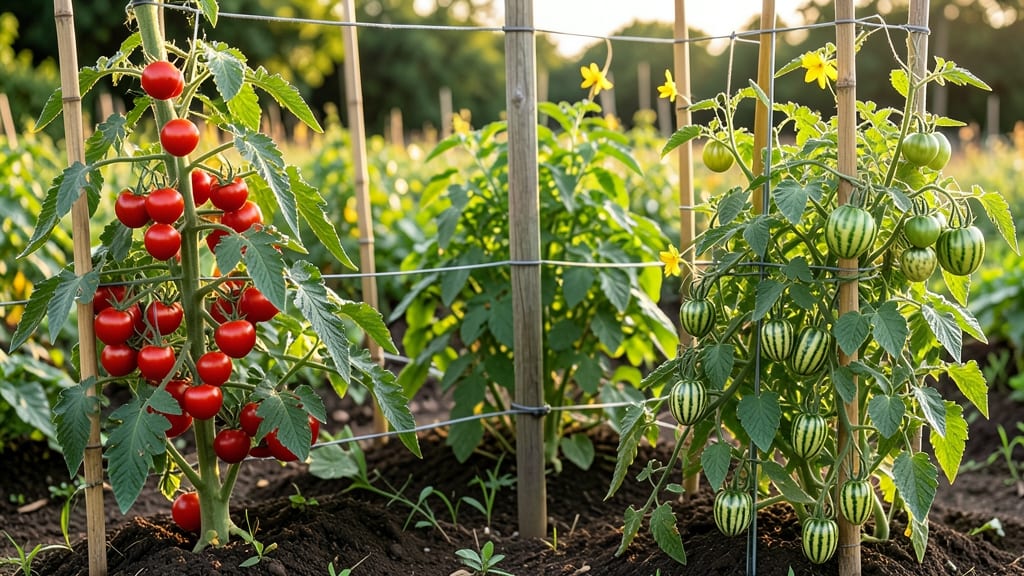
Identifying types of tomato plants with pictures involves recognizing their three main growth patterns: determinate (compact bush), indeterminate (continuous vining), and semi-determinate (moderate vining). Each type displays distinct leaf shapes, stem structures, and fruit production styles that make visual distinction straightforward.
These tomato varieties aren't just about how they grow—they also affect your garden's layout and harvest strategy.
Determinate types produce fruit all at once, perfect for canning, while indeterminate plants keep yielding until frost. 🌱 The leaf shapes alone can tell you what you're dealing with: determinate plants often have serrated leaves and thicker stems, whereas indeterminate varieties feature finer foliage and require staking.
I always recommend starting with a few of each type to experience their unique characteristics firsthand.
For visual learners, I suggest creating a simple chart comparing leaf serration, vine length, and fruit clusters. This helps you spot the differences at a glance, especially when shopping for seedlings.
The key is noticing how determinate plants stop growing after their first fruit set, while indeterminate types keep climbing and producing fruit until cold weather arrives. This growth habit distinction is your first clue when identifying tomato varieties without labels.
💡 In This Article
- Identifying Tomato Varieties by Growth Habits and Leaf Shapes
- Best Tomato Types for Small Gardens vs Large Spaces
Identifying tomato varieties by growth habits and leaf shapes
Determinate tomato plants grow in a compact, bush-like shape because their main stem stops growing after reaching 3-5 feet tall. This growth pattern happens because the plant's apical meristem (growth tip) stops producing new cells after flowering, a process triggered by hormonal signals in the plant.
The leaves are typically larger with deep serrations along the edges, almost like jagged teeth, which helps them maximize sunlight capture for their short stature. You'll notice clusters of fruit forming at the ends of branches, all ripening within 2-3 weeks of each other.
Indeterminate varieties, on the other hand, keep growing and producing fruit until frost kills them, sometimes reaching 6-12 feet or more. Their leaves are finer with shallower serrations and a lighter green hue, which helps reduce water loss during their long growing season.
The stems are thinner and require support like cages or trellises to prevent sprawling.
Fruit appears singly along the stem rather than in clusters, with each new blossom producing a single tomato over 70-80 days after planting. 🌿 This continuous growth makes them ideal for gardeners who want a steady harvest.
The semi-determinate category bridges the gap with moderate vining habits, typically growing 4-6 feet tall. Their leaf structure resembles indeterminate types but with slightly deeper serrations, and they produce fruit in both clusters and single stems.
This hybrid growth pattern means they'll yield heavily for 4-6 weeks before slowing down, making them a great compromise for gardeners with limited space who still want extended harvests. The key visual difference is their intermediate stem thickness and leaf size between the other two types.
Leaf arrangement also provides clues: determinate plants have leaves that grow in a spiral pattern along the stem, while indeterminate varieties often show alternate leaf placement with smaller gaps between nodes.
The stem thickness varies too—determinate stems feel sturdier due to their compact structure, whereas indeterminate stems are more flexible and require support. These physical differences become especially noticeable when handling seedlings or pruning established plants.
Color variations in foliage can also help: determinate types often have darker green leaves with prominent veins, while indeterminate varieties may show lighter green or even reddish hues in some cultivars.
The fruit clusters themselves are another giveaway—determinate plants produce dense, multi-fruit clusters at branch tips, while indeterminate types have spaced-out single fruits along the main stem. These visual patterns make identification straightforward once you know what to look for in your garden.
For gardeners who enjoy visual learning, I recommend creating a simple comparison chart with these key features: leaf serration depth, stem thickness, growth height, and fruiting pattern. Place it near your tomato patch as a quick reference when selecting varieties or troubleshooting growth issues.
The more you observe these patterns, the easier it becomes to identify tomato types at a glance—even without labels. 🌱