
Plants
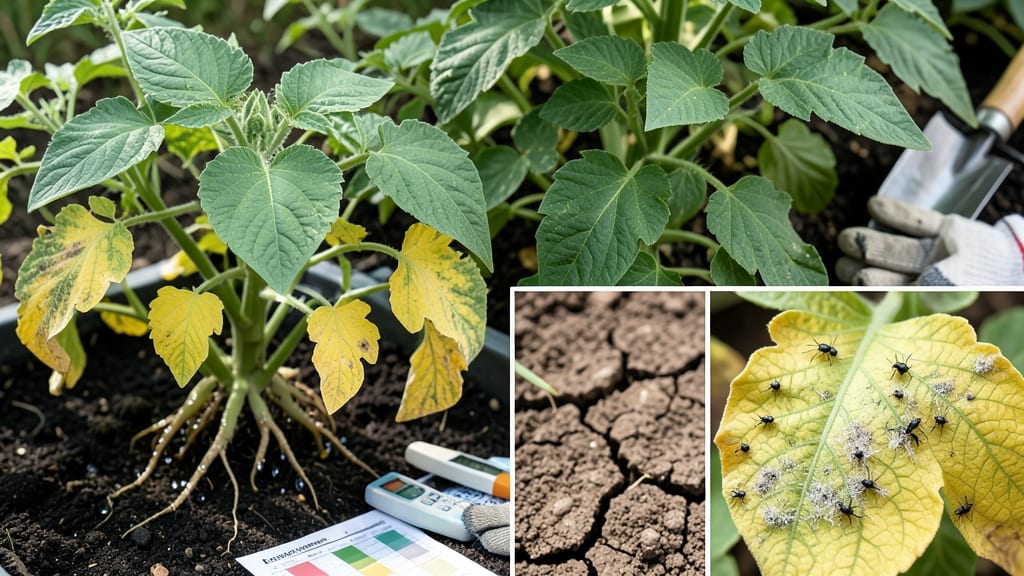
Yellow leaves on tomato plants don’t mean your garden is doomed—it’s your plant’s way of screaming for help. 🌱 I’ve seen this happen with overwatering, nutrient starvation, and even sneaky pests, and there’s always a fix.
The first step is figuring out which problem your plant is facing, because each cause has its own telltale signs.
Overwatering or poor drainage often starts with the bottom leaves turning yellow first, then mushy. Nutrient deficiencies show up differently: nitrogen deficiency makes leaves pale green, while magnesium deficiency creates yellow patches between the veins.
Fungal diseases like early blight cause yellow spots with dark edges, and spider mites leave behind tiny webs and speckled leaves.
Once you spot the pattern, the solution is straightforward: adjust watering, feed with the right fertilizer, or treat for pests. I’ve saved dozens of plants by acting fast—sometimes it’s as simple as letting the soil dry out or giving it a dose of Epsom salt for magnesium.
The key is catching it early before the problem spreads.
This isn’t just about fixing yellow leaves—it’s about keeping your tomatoes thriving all season. With the right diagnosis, you’ll have bushy, green plants producing fruit in no time. Let’s get those leaves back to their vibrant selves!
Underlying Causes Explained
Yellow leaves on tomato plants are like nature’s way of sending an SOS—each shade and pattern tells a unique story. 🌱💡 Let’s break down the five most common culprits behind this issue, why they happen, and what’s really going on in your plant’s roots, soil, or leaves.
Tomatoes hate soggy feet. When roots sit in waterlogged soil for too long, they suffocate from a lack of oxygen, triggering chlorosis (yellowing) as the plant struggles to transport nutrients.
Overwatering also dilutes essential minerals like nitrogen, magnesium, and iron in the soil, leaving leaves starved of chlorophyll—the green pigment that gives them color.
Why it happens:
- Compacted or clay-heavy soil traps excess moisture, preventing roots from breathing.
- No drainage holes in containers force water to pool at the bottom.
- Inconsistent watering (e.g., heavy rains followed by drought) shocks the plant’s root system.
Actionable clue: Check the soil 1–2 inches deep—if it’s damp, hold off on watering. Yellowing often starts on lower leaves first.
Yellow leaves can signal a specific nutrient shortage, each with its own "fingerprint":
- Nitrogen deficiency (pale yellow, older leaves first): Nitrogen fuels leaf growth; without it, leaves turn uniformly yellow before wilting.
- Magnesium deficiency (yellow patches between leaf veins): Magnesium is the backbone of chlorophyll—when it’s lacking, older leaves develop interveinal chlorosis (yellowing between veins).
- Iron deficiency (young leaves yellow, veins stay green): Iron helps produce chlorophyll, and since new leaves can’t access iron bound in alkaline soil, they turn yellow first.
Why it happens:
- Poor soil quality (e.g., sandy or overly acidic soil) locks out nutrients.
- Over-fertilizing with synthetic nitrogen can burn roots, preventing nutrient uptake.
- Alkaline soil (pH > 7.0) makes iron and manganese unavailable to plants.
Actionable clue: Test your soil’s pH (ideal for tomatoes: 6.0–6.8). Amend with compost, Epsom salt (for magnesium), or chelated iron if needed.
Tomatoes are thirsty plants, and wilting or crispy yellow edges on leaves often mean they’re not getting enough water—or they’re transpiring too fast in scorching heat. When soil dries out, roots can’t absorb water efficiently, causing leaves to yellow and curl.
Why it happens:
- Inconsistent watering (e.g., deep soaks followed by drought) stresses roots.
- High temperatures + low humidity increase evaporation, forcing plants to "shut down" leaves to conserve water.
- Shallow root systems (common in container-grown tomatoes) dry out faster.
Actionable clue: Water deeply 1–2 times per week (not daily light sprinkles) and mulch to retain moisture. Look for yellowing at leaf edges or wilting in the heat of the day.
Hidden invaders can drain nutrients or block sunlight, leading to yellowing:
- Aphids, spider mites, or whiteflies suck sap, weakening leaves and causing yellow stippling (tiny yellow spots).
- Fungal diseases (like early blight or septoria leaf spot) create yellow halos around brown spots, often starting on lower leaves.
- Root-knot nematodes damage roots, reducing water/nutrient uptake and causing generalized yellowing.
Why it happens:
- Crowded plants reduce airflow, inviting fungal growth.
- Overhead watering spreads spores or attracts pests.
- Stressed plants (from other issues) become easier targets.
Actionable clue: Inspect undersides of leaves for pests or spots. Treat with neem oil, insecticidal soap, or copper fungicide if needed.
Tomatoes are sensitive to extreme conditions, and sudden changes can trigger yellowing:
- Cold drafts or frost damage cause brown/yellow patches on leaves exposed to chill.
- Too much direct sun (especially after transplanting) leads to sunburn, turning leaves yellow and crispy.
- Windburn dries out leaves, causing yellowing along edges.
Why it happens:
- Transplant shock disrupts root systems, slowing nutrient uptake.
- Sudden temperature swings (e.g., nighttime frosts or daytime heatwaves) confuse the plant.
- Poor air circulation in greenhouses or dense foliage traps heat.
Actionable clue: Acclimate plants gradually to outdoor conditions (harden off seedlings) and protect from wind with windbreaks or stakes.
Fixing yellow tomato leaves fast
Now that you’ve pinpointed the culprit behind your tomato plant’s yellowing leaves, it’s time to take action! The good news? Most fixes are simple, cost-effective, and can restore your plant to vibrant health in no time.
Below, we’ve mapped out practical, step-by-step solutions for each common cause—plus prevention tips to keep your tomatoes thriving season after season.
Signs: Yellowing lower leaves, soggy soil, wilting despite water, fungal smell. Why it happens: Too much water suffocates roots, leading to rot or nutrient deficiencies.
Step-by-Step Fix:
- 🔥 Stop Watering Immediately
- Let the top 1–2 inches of soil dry out completely before watering again. Stick your finger in the soil—if it’s damp past your first knuckle, wait.
- 🍳 Improve Drainage
- For pots: Add a layer of perlite, gravel, or coarse sand to the bottom before repotting. Ensure pots have drainage holes.
- For garden beds: Amend the soil with compost or organic matter to improve aeration. Avoid heavy clay soils.
- 👨🍳 Repot if Necessary
- If roots are rotting (black, mushy, or smelly), trim the affected roots with sterilized scissors and repot in fresh, well-draining soil.
- ⏰ Adjust Your Watering Schedule
- Morning watering is best—it allows foliage to dry quickly, reducing fungal risks. Water at the base, not the leaves.
💡 Prevention Tips:
- Use a moisture meter to track soil moisture accurately.
- Choose container varieties (like ‘Tiny Tim’ or ‘Patio’) if drainage is a recurring issue.
- Mulch around plants to retain moisture without overwatering.
Signs: Yellowing edges of leaves, crispy or bleached spots, wilting in afternoon heat. Why it happens: Tomatoes need 6–8 hours of sun but can scorch in extreme heat (above 90°F/32°C).
Step-by-Step Fix:
- 🔥 Provide Afternoon Shade
- Use shade cloth (30–50%) or a lightweight row cover during peak sun (12–4 PM). Avoid full shade—tomatoes still need sunlight!
- 🍳 Water Deeply in Heatwaves
- Water early morning (6–8 AM) to reduce evaporation. Aim for 1–1.5 inches per week, including rainfall.
- 🌡️ Protect from Wind Burn
- If leaves are yellow and papery, wind may be the issue. Use burlap windbreaks or plant near a natural barrier (like a fence).
- ✨ Boost Humidity (Indoor/Greenhouse Growers)
- Place a humidifier nearby or mist leaves lightly (avoid wetting foliage at night to prevent disease).
💡 Prevention Tips:
- Choose heat-tolerant varieties like ‘Heatmaster’ or ‘Solar Fire’ for hot climates.
- Reflective mulch (white plastic or gravel) can reduce soil temperature by up to 10°F.
- Harvest early—ripe tomatoes won’t survive extreme heat; pick them green and ripen indoors.
Signs: Yellowing between veins (iron/chlorosis), stunted growth, purple stems (phosphorus deficiency). Why it happens: Poor soil, over-fertilizing with nitrogen, or lack of micronutrients.
Step-by-Step Fix:
- 📊 Test Your Soil
- Grab a DIY soil test kit (or send a sample to a local extension office) to check pH and nutrient levels. Tomatoes prefer pH 6.0–6.8.
- 💪 Fix Specific Deficiencies:
- Iron (yellow between veins):
- Apply chelated iron or Epsom salt (1 tbsp per gallon of water, sprayed on leaves).
- Prevention: Add compost or worm castings to improve iron availability.
- Nitrogen (pale yellow leaves):
- Use a balanced fertilizer (10-10-10) or fish emulsion (high in nitrogen).
- Magnesium (yellow patches, brown veins):
- Sprinkle Epsom salt around the base (1 tbsp per plant) and water in.
- Iron (yellow between veins):
- 🥗 Avoid Over-Fertilizing
- More fertilizer ≠ better. Burnt edges or wilting? Flush the soil with water to remove excess salts.
💡 Prevention Tips:
- Side-dress plants with compost every 4–6 weeks for slow-release nutrients.
- Avoid synthetic fertilizers if your soil is already rich—organic options (like banana peels for potassium) work too!
- Rotate crops to prevent nutrient depletion in garden beds.
Signs: Yellowing with holes, webs, or spots; sticky residue (aphids); white mold (powdery mildew). Why it happens: Sap-sucking pests or fungal/bacterial infections stress the plant.
Step-by-Step Fix:
- 🔪 Identify the Pest/Disease
- Aphids/Spider Mites: Yellowing + sticky leaves or tiny webs.
- Fungal (early blight): Yellow spots with concentric rings.
- Bacterial spot: Irregular yellow patches with black specks.
- 🍳 Natural Remedies First - Pests: - Neem oil spray (1 tsp neem oil + 1 tsp mild soap + 1 quart water).
Spray every 5–7 days. - Introduce beneficial insects (ladybugs for aphids, predatory mites for spider mites). - Fungal/Bacterial: - Baking soda spray (1 tbsp baking soda + 1 tsp soap + 1 gallon water). Spray undersides of leaves. - Copper fungicide for bacterial spot (follow label instructions).
- 👨🍳 Prune and Isolate
- Remove infected leaves immediately (don’t compost them—trash them!).
- Space plants properly (18–24 inches apart) to improve airflow.
- ⏰ Prevent Future Outbreaks
- Rotate crops yearly to prevent soil-borne diseases.
- Water at the base (not overhead) to keep foliage dry.
💡 Prevention Tips:
- Healthy plants resist pests! Ensure proper sun, water, and nutrients first.
- Row covers (floating fabric) can block pests like flea beetles.
- Copper tape around pots deters slugs and snails.
Signs: Yellowing new leaves, wilting, slow growth after repotting or moving. Why it happens: Roots disturbed during transplanting or poor handling.
Step-by-Step Fix:
- 🌿 Give It Time
- Transplant shock can take 1–2 weeks to resolve. Avoid fertilizing for 7–10 days post-transplant.
- 💧 Water Gently but Deeply
- Use a watering can with a gentle rose to avoid disturbing roots. Keep soil consistently moist (not soggy).
- 🍳 Add a Root Booster
- Mix mycorrhizal fungi (like MycoApply) into the soil to help roots establish faster.
- ✨ Shield from Stress
- Avoid direct sun for the first few days—provide partial shade with a cloche or shade cloth.
💡 Prevention Tips:
- Transplant on a cloudy day to reduce stress.
- Hardening off seedlings: Gradually expose them to outdoor conditions for 5–7 days before planting.
- Use larger pots (5+ gallons) to minimize root disturbance.
Final Thought: Yellow leaves are your plant’s way of saying “Something’s off—help me!” By acting quickly and targeting
Frequently asked questions about tomato leaf yellowing
Why do only the older leaves turn yellow first?
This is usually a sign of nutrient deficiencies like nitrogen or magnesium. Older leaves contain more nutrients, so when these are lacking, the plant "recycles" them by breaking down older leaves first. Check for pale yellowing (nitrogen) or yellow patches between veins (magnesium).
Can yellow leaves spread to healthy parts of my tomato plant?
Yes, if left untreated! Yellowing from overwatering or disease can spread upward, while nutrient deficiencies often start at the bottom but may progress. Act fast—prune affected leaves immediately and address the root cause (literally!) to prevent further damage.
Is it safe to eat tomatoes from a plant with yellow leaves?
Only if the yellowing is from nutrient issues or mild stress. Avoid eating tomatoes if the yellowing comes from pesticides, severe disease (like blight), or chemical exposure. When in doubt, remove affected fruit and focus on fixing the plant first.
How quickly should I see improvement after fixing the problem?
With proper care, you may see new growth in 3–7 days. Nutrient deficiencies respond fastest (within a week), while fungal diseases or root issues may take 2–3 weeks to show full recovery. Consistency is key—keep monitoring and adjusting!
Can I save a tomato plant if half the leaves are yellow?
Many plants recover fully if you act quickly. Prune yellowed leaves, address the cause (water, nutrients, pests), and provide optimal care. Just avoid over-pruning—keep enough leaves for photosynthesis to power recovery.