
Plants
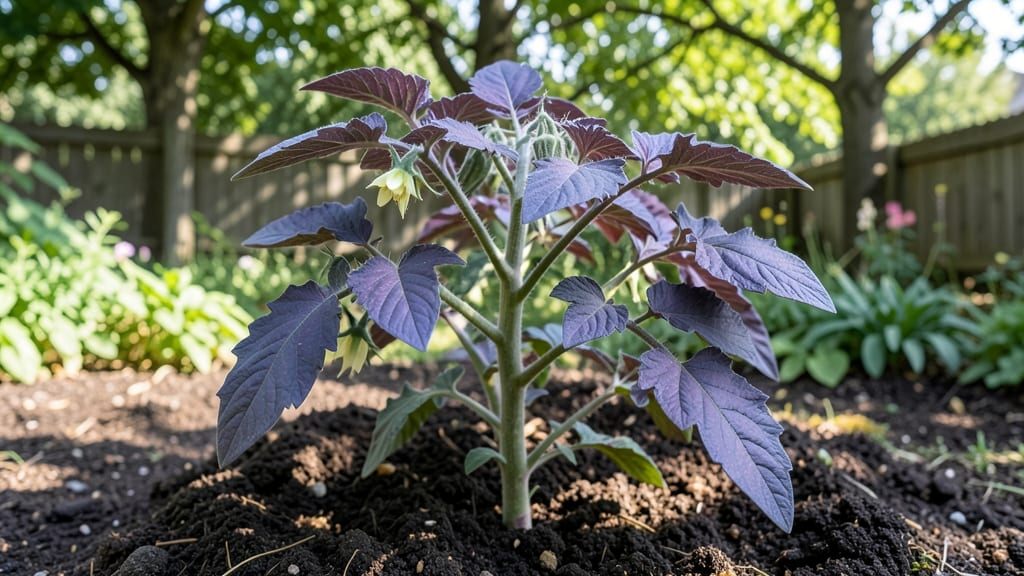
Your tomato plant’s leaves turning purple aren’t a death sentence—they’re screaming for phosphorus. 🌱 I’ve seen this happen after years of over-fertilizing with nitrogen-heavy mixes, and the fix is simpler than you think. Most gardeners panic, but this deficiency is easy to correct with the right approach.
The real culprit is often too much nitrogen or poor soil balance. Purple leaves on tomatoes usually mean phosphorus levels are low, but it could also be calcium or magnesium.
Start by testing your soil—if phosphorus is the issue, a balanced 10-10-10 fertilizer or bone meal will turn those leaves green again in about 2-3 weeks. Once you’ve adjusted the nutrients, keep an eye on watering—soggy soil worsens deficiencies. A mulch layer helps retain moisture and prevents stress.
With the right fix, your plant will bounce back faster than you’d expect, and those purple patches will disappear completely. This works for both container-grown and in-ground tomatoes.
If the problem persists after 3 weeks, check for other issues like fungal disease or pests—sometimes the fix isn’t as simple as fertilizer.
Root Causes Behind Purple Leaves
When your tomato plant’s leaves start turning an unnatural purple, it’s often a cry for help—specifically, a sign that something essential is missing from its diet. While phosphorus deficiency is the most common culprit, other factors can trigger this color shift.
Understanding the why behind the purple is the first step to restoring your plant’s health. Let’s break down the key reasons, backed by science and actionable insights.
Phosphorus is a vital nutrient for energy transfer, root development, and fruit production in tomato plants. When soil lacks available phosphorus (P), the plant struggles to synthesize anthocyanins, pigments that typically mask the purple hues. Instead, these pigments become visible as a stress signal.
- How it happens: Phosphorus is often bound tightly in soil, especially in alkaline conditions. Even if the soil tests "fertile," plants may not access it efficiently.
- Visual clues: Purple appears first on lower leaves and along the veins, while older leaves may yellow or brown at the edges.
- Why tomatoes? Tomato plants are heavy feeders during fruiting. If phosphorus isn’t replenished, the plant prioritizes survival over fruit development, triggering the purple alarm.
💡 Pro Tip: A quick soil test can confirm phosphorus levels. Aim for a reading between 30–100 ppm of available phosphorus (measured via the Bray-1 method). If low, amend with bone meal or rock phosphate—both release phosphorus slowly over time.
Nitrogen (N) and phosphorus work in tandem, but an imbalance—whether excess or deficiency—can disrupt chlorophyll production and trigger purple pigments. Here’s how:
- Excess nitrogen: While nitrogen fuels leafy growth, too much can burn out roots, preventing phosphorus uptake. The plant then overproduces anthocyanins as a protective response.
- Nitrogen deficiency: Without enough nitrogen, the plant can’t synthesize adequate chlorophyll, causing interveinal purple mottling (purple between veins) on younger leaves.
- Symptom overlap: Purple leaves from nitrogen issues often appear along with stunted growth or yellowing between veins.
🌡️ Fix It: Balance your fertilizer ratio to 3-1-2 (N-P-K) for tomatoes. Avoid synthetic fertilizers high in nitrogen (e.g., 20-0-0) during fruiting. Instead, use a low-nitrogen, high-phosphorus blend like 5-10-10.
Tomatoes thrive in 65–85°F (18–29°C) soil temperatures. Outside this range, the plant’s metabolic processes slow down, disrupting nutrient absorption—especially phosphorus. Extreme conditions can also induce anthocyanin production as a protective measure.
- Cold stress (<50°F / 10°C): Slows root activity, reducing phosphorus uptake. Purple appears on young leaves first.
- Heat stress (>90°F / 32°C): Causes nutrient lockout, where phosphorus becomes unavailable even if present. Leaves may also show scorch marks.
- Frost damage: Can kill cells, leading to purple-black discoloration and eventual leaf drop.
✨ Solution:
- Use mulch (straw or black plastic) to regulate soil temperature.
- Provide shade cloth during heatwaves (30–50% coverage).
- Avoid planting tomatoes in low-lying areas where cold air pools.
Phosphorus is most available in slightly acidic to neutral soil (pH 6.0–7.0). Outside this range, phosphorus binds to soil particles, becoming inaccessible. When pH drifts too high (alkaline, pH >7.5) or too low (acidic, pH <5.5), purple leaves often follow.
- Alkaline soil (pH >7.5): Common in regions with limestone. Phosphorus forms insoluble compounds with calcium, making it unusable.
- Acidic soil (pH <5.5): While phosphorus is technically more "available," other nutrients like calcium and magnesium become scarce, indirectly stressing the plant.
- Test first: Use a DIY pH test kit or send a sample to a lab. Adjust with:
| To Lower pH (More Acidic) | To Raise pH (Less Acidic) |
|---|---|
| Elemental sulfur (1–2 lbs per 100 sq ft) | Lime (calcium carbonate) (5–10 lbs per 100 sq ft) |
| Peat moss (mix into soil) | Wood ash (sprinkle lightly) |
| Cottonseed meal (adds acidity as it decomposes) | Aged compost (neutralizes over time) |
🔥 Warning: Avoid drastic pH changes—aim for 0.5–1.0 pH shift per season. Overcorrecting can harm beneficial soil microbes.
While less common, pathogens and pests can weaken tomato plants to the point of nutrient starvation, leading to purple leaves. Here’s how:
- Verticillium or Fusarium wilt: Fungal diseases that block water and nutrient transport in roots. Purple leaves appear alongside yellowing, wilting, or stunted growth.
- Root-knot nematodes: Microscopic worms that damage root hairs, reducing the plant’s ability to absorb phosphorus. Look for galls (lumpy roots).
- Aphids or spider mites: Sap-sucking pests that stress the plant, causing nutrient imbalances. Check for sticky residue (honeydew) or fine webbing.
👨🍳 Take Action:
- For disease: Remove infected plants immediately. Apply copper fungicide or compost tea to prevent spread.
- For nematodes: Solarize soil (cover with clear plastic for 4–6 weeks) or plant marigolds as a trap crop.
- For pests: Spray with neem oil or introduce ladybugs for natural control.
Revive Your Tomatoes Fast
Now that you know why your tomato plant leaves are turning purple, it’s time to take action! The good news is that most of these issues are fixable with simple adjustments. Below, we’ll break down practical, step-by-step solutions tailored to each cause—plus prevention tips to keep your plants thriving.
---
Phosphorus is the backbone of strong roots, flowers, and fruit development. If your tomatoes are starving for it, here’s how to boost their energy fast:
#### 🍳 Step 1: Apply a Phosphorus-Rich Fertilizer Use a balanced fertilizer with a higher middle number (P) on the NPK label (e.g., 10-20-10 or 5-10-5).
For an organic fix, try: - Bone meal (5-10-0) – Sprinkle 1–2 tbsp per plant and water well. - Rock phosphate – A slow-release option that improves soil over time. - Compost tea – Steep well-aged compost in water for 24–48 hours, then use as a foliar spray or soil drench.
✨ Pro Tip: Avoid overdoing nitrogen (the first number in NPK) while treating phosphorus deficiency—too much N can worsen the problem!
#### 👨🍳 Step 2: Improve Soil Drainage & Aeration Compacted or waterlogged soil locks out nutrients. Loosen the soil around the base of the plant (6–8 inches deep) and mix in: - Sand or perlite (for sandy soils) - Coconut coir or peat moss (for clay-heavy soils) - Worm castings (adds natural phosphorus + improves structure)
💡 Quick Fix: If your soil is soggy, raise the plant’s base with a mound of compost or gravel to prevent root rot.
#### 🥘 Step 3: Encourage Root Growth Healthy roots = better nutrient uptake.
Try these root-boosting tricks: - Mycorrhizal fungi – Add a powder or liquid inoculant to the soil to help roots absorb phosphorus efficiently. - Deep watering – Water slowly and deeply (1–2 inches per week) to encourage roots to grow downward. - Mulch heavily – Use straw or wood chips to retain moisture and prevent phosphorus loss from runoff.
--- If purple leaves are due to heat stress or poor light, adjust the growing conditions:
#### 🌞 Step 1: Provide Shade During Peak Heat - Use shade cloth (30–50%) if temps exceed 90°F (32°C). - Plant in a morning-sun, afternoon-shade spot if possible. - Mulch with straw to keep roots cool.
#### ☀️ Step 2: Extend Growing Hours (If Light Is the Issue) - Move potted tomatoes to a sunnier location (6+ hours of direct light daily). - Use a grow light (LED or fluorescent) for 12–14 hours/day if indoors. - Prune nearby tall plants blocking sunlight.
--- If purple discoloration is paired with spots, wilting, or slimy stems, act fast:
#### 🧴 Step 1: Remove & Destroy Infected Leaves - Snip off purple or spotted leaves with clean pruners. - Dispose of them in the trash (not compost)—don’t let spores spread.
#### 💦 Step 2: Apply a Fungicide or Bactericide - Neem oil (1 tsp per quart of water + a drop of dish soap) – Spray every 7–10 days. - Copper fungicide – Effective against early blight and bacterial spots. - Baking soda spray (1 tsp baking soda + 1 quart water + a drop of soap) – Helps prevent fungal growth.
#### 🚿 Step 3: Improve Airflow & Sanitize Tools - Space plants 18–24 inches apart to reduce humidity. - Water at the base (avoid wetting leaves) to prevent fungal spores. - Disinfect pruners with rubbing alcohol between cuts.
--- Once your plants are back on track, keep them healthy long-term with these habits:
- Test your soil every 2–3 years (or when issues arise) to check phosphorus levels. - Rotate crops – Don’t plant tomatoes in the same spot yearly (depletes nutrients). - Feed regularly – Use a low-nitrogen, high-phosphorus fertilizer every 4–6 weeks during flowering/fruiting. - Monitor moisture – Purple leaves often signal overwatering or drought—stick your finger in the soil to check! - Harvest promptly – Overripe fruit stresses the plant; pick tomatoes when fully colored but firm.
--- - Phosphorus deficiency: 7–14 days (new leaves should green up). - Heat stress: 3–5 days (once temps drop or shade is added). - Fungal/bacterial issues: 5–10 days (with consistent treatment).
Don’t panic if you see purple leaves—act fast, and your tomatoes will bounce back! With the right care, you’ll be enjoying juicy, vine-ripened tomatoes in no time. 🍅🌿
Frequently asked questions
Why do only the lower leaves turn purple first?
This is your plant’s survival strategy! When phosphorus is low, the plant prioritizes feeding nutrients to new growth. Older leaves get \"sacrificed\" first—purple appears there as a stress signal while younger leaves stay green. Think of it like your body sending blood to your brain during a crisis.
Can I fix purple leaves without buying fertilizer?
Start with compost tea (steep well-aged compost in water for 48 hours) or use crushed eggshells (baked and ground) for calcium + phosphorus. For organic options, try wood ash (sprinkle lightly) or coffee grounds (adds phosphorus as they decompose). Just avoid overdoing it—too much can burn roots.
Is purple always a phosphorus problem?
Not always! Purple can also mean calcium deficiency (look for brown edges), magnesium deficiency (purple between veins), or even cold stress. Check the pattern: Phosphorus causes purple on older leaves, while calcium/magnesium affects younger leaves. A soil test solves this mystery for sure.
Will my tomatoes still grow if leaves are purple?
Yes, but expect smaller yields. Purple leaves mean the plant is stressed and diverting energy to survival—not fruit production. Fix the issue within 2 weeks to restore normal growth. If you see no new flowers after 3 weeks, the deficiency is likely severe and needs immediate attention.
How do I know if my soil pH is the problem?
Test your soil with a DIY pH kit (available at garden centers). Purple leaves often appear when pH is below 5.5 (too acidic) or above 7.5 (too alkaline). If your soil is alkaline (common in limestone areas), phosphorus binds and becomes unusable—even if it’s in the soil!