
Companion Plants
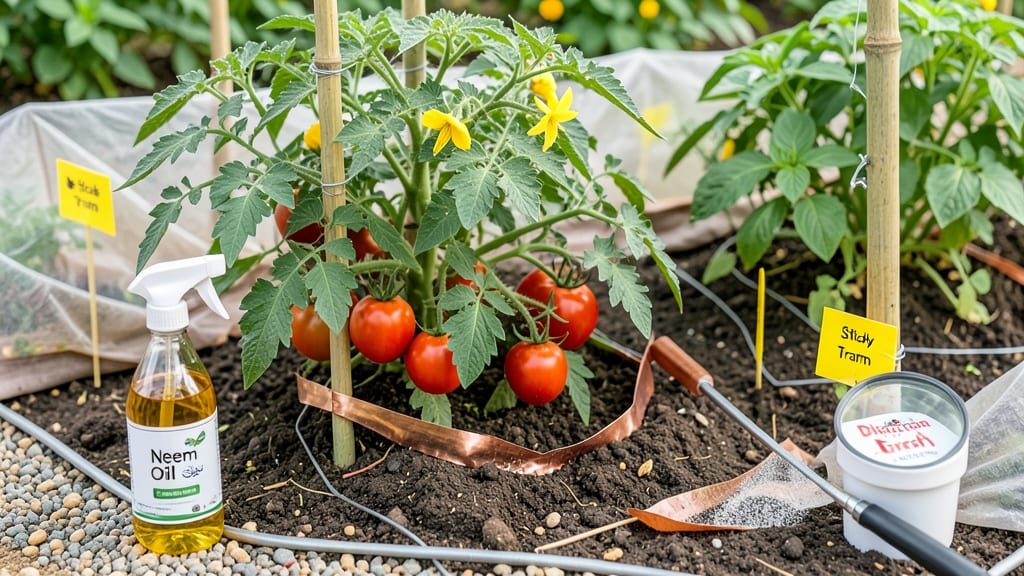
How to keep pests off tomato plants—before they turn your garden into a buffet—requires this barrier-spray-trap combo. 🌱 I’ve lost entire harvests to hornworms and aphids—until I layered these three defenses. The key? Acting before the pests arrive, not after they’ve moved in.
Start with physical barriers like row covers or collars around stems to block flying insects. Add neem oil sprays every 7-10 days as a deterrent, and set up yellow sticky traps to monitor (and catch) early infestations. This trio works even on stubborn blight-prone varieties.
By midseason, your plants will stay lush and productive, not skeletonized by caterpillars or spotted with fungal lesions. The traps reveal what’s attacking, so you can adjust sprays—no more guessing games or last-minute panic.
Works for container tomatoes, raised beds, or in-ground gardens—just scale the traps and sprays to your plot size. Here’s the exact routine I follow to keep my harvests blemish-free.
📚 In This Guide
- What you need
- Instructions
- Tips and common mistakes
- Wrapping up and next steps
What you need
- ● Barrier Method: 1–2 rolls landscape fabric (3–4 ft wide, 50–100 ft long) or row covers (lightweight, breathable fabric).
- ● Sturdy stakes or hoops (bamboo, metal, or wooden) – 6–12 per 10 ft row, depending on plant size.
- ● Garden twine or zip ties (for securing fabric).
- ● Spray Solutions: 1–2 spray bottles (16–32 oz, with fine-mist nozzles).
- ● Neem oil (100% cold-pressed, 16–32 oz bottle).
- ● Insecticidal soap (7–16 oz bottle, must be labeled for garden use).
- ● Diatomaceous earth (food-grade) (1–2 lb bag, apply dry only).
- ● Garlic or hot pepper spray ingredients (4–6 fresh garlic cloves + 1–2 habanero peppers or 1 tbsp cayenne powder).
- ● Trap Systems: Yellow sticky traps (1–2 per 10 ft row, 6x6" or larger).
- ● Small plastic cups or containers (6–8 oz, for beer/sugar traps).
- ● Beer or sugar water (1 cup beer or 1 tbsp sugar + 1 cup water per trap).
- ● Crushed eggshells or coffee grounds (1–2 cups, for slug/bait traps).
- ● Companion plants: Basil, marigolds, or nasturtiums (3–5 plants per 10 ft row).
- ● Beneficial nematodes (for soil-dwelling pests, 1–2 lbs per 100 sq ft).
- ● Ladybugs or lacewing larvae (natural predators, 50–100 per acre).
- ● Garden hose with spray nozzle (for rinsing pests off plants).
- ● Pruning shears (to remove heavily infested leaves).
Step-by-step instructions for a natural tomato pest defense system
Here's my battle-tested combo of barriers, sprays, and traps that keeps tomato plants thriving without toxic chemicals.
🌱 Step 1: Create Physical Barriers to Block Entry
Start with row covers or collars made from lightweight fabric (like floating row cover) to prevent flying insects like whiteflies and aphids from landing. I cut 6-inch tall collars from cardboard tubes and bury them 2 inches deep around young plants—this stops cutworms from chewing stems at soil level. For larger plants, drape fine mesh netting over the entire plant, securing it with clips or stakes.
Here's the thing—these barriers work best when combined. I use row covers during early growth when plants are most vulnerable, then switch to netting once flowers appear. The key is secure edges—if gaps exist, pests will find them. Check daily for tears or lifted edges, especially after rain or wind.
💧 Step 2: Apply Homemade Sprays for Immediate Deterrence
Mix 1 tablespoon of neem oil with 1 teaspoon of dish soap in 1 quart of water and spray early in the morning when pests are least active. Neem disrupts insect life cycles while the soap helps it stick to leaves. I add 1 crushed garlic clove to the mix for extra repellent power—it releases sulfur compounds that deter chewing insects. Spray every 5-7 days or after rain, focusing on undersides of leaves where pests hide.
Don't skip the soil drench—pour half the mixture into the soil around the base. This targets root-feeding larvae and prevents future infestations. I like to spray at dusk because the scent lingers overnight when many pests are most active. If you see holes in leaves or sticky residue (aphid honeydew), it's time to reapply immediately.
✂️ Step 3: Set Up Traps to Monitor and Reduce Populations
Place yellow sticky traps near plants to catch whiteflies, aphids, and fungus gnats before they multiply. I hang 4-inch square traps on stakes at plant height and replace them weekly—over time, you'll see patterns in which pests dominate. For hornworms, I use pink or purple traps baited with fermented fruit juice (mix 1 cup apple cider vinegar with 1 cup water and a tablespoon of sugar). These traps lure adult moths away from laying eggs.
Here's where it gets strategic: rotate trap locations every few days. Pests adapt to stationary traps, so moving them keeps effectiveness high. I also crush any trapped pests immediately to avoid attracting more. If you find more than 5 insects per trap per day, it's time to escalate with beneficial nematodes for soil-dwelling pests.
☀️ Step 4: Maintain Plant Health to Deter Pests Naturally
Healthy tomato plants resist pests better than stressed ones. I water deeply at the base (not overhead) to prevent fungal diseases that attract pests like hornworms and spider mites. Use mulch (like straw or grass clippings) to retain moisture and suppress weeds, which harbor pest eggs. I also rotate crops annually—never plant tomatoes in the same spot two years in a row—to break pest life cycles.
Watch for nutrient deficiencies (like yellowing leaves) that weaken plants. A balanced fertilizer (like 5-5-5) applied every 4-6 weeks keeps them strong. I swear by companion planting too—basil, marigolds, and nasturtiums planted nearby repel pests naturally. The marigolds release a scent that deters nematodes, while basil masks the tomato scent that attracts fruit flies.
Tips & tricks for a natural tomato pest defense system
These battle-tested strategies will help you create an impenetrable defense for your tomato plants without harsh chemicals.
Layering Your Barriers: The secret to effective pest control lies in combining barriers—don't rely on just one. I start with row covers for young plants to block flying insects completely, then transition to fine mesh netting as they mature. For extra protection, I reinforce the 6-inch cardboard collars with aluminum foil at the bottom to create a physical barrier against cutworms. This layered approach creates multiple defense lines that pests simply can't penetrate.
Spray Timing is Everything: When applying your homemade neem oil spray, timing matters more than you might think. The instructions call for morning application to catch pests when they're least active, but I've found that dusk application works even better for me—it allows the spray to linger overnight when many pests are most active. Always focus on the undersides of leaves where pests hide, and don't forget to soil drench half the mixture to target root-feeding larvae. The key is consistency: stick to the every 5-7 days schedule unless you see signs of infestation.
Trap Rotation Strategy: Here's what nobody tells you about traps—they lose effectiveness if left in one spot too long. I rotate my yellow sticky traps every 3-4 days to prevent pests from learning to avoid them. For hornworm traps, I change the baited fruit juice every other day to maintain its lure. When you see more than 5 insects per trap per day, it's time to escalate—this is your signal to introduce beneficial nematodes for soil-dwelling pests. I keep a small container of nematodes on hand specifically for this purpose, and they've saved my plants from severe infestations.
Plant Health as Your First Line of Defense: The most effective pest deterrent is a healthy plant. I've learned this the hard way after ruining three batches of tomatoes due to nutrient deficiencies. Pay special attention to yellowing leaves—this is often the first sign of stress that attracts pests. When applying your 5-5-5 balanced fertilizer, water it in immediately to prevent root burn. And don't overlook the power of companion planting: I always plant basil between my tomato rows as it naturally repels pests while enhancing flavor. The marigolds I plant nearby release compounds that deter nematodes, creating a natural pest-repelling ecosystem.
Pro Tips for Keep Pests Off Tomato Plants
- These battle-tested strategies will help you create an impenetrable defense for your tomato plants without harsh chemicals.
- Layering Your Barriers: The secret to effective pest control lies in combining barriers—don't rely on just one.
- Spray Timing is Everything: When applying your homemade neem oil spray, timing matters more than you might think.
Frequently asked questions
Got questions about keeping pests away from your tomato plants? You’re not alone!
Here are some of the most common concerns—and straightforward answers to help you grow healthy, thriving tomatoes without unwanted visitors.
What’s the best natural pest control for tomato plants?
Combine barriers (like row covers or collars), sprays (neem oil or insecticidal soap), and traps (yellow sticky cards for whiteflies). For a hands-off approach, plant basil, marigolds, or garlic nearby—they repel pests naturally while boosting flavor!
When should I start protecting my tomato plants from pests?
Begin at planting time with physical barriers (like tomato cages wrapped in fine mesh). Once seedlings sprout, monitor daily for early signs (chewed leaves, tiny eggs). Prevention is easier than treatment! Start sprays if pests appear, but act fast—some, like aphids, multiply in days.
Are chemical pesticides safe for tomato plants?
Use organic-approved pesticides (like pyrethrin or horticultural oil) sparingly—follow label instructions! Avoid synthetic chemicals if you plan to eat the tomatoes raw (some leave residues). For edible gardens, preventive methods (companion planting, pruning) are your best bet.
What do I do if pests keep coming back despite my efforts?
Rotate your methods! Try crop rotation (don’t plant tomatoes in the same spot yearly), introduce beneficial insects (ladybugs or lacewings), or switch sprays (e.g., alternate neem oil with a garlic spray). Check soil health too—weak plants attract pests. If infestations persist, consult a local extension service for tailored advice.
Can I still harvest tomatoes if pests are already on the plant?
Yes! Remove heavily damaged fruit to save energy for healthy tomatoes. For minor issues (like a few aphids), wash tomatoes thoroughly before eating. Focus on protecting new growth—pests target tender leaves and stems first. If using sprays, apply 3 days before harvest to ensure safety.
Wrapping up and next steps
Keeping pests away from your tomato plants doesn’t have to be a battle—just a smart, proactive strategy! By combining physical barriers, natural sprays, and trap methods, you’ll protect your harvest while staying eco-friendly. Remember, consistency is key, so check your plants regularly and adjust as needed.
You’ve got this! 🌱 Now that you’re armed with these tips, head to your garden and give your tomato plants the care they deserve. Happy gardening—and enjoy those juicy, pest-free tomatoes all season long!