
Planting
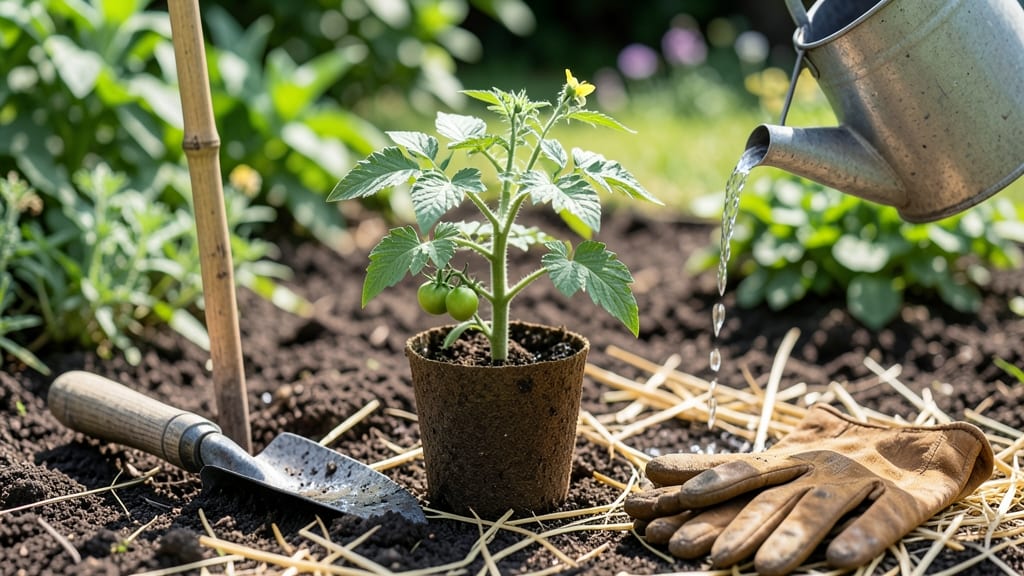
Planting tomato plants outside transforms your garden from ordinary to extraordinary. 🌱 The secret isn't just digging a hole—it's creating the perfect sunny spot with rich soil, proper spacing, and the right timing. I've learned that even the most tender seedlings thrive when you follow these simple but critical steps.
Start by choosing a location with at least 6-8 hours of sunlight daily—tomatoes are sun worshippers. Amend the soil with compost to improve drainage, and avoid planting too deep; bury only up to the first set of leaves to prevent disease.
My first year, I planted too shallow, and the roots struggled—now I make sure they're snug in the soil. After planting, water deeply to settle the roots, then mulch to retain moisture and keep soil temperatures steady. Within 2-3 weeks, you'll see new growth as the plants adjust.
The key is consistency: regular watering, support for vines, and watching for pests early on. This method works for both bush and vine varieties, and the results are worth the effort. Before you know it, you'll be harvesting tomatoes that taste like summer in every bite.
📚 In This Guide
- What you need
- Instructions
- Tips and common mistakes
- Wrapping up and next steps
What you need
- ● Tomato plants: 3–6 healthy seedlings (choose disease-resistant varieties if needed).
- ● Garden soil or potting mix: Well-draining, nutrient-rich soil (amend with compost for extra fertility).
- ● Garden space: A sunny spot (6–8+ hours of sunlight daily) with at least 18–24 inches of spacing between plants (or 36+ inches for indeterminate varieties).
- ● Fertilizer: Balanced organic fertilizer (e.g., 10-10-10) or compost tea for a nutrient boost.
- ● Watering can or hose: With a gentle spray nozzle to avoid disturbing roots.
- ● Garden stakes or cages: 5–6 ft tall (for indeterminate varieties) or 3–4 ft (for determinate).
- ● Mulch: Straw, grass clippings, or shredded leaves (2–3 inches thick) to retain moisture.
- ● Pruning shears (for trimming suckers and dead leaves).
- ● Plant ties (soft fabric strips) to secure vines to stakes.
- ● Drip irrigation system (for consistent watering).
- ● Epsom salt (1 tbsp per plant every 2–3 weeks for magnesium boost).
- ● Row covers or shade cloth (if planting early or in hot climates).
Step-by-Step instructions for planting tomato plants outside
Here's how I ensure my tomato plants thrive from day one in the garden.
🪴 Step 1: Choose the Perfect Planting Spot
Pick a location that gets at least 6-8 hours of direct sunlight daily—tomatoes are sun worshippers. I avoid spots where last year's tomatoes grew to prevent soil-borne diseases from lingering. The soil should drain well; if it stays soggy after rain, amend it with compost or build a raised bed.
Check the spot in the morning and afternoon. If the area gets hotter than 90°F in peak summer, provide afternoon shade with a lightweight shade cloth. You'll notice leaves wilting or turning yellow if the heat is too intense—this is your plant's distress signal.
🌱 Step 2: Prepare the Soil and Dig Holes
Loosen the soil to a depth of 12-18 inches with a garden fork or tiller. Tomatoes need room to spread their roots, so don't skimp on this step. Mix in 2-3 inches of compost or well-rotted manure to enrich the soil naturally. Avoid fresh manure—it burns tender roots.
Dig holes slightly larger than the root balls of your tomato plants. If you're planting deep, bury the stem up to the first set of leaves. This encourages stronger root growth and more stable plants. Gently remove plants from their containers, tease the roots apart if they're circling, and place them in the holes.
☀️ Step 3: Plant and Water Deeply
Fill the holes with soil, pressing gently around the base of each plant to remove air pockets. Water deeply right after planting to settle the soil and encourage root contact. Use 1-2 gallons of water per plant, letting it soak in slowly. You'll see the soil surface darken as it absorbs moisture—this tells me the water reached the roots.
Mulch around the base of each plant with 2-3 inches of straw or shredded leaves to retain moisture and suppress weeds. Keep the mulch a few inches away from the stem to prevent rot. Water again lightly the next day to help the plants establish without shocking them.
✂️ Step 4: Provide Support and Monitor Growth
Install tomato cages, stakes, or trellises immediately after planting. Tomatoes grow fast, and waiting until they're top-heavy can lead to broken stems. I use sturdy bamboo stakes for indeterminate varieties and cages for smaller determinate types. Secure the support gently so it doesn't damage the stems as the plant grows.
Watch for new growth in 5-7 days. You'll notice the first true leaves emerging as small, pointed shapes. Keep the soil consistently moist but not soggy—tomatoes are drought-sensitive. If leaves start curling or wilting, water deeply and check the soil moisture again.
🌿 Step 5: Maintain and Protect Through the Season
Fertilize lightly every 3-4 weeks with a balanced, water-soluble fertilizer. I use a 10-10-10 mix diluted to half strength to avoid burning the plants. Prune suckers (the small shoots that form in the joint between the stem and branches) regularly to direct energy to fruit production instead of foliage.
Keep an eye out for pests like hornworms or aphids. Handpick larger pests or spray with neem oil for a natural solution. If you notice yellowing leaves, it might be a sign of overwatering or nutrient deficiency. Adjust your care routine based on what you observe—your plants will tell you what they need if you listen closely.
Tips & tricks for perfect tomato planting
These little details make all the difference between struggling vines and thriving tomato plants.
Sunlight Strategy: The 6-8 hours of direct sunlight is non-negotiable, but here's what I've learned: morning sun is gentler, while afternoon sun can scorch tender leaves. If your spot gets intense afternoon heat (especially above 90°F), install a shade cloth that blocks 30-50% of light during peak hours. This prevents sunburn while still letting enough light through for photosynthesis. I test shade needs by watching for leaf wilt—if leaves droop by midday, it's time for shade.
Soil Prep Secret: When loosening soil to 12-18 inches in Step 2, don't just dig—score the soil vertically with your fork. This creates channels for roots to grow deeper without competing with surface roots. For clay-heavy soil, mix in 2-3 inches of compost right where the roots will spread (about 6 inches from the stem). The compost breaks up clay while providing nutrients exactly where new roots need them most.
Watering Wisdom: That first deep watering with 1-2 gallons per plant in Step 3 is crucial, but timing matters too. Water in the morning so leaves dry completely by evening—this prevents fungal diseases. I use a soaker hose for the initial watering because it delivers moisture slowly to the roots without disturbing the soil. After planting, I set up a drip irrigation system on a timer for consistent moisture without overwatering.
Support System: Installing support in Step 4 isn't just about preventing broken stems—it's about airflow. Crowded plants develop more diseases. For indeterminate varieties, use bamboo stakes (they're sturdy and biodegradable) and tie the main stem loosely with soft plant ties every 12 inches. For cages, choose ones with at least 18" diameter—smaller cages restrict growth and make harvesting difficult. I always add support before the first true leaves appear because tomatoes grow surprisingly fast once they get going.
Pro Tips for Plant Tomato Plants Outside
- These little details make all the difference between struggling vines and thriving tomato plants.
- Sunlight Strategy: The 6-8 hours of direct sunlight is non-negotiable, but here's what I've learned: morning sun is gentler, while afternoon sun can scorch tender leaves.
- Soil Prep Secret: When loosening soil to 12-18 inches in Step 2, don't just dig—score the soil vertically with your fork.
Frequently asked questions
Got questions about planting tomato plants outside? You’re not alone—growing tomatoes can feel like a balancing act between sunshine, soil, and patience. Below, we’ve rounded up the most common questions to help you avoid pitfalls and grow like a pro.
When is the best time to plant tomato plants outdoors?
Plant tomato seedlings after the last frost date in your area and when soil temperatures reach at least 50°F (10°C). For most regions, this means late spring (May–June). Use a frost cloth if nighttime temps dip below 40°F (4°C) to protect young plants.
Can I plant tomatoes directly in the ground, or should I start indoors first?
Both work! For a head start, sow seeds indoors 6–8 weeks before the last frost and transplant seedlings outside. If you prefer direct sowing, plant seeds in warm soil (60°F/15°C+) after frost risk passes. Just be patient—direct-sown tomatoes take longer to mature.
Why are my tomato plants wilting or turning yellow after planting?
Wilting often signals transplant shock or underwatering. Yellow leaves may mean overwatering (root rot) or nutrient deficiency. Check soil moisture daily, mulch to retain moisture, and fertilize with a balanced tomato feed if leaves look pale. Give plants a week to adjust before stressing them further.
How close can I plant tomato plants together?
Space depends on the variety:
- Determinate (bush) tomatoes: 18–24 inches apart, 3–4 feet between rows.
- Indeterminate (vining) tomatoes: 24–36 inches apart, 4–5 feet between rows.
What if my garden doesn’t get full sun? Can tomatoes grow in partial shade?
Tomatoes thrive in 6–8+ hours of direct sunlight daily. In partial shade (<4 hours), expect smaller yields and fewer fruits. If your spot is shady, choose dwarf or cherry varieties (like ‘Tiny Tim’) and supplement with grow lights if needed. South-facing walls or raised beds can maximize sunlight.
Wrapping up and next steps
Planting tomato plants outside is a rewarding journey that starts with the right location, soil prep, and a little patience! 🌱 By choosing a sunny spot, enriching your soil, and spacing your plants properly, you’re setting the stage for a bountiful harvest.
Remember, consistency in watering and care will help your vines thrive—so don’t hesitate to get your hands dirty and enjoy the process.
Now that you’re ready to plant, why not take the next step? Research companion plants like basil or marigolds to boost your garden’s productivity, or explore organic fertilizers to keep your tomatoes flourishing. Happy gardening—your future salads are waiting! 🍅✨