
Neem Oil
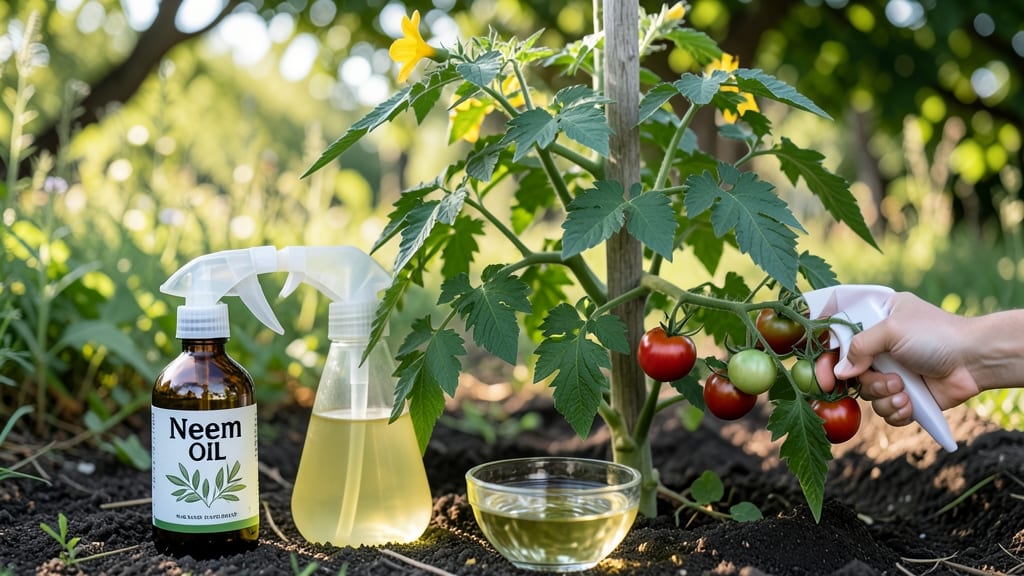
Neem oil for tomato plants is a powerful organic solution that deters pests like aphids and whiteflies while preventing fungal diseases such as early blight by disrupting their life cycles and growth. Always dilute it correctly and apply in the evening for maximum effectiveness.
Neem oil works wonders for tomato plants because it contains natural compounds like azadirachtin, which confuses insects and stops them from feeding or reproducing. 🌱 For fungal issues, its fatty acids break down the protective membranes of spores, preventing them from spreading.
Many gardeners swear by it because it's a chemical-free way to protect their plants while also improving soil health over time. The key is consistency—regular applications keep pests and diseases at bay without harming your tomatoes.
When using neem oil, remember to mix it with water and a drop of dish soap to help it stick to plant surfaces. Apply it in the evening to avoid harming beneficial insects like bees, and always wear gloves to protect your skin.
This method isn't just effective—it's also safer for your family and the environment compared to synthetic pesticides.
💡 In This Article
- How Neem Oil Works Against Tomato Plant Pests and Fungi
- Step-by-Step Guide: Applying Neem Oil to Tomato Plants
How neem oil works against tomato plant pests and fungi
The real magic of neem oil lies in its chemical complexity, particularly azadirachtin, a compound that acts like a biological disruptor for pests. This natural compound interferes with insects' hormonal systems, preventing them from molting properly and ultimately stopping their life cycles.
For example, aphids exposed to neem oil often fail to reproduce, while whiteflies lose their ability to feed effectively. The oil also contains salannin and nimbin, which act as feeding deterrents, making pests avoid treated plants entirely. 🔥
When targeting fungal diseases like early blight, neem oil's fatty acids play a crucial role. These acids penetrate fungal cell membranes, causing them to rupture and preventing spore germination. The oil creates a protective barrier on plant surfaces that lasts for several days, even after rain.
Unlike chemical fungicides, neem oil doesn't leave harmful residues—it simply disrupts the fungal growth process at a cellular level. Studies show it can reduce early blight severity by up to 70% when applied preventatively.
What makes neem oil particularly valuable is its systemic properties. When applied correctly, the oil gets absorbed into plant tissues, providing protection not just on the surface but throughout the plant. This means even hidden pests or fungal spores in the foliage get exposed to its active compounds.
The oil also stimulates the plant's natural defenses, making tomatoes more resilient against future attacks. Organic growers love this because it offers broad-spectrum protection without synthetic chemicals.
However, the effectiveness depends on proper application. Neem oil works best when diluted to 1-2% concentration (about 1-2 tablespoons per gallon of water) and applied during early evening to avoid harming bees and other pollinators.
The oil's strong aroma also acts as a natural repellent, keeping pests away for up to 2-3 weeks after application. This dual action—chemical disruption and sensory deterrence—is why neem oil remains a garden staple.
For fungal diseases, timing is everything. Apply neem oil at the first sign of infection, before spores have a chance to spread. The oil's ability to break down fungal membranes means it can stop existing infections from worsening, not just prevent new ones.
This makes it especially useful during humid growing seasons when fungal diseases thrive. The key is consistency—regular applications every 7-14 days create a protective cycle that keeps tomato plants healthy.
What most gardeners don't realize is that neem oil also improves soil health over time. As it breaks down, it enriches the microbial life in the soil, creating a more balanced ecosystem that naturally resists pests and diseases.
This holistic approach is why organic farmers consider neem oil one of their most valuable tools. 🌱
The science behind neem oil's effectiveness is well-documented, with research showing it can control up to 90% of common tomato pests when used correctly. Its multi-faceted action—disrupting hormones, deterring feeding, and breaking down fungal structures—makes it far more versatile than single-purpose pesticides.
This is why it's trusted by both home gardeners and large-scale organic farms alike.