
Container Gardens
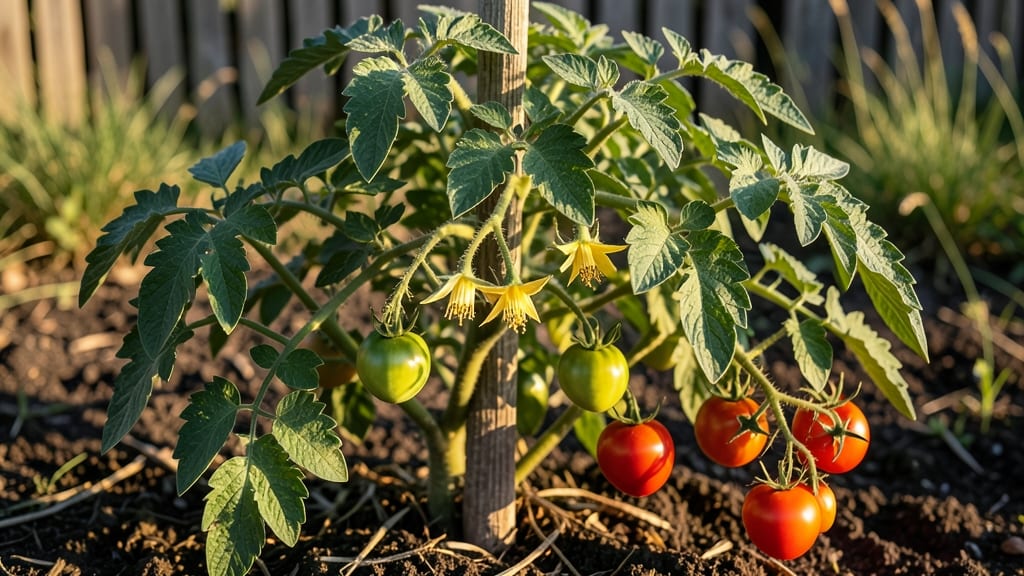
Counting down from seed to sun-ripened tomato is all about timing—tomato growing time depends on variety, climate, and whether you start indoors or sow directly.
My heirloom 'Brandywine' takes 90 days from seed to harvest, while cherry tomatoes like 'Sweet 100' mature in 65 days—and that window shifts with your zone and spring temperatures.
The magic starts indoors 6-8 weeks before last frost, where seeds sprout in 5-10 days under warm mats.
Transplant seedlings outside 2-3 weeks after soil warms to 50°F, and expect flowers 4-6 weeks later—then brace for the fruit-setting phase, where heat and humidity decide if those blossoms turn into tomatoes. A simple chart tracks these milestones, so you never guess when to thin or prune.
By mid-summer, you’ll be harvesting glossy red slices straight from the vine, with the right variety and care cutting that 65-90 day timeline to your exact growing season.
The key? Matching plant vigor to your climate—some zones rush through the cycle in 70 days, while cooler areas stretch it to 100+.
Whether you’re racing against short summers or extending the season with row covers, this timeline keeps you ahead of pests, bolting, and the dreaded "why aren’t my tomatoes ripening?" moment. Let’s break it down by stage—so you’re planting, not panicking.
📚 In This Guide
- What you need
- Instructions
- Tips and common mistakes
- Wrapping up and next steps
What you need
- ● Container: At least 5-gallon pots (or larger, 10+ gallons for indeterminate varieties). Ensure pots have drainage holes at the bottom.
- ● High-quality potting mix: 10-12 lbs of sterile, well-draining mix (avoid garden soil—it compacts!). Look for blends labeled for vegetable gardening.
- ● Tomato seeds or seedlings: Seeds: 3-5 seeds per container (thin to the strongest seedling). Choose determinate (bush) or indeterminate (vining) varieties based on your space.
- ● Seedlings: 1-2 healthy, disease-free plants per container (transplant when they’re 4-6 inches tall).
- ● Fertilizer: Balanced fertilizer (10-10-10 or 5-5-5): 1 tbsp per plant at planting.
- ● Tomato-specific fertilizer (high in potassium & phosphorus): Use every 2-3 weeks after flowering.
- ● Stakes or cages: 1-2 per plant (bamboo stakes for indeterminate varieties or 5-6 ft tomato cages for support).
- ● Watering can or hose with gentle nozzle: 1-2 gallons per watering (keep soil consistently moist but not soggy).
- ● Mulch: 2-3 inches of organic mulch (straw or shredded leaves) to retain moisture and suppress weeds.
- ● Grow lights: If starting seeds indoors, a full-spectrum LED grow light (12-16 hours/day) for seedlings.
- ● Time-release fertilizer tablets: Place 1-2 tablets in the bottom of the pot for slow-release nutrients.
- ● Succession plant tags: Label pots with variety names and planting dates to track growth stages.
- ● Pruning shears: For indeterminate varieties, trim suckers (side shoots) to encourage fruit production.
- ● Drip irrigation kit: Automates watering and saves time (great for busy gardeners!).
How to track and optimize your tomatoes' 65-90 day growth cycle
Mastering the timing of tomato growth transforms guesswork into a predictable harvest—here's how to work within the plant's natural rhythm.
Calculate Your Last Frost Date and Work Backwards
Find your average last frost date in your USDA hardiness zone—this is your absolute deadline. For a 65-day variety, subtract 90 days from that date to determine your ideal transplant date. For 90-day varieties, subtract 120 days. I always add a 10-day buffer to account for unexpected delays like cool springs.
Most gardeners overestimate their timeline by starting too early. If you plant seeds 60 days before your last frost, your seedlings will outgrow their containers and become root-bound by transplant time. Use a planting calendar or online tool to input your zip code for precise dates—this eliminates the guesswork entirely.
Start Seeds at the Correct Time for Your Climate Zone
In zones 5-7, begin seeds indoors 8-10 weeks before your last frost. In warmer zones 8-10, you can direct-sow seeds 4-6 weeks before the last frost or start indoors 6-8 weeks earlier. The key is to have sturdy seedlings with 4-6 true leaves ready to transplant when nighttime temperatures stay above 55°F consistently.
I test soil temperature with a thermometer—seeds won't germinate well below 60°F. If your indoor space runs cool, use a seedling heat mat to maintain 75-85°F during germination. Watch for first sprouts in 5-14 days depending on variety and temperature. The moment you see cotyledons (those first tiny leaves), move seedlings to the brightest light source immediately.
Monitor Growth Stages and Adjust Care Accordingly
Tomatoes progress through three critical growth phases within the 65-90 day window. Phase 1 (0-30 days) focuses on seedling establishment—harden off seedlings for 7-10 days before transplanting. Phase 2 (30-60 days) is vegetative growth where plants develop strong stems and leaf canopies. This is when you should prune suckers to direct energy upward.
Phase 3 (60-90 days) is flowering and fruiting. You'll notice first flowers around day 50, followed by fruit set 7-14 days later. At this stage, reduce nitrogen (stop high-nitrogen fertilizers) and increase potassium and phosphorus to encourage fruiting. Watch for first green tomatoes around day 70—this is your 65-day marker for early varieties.
Extend the Season for Late Varieties Beyond 90 Days
For 90-day+ varieties, extend the season by planting in late spring (after soil reaches 60°F) and using season-extending techniques. I cover plants with floating row covers at night to protect from below 50°F temperatures. For heirloom varieties that take 90-120 days, start seeds indoors 10-12 weeks before last frost and transplant only after all danger of frost has passed.
In cooler climates, use black plastic mulch to warm soil 5-10°F faster in spring. For fall harvests, plant heat-tolerant varieties like 'Celebrity' or 'Better Boy' 60 days before first frost—they'll ripen before cold sets in. Track average nighttime temperatures—tomatoes need above 55°F to set fruit consistently.
Harvest at Peak Ripeness to Maximize Flavor and Yield
Harvest early varieties the moment they turn fully colored—waiting too long risks cracking from uneven watering. For heirlooms, allow full vine ripening (leave on plant until deep red/yellow/orange). I test ripeness by gentle squeezing—if the tomato gives slightly, it's ready. Harvest in morning hours when temperatures are coolest to preserve quality.
After harvest, prune remaining vines to 6-8 inches tall to encourage new growth for a second flush of tomatoes. In warm climates, this can produce additional fruit before frost. Record your actual days to harvest—this data helps refine next year's planting schedule. For example, if your 65-day variety took 72 days, adjust future plantings accordingly.
Tips & tricks for mastering your tomatoes' 65-90 day growth cycle
Timing is everything when it comes to growing tomatoes—here's how to optimize each phase for predictable success.
Climate Zone Precision: The 8-10 week window for zones 5-7 is non-negotiable, but here's the trick: verify your last frost date using your local cooperative extension service rather than generic online calculators. I've seen discrepancies of up to 10 days between different sources—this directly impacts your 90-day transplant deadline. For zones 8-10, direct sowing 4-6 weeks before last frost only works if your soil stays above 60°F consistently. I test with a soil thermometer every morning before planting.
Seedling Heat Management: That 75-85°F germination range is critical, but most household environments fall short. I use a combination of a seedling heat mat (which maintains bottom heat) and a clear plastic dome over the tray to create a mini greenhouse effect. The moment you see those first cotyledons appear (usually within 5-14 days), remove the dome immediately to prevent damping-off disease—this is when seedlings rot at the stem.
Phase Transition Cues: The shift from Phase 2 to Phase 3 is subtle but crucial. Around day 50 when you notice first flowers, switch your fertilizer ratio to 5-10-10 (potassium to phosphorus) immediately. I also recommend applying a calcium supplement at this stage to prevent blossom-end rot, which can devastate your crop during the critical 60-90 day window. Look for the first green tomatoes around day 70 as your 65-day marker—this confirms you're on track.
Temperature Buffer Zones: The instructions mention 55°F as your minimum nighttime temperature, but I've found tomatoes actually perform best when nighttime temps stay between 60-70°F. Below 50°F causes flower abortion, while above 80°F can lead to sun scald. Use floating row covers at night during cool periods—they raise temperatures by 5-10°F without creating a greenhouse effect that would overheat your plants during the day.
Pro Tips for Tomato Growing Time
- Timing is everything when it comes to growing tomatoes—here's how to optimize each phase for predictable success.
- Climate Zone Precision: The 8-10 week window for zones 5-7 is non-negotiable, but here's the trick: verify your last frost date using your local cooperative extension service rather than generic online calculators.
- Seedling Heat Management: That 75-85°F germination range is critical, but most household environments fall short.
Frequently asked questions
Got questions about growing tomatoes in containers? You’re not alone! Here are some of the most common concerns—and quick answers—to help you grow a thriving harvest.
How long does it take for tomato seeds to sprout?
Tomato seeds typically sprout in 5–14 days after planting, depending on temperature and moisture. Keep the soil warm (around 70–85°F) and consistently damp. If nothing appears after two weeks, gently check for seeds—some may have been buried too deep or need a little extra warmth.
Can I speed up the tomato growing time in a container?
Yes! Start seeds indoors 6–8 weeks before your last frost date under grow lights. Use fast-maturing varieties (like ‘Early Girl’ or ‘Patio Princess’), provide 10+ hours of sunlight daily, and fertilize with a balanced tomato feed every 2–3 weeks. Pruning suckers and harvesting early can also encourage faster fruit production.
What’s the best temperature for container-grown tomatoes?
Tomatoes thrive in 70–85°F daytime temps and 60–70°F at night. Avoid planting until soil is at least 55°F—cold soil slows growth and increases disease risk. If nights dip below 50°F, use row covers or move containers to a sheltered spot. Heatwaves? Provide afternoon shade to prevent sunscald.
Why aren’t my container tomatoes ripening?
Unripened tomatoes often signal insufficient sunlight, water stress, or poor nutrition. Check for 6+ hours of direct sun daily and water deeply (1–2 inches per week). Yellow leaves? Boost nitrogen. Blossoms dropping? It could be temperature swings or a lack of phosphorus. Try hand-pollinating flowers with a soft brush if needed.
Can I grow tomatoes in containers year-round?
Not in most climates! Tomatoes are warm-season crops and need frost-free conditions. In mild winters (zones 9–11), you might extend the season with row covers or greenhouses. Otherwise, save seeds from your best tomatoes for next year’s spring or summer planting—just store them in a cool, dry place.
Wrapping up and next steps
Growing tomatoes in containers is a rewarding journey that delivers fresh, homegrown flavor in just 65-90 days—perfect for small spaces and busy schedules! 🌱 With the right variety, soil, and care, you’ll enjoy a bountiful harvest without the hassle of a full garden.
Now that you’re armed with tips and answers to common questions, it’s time to roll up your sleeves and plant those seeds!
Ready to dive in? Start by gathering your supplies and setting up your container garden today—your first ripe tomato is just two months away! 🍅