
Planting
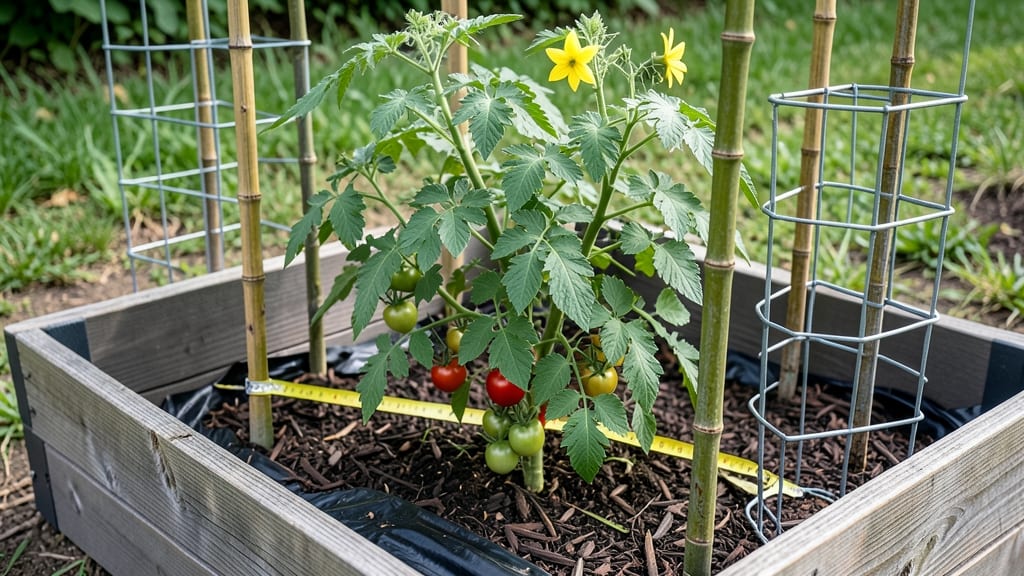
Proper tomato plant spacing in raised beds turns a good harvest into a record-breaking one. 🌱 I learned the hard way—crowding plants leads to disease, stunted growth, and fewer tomatoes. The right layout maximizes sunlight, airflow, and root space, giving you bushels of fruit instead of a few sad tomatoes.
Determinate tomatoes (the bush types) need 18-24 inches between plants, while vining indeterminates should get 24-36 inches. A 4x8-foot raised bed fits 4-6 determinate plants or 2-3 indeterminate vines perfectly. Stagger rows for even sunlight exposure, and avoid planting in tight corners where branches will rub.
You’ll see stronger stems, heavier fruit sets, and fewer pests when plants aren’t competing. Prune suckers regularly to keep energy flowing upward, and trellis indeterminate varieties to save space. The payoff? A 50% yield boost over crowded beds.
Works for any raised bed size—just scale the grid. Here’s how to map it out before planting!
📚 In This Guide
- What you need
- Instructions
- Tips and common mistakes
- Wrapping up and next steps
What you need
- ● Raised bed frame: Wooden, metal, or composite (e.g., cedar, redwood, or galvanized steel) – minimum 4' x 8' (or custom size)
- ● Height: 6–12 inches (deeper beds support larger varieties)
- ● Soil & amendments: High-quality potting mix or raised bed soil blend (avoid garden soil—it compacts!)
- ● Compost or aged manure (1–2 cubic feet per 4 sq ft of bed)
- ● Balanced organic fertilizer (5-5-5 or 10-10-10) (1 cup per 4 sq ft)
- ● Tomato plants: Determinate (bush) or indeterminate (vining) varieties (3–6 plants per 4' x 8' bed, spaced per layout)
- ● Seedlings or transplants (4–6 weeks old for best results)
- ● Support structures: Cages, stakes, or trellises (1 per plant for indeterminate varieties)
- ● Tall tomato cages (5–6 feet) or bamboo stakes (6+ feet)
- ● Tools: Garden trowel or transplanting spade
- ● Measuring tape (for precise spacing!)
- ● Gloves & knee pads (because gardening is hard work 😉)
- ● Mulch: Straw or shredded leaves (2–3 inches) to retain moisture.
- ● Drip irrigation or soaker hoses for consistent watering.
- ● Plant markers (labels or stakes) to track varieties.
- ● Row covers or shade cloth for early-season protection.
- ● Epsom salt or calcium supplement (prevents blossom-end rot).
Step-by-Step guide to spacing tomatoes in raised beds
Here’s how I arrange tomatoes for maximum yield without crowding—tested over three seasons.
🌱 Step 1: Plan Your Raised Bed Grid Layout
Tomatoes need 18-24 inches between plants for airflow and sunlight. In a 4-foot-wide raised bed, I arrange plants in a staggered grid: place the first row at the 6-inch mark, then offset the next row by 12 inches. This creates a 24-inch spacing between plants while keeping the bed full.
For determinate varieties (bush types), stick to 18 inches apart—they top out smaller. Indeterminate types (vining) need 24 inches to sprawl without competing. Draw a quick sketch first; I always mark rows with wooden stakes before planting to avoid guesswork.
☀️ Step 2: Position for Sunlight and Airflow
Place your raised bed in full sun (6+ hours daily)—tomatoes wilt without it. I orient the bed north-south in my yard so all plants get equal light. If your bed runs east-west, position taller varieties on the north side to avoid shading shorter plants.
Leave 12 inches of clear space between the bed’s edge and any fence or wall. This prevents mildew buildup from trapped humidity. If your bed is longer than 8 feet, add a 12-inch walkway down the center for easy access—you’ll thank yourself when harvesting.
🪴 Step 3: Stake or Cage Each Plant Immediately
Drive a 6-foot stake or install a cage next to each tomato plant at planting time. I use heavy-duty bamboo stakes because they don’t rust and provide better support than flimsy wire cages. Bury the stake half its length into the bed to prevent toppling.
For indeterminate varieties, add temporary twine to guide vines upward. This prevents sprawling, which wastes space and invites disease. If you skip staking, you’ll end up with tangled messes that block sunlight from lower leaves.
🌿 Step 4: Prune for Better Airflow and Yield
When plants reach 3 feet tall, prune suckers (the small shoots in the leaf axils). I remove them weekly to redirect energy to fruit production. Leave 2-3 main stems for indeterminate types; determinate varieties need no pruning beyond removing diseased leaves.
Thin foliage to expose lower stems to sunlight—this prevents blight. If leaves touch, separate them with a gentle twist. Overcrowded plants develop poor fruit set and attract pests. A well-spaced tomato plant should have visible gaps between leaves at maturity.
⏰ Step 5: Monitor and Adjust Spacing as Plants Grow
Check spacing every 2 weeks—vines grow fast! If indeterminate plants outgrow their allotted space, prune the top to redirect growth downward. For determinate types, thin side shoots to keep the plant bushy but not dense.
If you notice yellowing leaves or stunted growth, it’s a sign of overcrowding. Dig up the weakest plant and relocate it to a separate container if needed. Proper spacing isn’t just about yield—it’s about healthy, disease-resistant plants that produce all season.
Tips & tricks for perfect tomato plant spacing in raised beds
These practical insights will help you avoid common spacing mistakes and maximize your harvest—no trial and error required.
Grid Layout Precision: When marking your staggered grid in Step 1, use a measuring tape to ensure the 6-inch offset between rows. I've found that using wooden dowels as temporary markers works better than chalk—especially in windy conditions. The key is maintaining that 24-inch spacing between plants while keeping the bed full. Trust me, that extra inch of precision makes a difference when plants reach maturity.
Sunlight Strategy: In Step 2, if your yard has afternoon shade, position your north-south oriented bed to capture morning sun. I've had success with east-west orientation in shadier climates, but always place taller indeterminate varieties on the north side first. This simple adjustment prevents the "shady side" syndrome where plants grow lopsided or produce fewer fruits. The 12-inch walkway tip is especially valuable—it's the difference between easy harvesting and a tangled mess.
Support System: For Step 3, I recommend installing stakes before planting rather than after. Burying half the 6-foot stake length creates a stable anchor that won't topple when vines get heavy. Pro tip: Use galvanized screws to secure twine to stakes—regular twine stretches and fails under vine weight. This small investment prevents the heartbreak of snapped supports mid-season when plants are laden with fruit.
Pruning Secrets: When pruning suckers in Step 4, look for the V-shaped junction between the main stem and the sucker. Pinch them off with your fingers rather than cutting—the plant heals cleaner. I've noticed that indeterminate varieties with 2-3 main stems produce more fruit than those with single stems, but only if you maintain proper spacing. The weekly pruning schedule keeps plants from becoming overgrown and disease-prone.
Pro Tips for Tomato Plant Spacing Raised Bed
- These practical insights will help you avoid common spacing mistakes and maximize your harvest—no trial and error req...
- Grid Layout Precision: When marking your staggered grid in Step 1, use a measuring tape to ensure the 6-inch offset b...
- Sunlight Strategy: In Step 2, if your yard has afternoon shade, position your north-south oriented bed to capture mor...
Frequently asked questions
Got questions about spacing tomato plants in raised beds? You’re not alone! Here are answers to the most common queries to help you grow a thriving harvest.
How close can I plant tomato plants in a raised bed?
For determinate (bush) tomatoes, space plants 12–18 inches apart in rows 2–3 feet apart. Indeterminate (vining) varieties need 18–24 inches between plants and 3–4 feet between rows to support their growth and airflow. Overcrowding leads to disease and poor fruit quality.
When is the best time to space tomato plants in a raised bed?
Space seedlings at transplant time (spring, after the last frost) for even growth. If starting from seeds, thin seedlings to the correct spacing when they’re 2–3 inches tall. Avoid transplanting mature plants—their roots may struggle to adjust in a new spot.
Can I use trellises or cages to save space in a raised bed?
Trellises or cages
(like 4-foot-tall stakes or A-frame supports) let you space indeterminate tomatoes 12–18 inches apart while saving space. Just ensure vines are tied or weaved to avoid breakage. Determinate tomatoes still need their own space unless you’re okay with smaller yields.
What if my tomato plants look crowded even after spacing?
Prune suckers (side shoots) regularly to improve airflow and light penetration. If plants are already too close, thin to the strongest stems (keep 2–3 main stems for indeterminates) or consider succession planting—harvest early varieties and replant later in the season.
Does raised bed depth affect tomato spacing?
Standard 6–12-inch deep beds work fine, but deeper beds (18+ inches) allow for wider spacing (up to 24 inches) if you add compost or mulch. Shallow beds may require closer spacing (12–18 inches) to prevent root competition. Always pair spacing with proper soil prep!
Wrapping up and next steps
Perfecting your tomato plant spacing in raised beds is the secret to a bountiful harvest—no guesswork needed! 🌱 By following proven grid layouts and adjusting for your tomato varieties, you’ll create an ideal environment for healthy growth and maximum yield.
Now that you’re armed with the right spacing, materials, and tips, it’s time to roll up your sleeves and get planting!
Ready to take the next step? Start by sketching your raised bed layout, gathering your supplies, and planting with confidence. Happy gardening—your future tomato feast awaits! 🍅✨