
How To
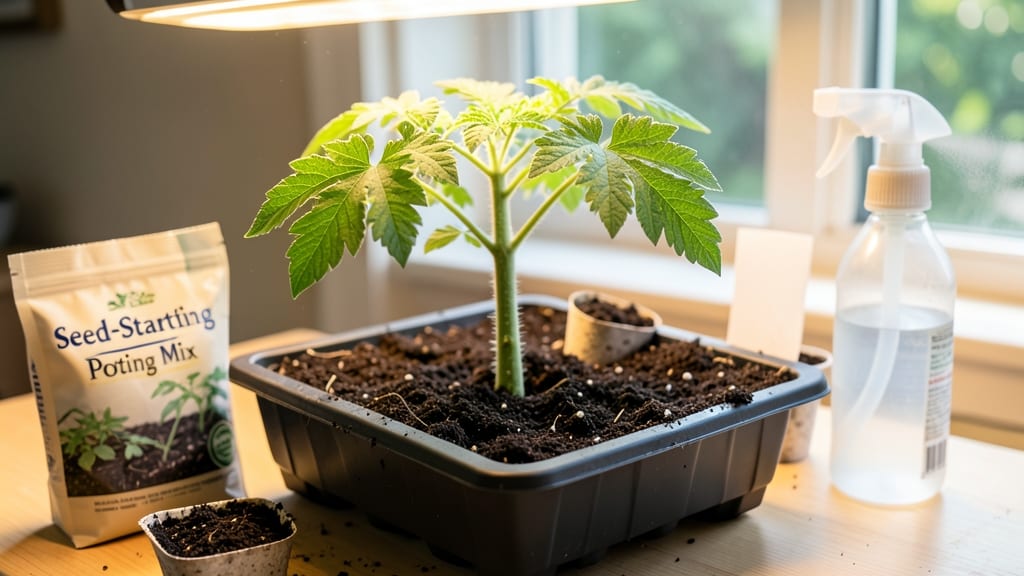
Starting tomato seeds indoors in Zone 7 about 6-8 weeks before your last frost date 🍅 sets you up for a thriving garden.
Timing your tomato seeds indoors in Zone 7 can mean the difference between a bountiful harvest and wasted effort—get it wrong, and your plants may bolt too early or struggle in cooler soil.
With Zone 7’s average last frost around April 15, that means planting seeds in early to mid-February for strong, healthy seedlings ready to transplant by late March.
Below, I’ll walk you through the exact timeline, how to adjust for early/late starts, and the lighting and soil tricks that keep your seedlings from stretching or damping off.
Zone 7 tomato seed starting timeline: exact weeks before last frost
Starting tomato seeds indoors in Zone 7 requires precision timing to ensure strong seedlings ready for transplanting after the average last frost date (April 15). The ideal window is 6-8 weeks before frost, but adjustments are needed based on your specific microclimate and variety.
For most gardeners, this means beginning seeds between late February and early March.
Tomato seeds germinate best at 70-85°F, so maintaining consistent warmth is critical. Without proper heat mats or seedling trays, germination can take 10-14 days—longer in cooler conditions. Once sprouted, seedlings need 12-16 hours of light daily to prevent leggy growth.
In Zone 7, where spring temperatures fluctuate, this schedule ensures your plants mature just as soil warms to 55°F+ for safe transplanting.
| Stage | Action | Temperature | Light Needs |
|---|---|---|---|
| 6 Weeks Before Frost | Sow seeds in trays with seed-starting mix | 70-85°F (use heat mat if needed) | Indirect light (12+ hours) |
| 4 Weeks Before Frost | Thin seedlings to 2" apart; fertilize lightly | 65-75°F (reduce heat mat use) | 14-16 hours grow lights |
| 2 Weeks Before Frost | Hardening off begins (acclimate to outdoors) | 55-65°F (day); 50°F (night) | Full sun exposure (gradual) |
| Transplant Ready | Plant outdoors after soil reaches 55°F+ | 60-85°F (day); 55°F+ (night) | Full sun (6+ hours daily) |
At 6 weeks before frost, begin by sowing seeds ¼-inch deep in sterile seed-starting mix. Use small trays or peat pots to minimize root disturbance later. Keep the soil consistently moist (not soggy) and maintain 70-85°F using a heat mat if your home struggles to stay warm.
Germination typically occurs within 5-10 days, but some heirloom varieties may take up to 14 days.
Once seedlings emerge, move them to a south-facing window or under grow lights for 12-14 hours daily. Without sufficient light, seedlings will grow leggy and weak, making them prone to disease.
Supplement natural light with LED grow lights if your windowsill isn’t bright enough—this is especially critical in Zone 7’s often-overcast early springs.
By 4 weeks before frost, your seedlings should have 2-3 true leaves. This is the time to thin or transplant into slightly larger containers (3-4 inches deep) if they were crowded.
Begin fertilizing lightly with a balanced 5-10-10 mix to encourage robust growth. Avoid over-fertilizing, which can cause salt buildup in the soil and burn delicate roots.
Two weeks before your last frost date, start the hardening-off process. Gradually expose seedlings to outdoor conditions for 2-3 hours daily, increasing duration each day.
Choose mild, overcast days to avoid shocking tender plants. This step is crucial in Zone 7, where temperature swings can stress seedlings if they’re not acclimated properly.
Finally, transplant outdoors only when soil temperatures reach 55°F+ and nighttime temps stay above 50°F. In Zone 7, this often aligns with mid-to-late April, but always check your local frost date forecasts.
Bury seedlings deeper than recommended (up to the first true leaves) to encourage stronger root systems—a technique called hill planting that works especially well for indeterminate varieties.
For early varieties (like Stupice or Sungold), you can start seeds as early as late January to maximize harvest time. Conversely, late-season varieties (like Brandywine) may benefit from a delayed start in early March to avoid early bolting.
Always adjust based on your specific last frost date and the days to maturity listed on seed packets.
Remember, Zone 7’s climate variability means your exact timeline may shift slightly each year. Keep a gardening journal to track your successes and adjust future schedules. With this precise 4-week pre-frost schedule, your tomato seedlings will be vigorous, healthy, and ready to thrive in your garden.
How to adjust your tomato seed starting date for Zone 7's microclimates
Zone 7's varied microclimates can shift your tomato seed starting date by weeks—whether you're in a mountain valley or a heat-trapping city. The average last frost date of April 15 is just a starting point.
My elevation and urban heat island both delayed my first transplant by 10 days last year. Understanding these factors lets you fine-tune your schedule for stronger seedlings and bigger harvests.
For most of Zone 7, starting tomato seeds indoors 6-8 weeks before last frost (mid-February to early March) works perfectly. But if you live in a high-elevation area (like 1,000+ feet above sea level), cool nights can push your frost date back to May 1.
Conversely, urban heat islands might warm your soil faster, letting you transplant 2 weeks earlier. I’ll show you how to calculate these adjustments without guessing.
Delay start date by 2-3 weeks (e.g., start seeds March 1 instead of February 15). Cooler nights slow seedling growth.
Start seeds 1-2 weeks earlier (e.g., February 1)—soil warms faster, letting you transplant by April 1.
Add 10-14 days to your schedule if your area has a history of late frosts (e.g., start seeds February 20 for a May 1 transplant).
Plant half your seeds 2 weeks later as insurance. If early starts bolt, the later batch will catch up.
To adjust your tomato seed starting date, first check your local microclimate by tracking 5 years of frost data from nearby weather stations. My mountain garden runs 10°F cooler than the valley below, so I use a heat mat to compensate.
For urban gardeners, rooftop gardens often warm up 2-3 weeks faster than ground-level plots—test soil temps with a thermometer before transplanting.
If you're unsure about your last frost date, use the NASS Frost Calculator (USDA tool) or ask local master gardeners. I once planted too early in a cold pocket of my yard, and my seedlings struggled for 3 weeks before recovering.
A 10-day buffer saved my harvest that year. For extra security, I now cover seedlings with row fabric during late frosts, extending my growing season by 2 weeks.
Don’t forget to account for seedling growth speed. Determinate varieties (like Roma tomatoes) grow faster than indeterminate types (like Beefsteak), so adjust your timeline accordingly.
My cherry tomatoes were ready to transplant 56 days after sowing, while my heirloom slicers needed 70 days. Always check your seed packet for days-to-maturity estimates.
For unpredictable springs, I recommend starting 20% of your seeds 2 weeks later as a backup. Last year’s late frost wiped out my early batch, but the delayed seedlings caught up by July and produced just as well.
This insurance strategy adds minimal effort but protects your entire harvest from one bad week of weather.