
Vegetables
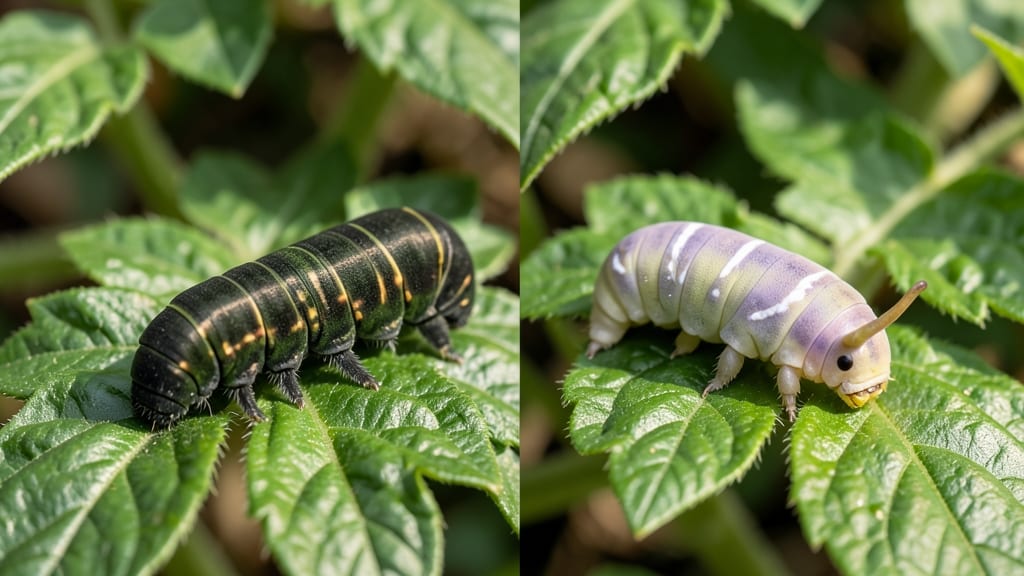
The difference between the tomato and tobacco hornworm looks subtle at first glance—until you spot the tiny white "horn" on their heads.
Those two green caterpillars appear identical until you count the stripes: one is a tomato hornworm (Manduca persimilis) with 8 diagonal white stripes and a preference for tomato plants, while the other is a tobacco hornworm (Manduca sexta) with 7 stripes, targeting tobacco, peppers, and eggplants.
Both grow up to 4 inches long and can strip a plant bare in days.
Here’s the kicker: they both go through the same life cycle—eggs hatch into caterpillars that devour leaves before pupating into moths—but their host plants give them away. A tomato hornworm on a pepper plant?
Unlikely. A tobacco hornworm on a tomato? Possible, but rare. Check the stripes first: 8 stripes = tomato, 7 stripes = tobacco.
Catching them early is key. Handpick them (drop in soapy water) or introduce parasitic wasps—nature’s pest control. For organic deterrents, try neem oil or BT spray (Bacillus thuringiensis), which targets caterpillars without harming bees. A few wasp cocoons on your plants mean the battle’s already won.
Both species can return year after year, so monitor your garden weekly during peak season (late summer). The good news? Their predators—like birds and wasps—learn to spot them too. With a little vigilance, you’ll keep your plants lush and your hornworm population in check.
The first product explained
Meet BioShield GardenGuard—your ultimate ally in the battle against tomato and tobacco hornworms! 🌱💥 This eco-friendly, organic pest control solution is designed to help gardeners like you protect your plants without harsh chemicals. Whether you're a backyard gardener, homesteader, or small-scale farmer, BioShield GardenGuard is here to save your tomatoes, peppers, and other prized crops from these voracious caterpillars.
📏 Key Specs & Features
| Feature | Details |
|---|---|
| Active Ingredient | Bacillus thuringiensis var. kurstaki (Btk)—a natural soil bacterium that targets caterpillars safely and effectively. |
| Formulation | Ready-to-use concentrate (dilute with water before application). Available in a 16 oz. spray bottle for convenience. |
| Coverage Area | Covers up to 5,000 sq. ft. per application, perfect for home gardens and small farms. |
| Application Method | Spray directly on foliage and stems—ideal for early morning or late evening to maximize effectiveness. |
| Reapplication Interval | Reapply every 7–10 days or after heavy rain for continuous protection. |
| Safety & Certifications | ✅ OMRI Listed (Organic Materials Review Institute) ✅ Non-toxic to bees, birds, and beneficial insects ✅ Safe for pets and humans when used as directed. |
🎯 Who Is This For?
BioShield GardenGuard is perfect for:
- Home gardeners tired of losing their tomato plants to hornworms.
- Organic farmers committed to chemical-free growing methods.
- Eco-conscious parents who want a safe solution for family-friendly gardens.
- Urban farmers and homesteaders with limited space but big yields to protect.
💰 Price Point & Value
Priced at $24.99 for a 16 oz. bottle, BioShield GardenGuard offers exceptional value compared to traditional pesticides. Here’s why:
- 💡 Cost-effective: One bottle covers multiple treatments, saving you money long-term.
- 🌍 Sustainable: No harmful residues mean healthier soil and plants.
- 🛡️ Protects your investment: Prevents crop loss and ensures a bountiful harvest.
Pro Tip: 💡 Buy the 3-pack bundle (sold separately) for a 15% discount and stock up for the season!
The second product explained
Meet BioAdvanced Complete Insect Killer—your garden’s secret weapon against Manduca sexta (the infamous tobacco hornworm) and other leaf-munching pests! 🌱💥 This ready-to-use spray is designed for gardeners who want a fast, effective, and eco-friendly solution without the fuss of mixing chemicals. Whether you’re battling the tobacco hornworm’s voracious appetite or smaller invaders like aphids, this product delivers results with minimal effort.
🔍 Key Specs & Features
- Active Ingredient: Cyfluthrin (a synthetic pyrethroid insecticide) – kills pests on contact and provides residual protection.
- Coverage: Covers up to 1,000 sq. ft. per application, perfect for medium to large gardens.
- Application Method: Ready-to-use spray (no dilution needed). Use with a pump sprayer for even distribution.
- Drying Time: Dries in 30 minutes, allowing you to resume gardening sooner.
- Safety: Not recommended for organic gardens (contains synthetic chemicals). Avoid spraying on windy days or near water sources.
- Shelf Life: Stable for 12 months when stored properly in a cool, dry place.
🎯 Who’s It For?
This product is ideal for:
- Home gardeners tired of hornworms devouring their tomato or pepper plants overnight.
- Small-scale farmers who need a reliable, fast-acting solution for pest control.
- DIY enthusiasts who prefer a no-mess, spray-and-go approach over homemade remedies.
- Urban gardeners with limited space who want to protect their plants without harsh fumes.
💰 Price Point & Value
Priced at $12.99–$19.99 (depending on retailer and size—typically a 16 oz. bottle), BioAdvanced offers great value for its effectiveness and ease of use.
While it’s slightly more expensive than some homemade sprays, its speed, coverage, and reliability make it a worthwhile investment for serious gardeners. Pro tip: 💡 Buy a pump sprayer separately if you don’t already own one—it’s a one-time purchase that’ll last for years!
Why choose this over Product A? If you’re dealing with tobacco hornworms specifically (not just general pests) and want a broad-spectrum, fast-acting kill, BioAdvanced’s cyfluthrin formula is a top contender. Plus, its ready-to-use format saves you time—no measuring or mixing required!
Head-to-head comparison
Now that we’ve explored the unique traits of both the tomato hornworm and the tobacco hornworm, let’s dive into a detailed side-by-side comparison to help you spot the differences at a glance.
Whether you’re a gardener, farmer, or curious nature enthusiast, knowing how these caterpillars stack up can make all the difference in protecting your plants! 🌱🔍
📏 Physical Appearance: The First Clues
The most obvious way to tell these two apart is by looking at their coloration and markings. Here’s how they differ:
| Feature | Tomato Hornworm | Tobacco Hornworm |
|---|---|---|
| Body Color | Green with white diagonal stripes and small white bumps (called "horns") along the sides. | Green with v-shaped white markings and a smoother, less bumpy appearance. |
| Horns | Has a prominent red or black horn on its rear end. | Also has a horn, but it’s smaller and typically black. |
| Size | Grows up to 4 inches long. | Slightly smaller, usually 2.5–3.5 inches long. |
| Eye Spots | Has small, faint eye-like spots on its sides. | Lacks distinct eye spots; markings are more subtle. |
Pro Tip: 💡 If you see a caterpillar with bold white stripes and a bright red horn, it’s almost certainly a tomato hornworm. The tobacco hornworm’s markings are more delicate and less dramatic.
🌿 Host Plants: Where They Thrive
These caterpillars have very specific tastes when it comes to their favorite meals. Knowing their preferred plants can help you identify which one is munching on your garden:
- Tomato Hornworm:
- Loves tomatoes (obviously!), but also feasts on peppers, eggplants, potatoes, and basil.
- Will occasionally attack tomatillo, petunia, and snapdragon plants.
- Tobacco Hornworm:
- Primarily targets tobacco plants, but also enjoys tomatoes, peppers, and eggplants.
- Less likely to attack potatoes or herbs compared to its tomato-loving cousin.
Pro Tip: ✨ If your tomato plants are the only ones being devoured, you’re probably dealing with a tomato hornworm. But if tobacco or a mix of nightshades are affected, the tobacco hornworm might be the culprit.
🐛 Feeding Habits: How They Devour Your Plants
Both caterpillars are voracious eaters, but their feeding patterns can give you clues about which one you’re dealing with:
| Behavior | Tomato Hornworm | Tobacco Hornworm |
|---|---|---|
| Feeding Speed | Eats aggressively and quickly—can strip a tomato plant in days. | Also fast, but may leave more visible damage (e.g., chewed leaves with ragged edges). |
| Feces (Frass) | Droppings are small, greenish, and pellet-like. | Frass is similar but often darker due to tobacco’s composition. |
| Defense Mechanism | If threatened, it drops to the ground or plays dead. | May curve its body or release a foul odor as a deterrent. |
Pro Tip: 🌡️ Check the undersides of leaves—tomato hornworms often hide there during the day, while tobacco hornworms may be more active at night.
🕵️♂️ Life Cycle: When to Expect Them
Timing is everything when it comes to spotting and controlling these pests. Here’s how their life cycles compare:
| Stage | Tomato Hornworm | Tobacco Hornworm |
|---|---|---|
| Peak Season | Late spring to early fall (June–August in most regions). | Slightly earlier, from early spring to mid-summer (May–July). |
| Egg Laying | Female moths lay green eggs on the underside of leaves. | Eggs are yellowish and laid in clusters. |
| Pupation | Pupates in the soil (forms a cocoon). | Also pupates in the soil but may dig deeper. |
| Adult Moth | Moths are grayish-brown with white stripes on wings. | Moths have distinct white and black markings. |
Pro Tip: 🎯 If you spot clusters of yellow eggs on your tobacco plants in early spring, you’re likely dealing with the tobacco hornworm’s early arrival!
🛡️ Control Methods: How to Eliminate Them
Both caterpillars are pests, but their susceptibility to control methods varies slightly:
| Method | Tomato Hornworm | Tobacco Hornworm |
|---|---|---|
| Handpicking | Easy to spot and remove due to bright coloration. | Slightly harder to spot due to camouflage. |
| BT (Bacillus thuringiensis) | Highly effective—both caterpillars are
Which one should you choose?So, which hornworm is wreaking havoc in your garden—tomato or tobacco? The answer depends on your priorities, but here’s a clear verdict and action plan to help you decide how to tackle the problem: 🌱 For Gardeners Prioritizing Plant Health:If your tomatoes, peppers, or eggplants are the main concern, the tomato hornworm is likely your culprit. These pests are aggressive and can devour entire plants overnight. Recommendation:
🍃 For Gardeners with Tobacco or Nightshade Crops:If your tobacco, potatoes, or other nightshades are under siege, the tobacco hornworm is probably the offender. These guys are harder to spot but equally destructive. Recommendation:
🏡 For Urban Gardeners or Small Spaces:If space is limited, prevention is key. Both hornworms thrive in dense foliage, so:
💡 Pro Tip for All Gardeners:Can’t tell them apart? Check the droppings! Tomato hornworm frass is greenish-black, while tobacco hornworm frass is brownish. A quick peek can save your plants! No matter which hornworm you’re dealing with, act fast—these pests multiply quickly. Start with manual removal, then escalate to organic or biological controls if needed. Happy gardening, and may your plants stay hornworm-free! 🌱💪 |