
Planting
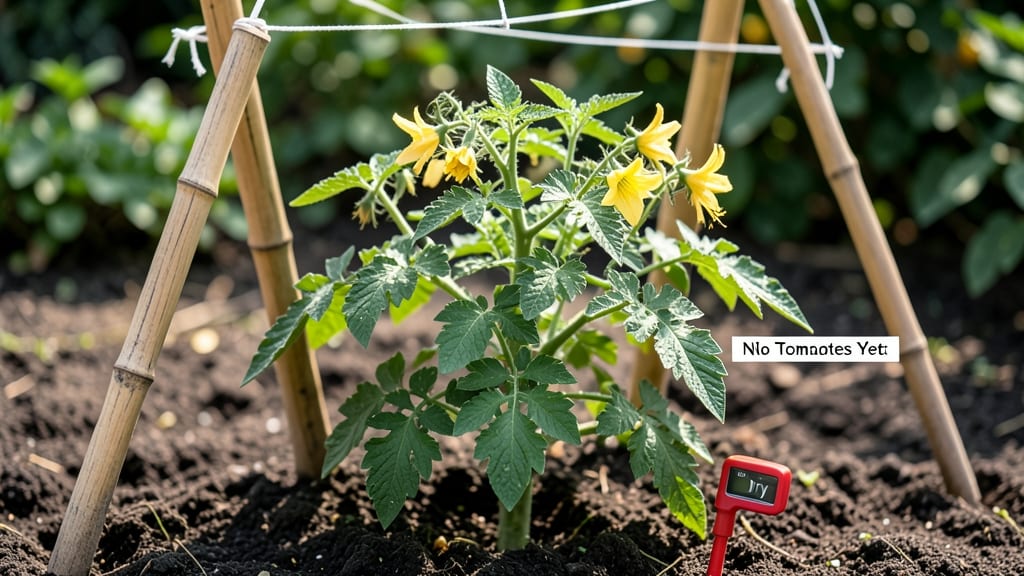
Your tomato plant is throwing blossoms like confetti but delivering zero fruit—this is the most frustrating gardening mystery. 🌱 I’ve stared at dozens of tomato plants with perfect green leaves and zero tomatoes, and I know the exact steps to turn that around.
The problem isn’t always what you think (it’s rarely pests or disease), and the fix often comes down to something as simple as a calcium boost or a little extra hand-pollination.
Most gardeners miss the obvious: tomatoes need both pollination and the right nutrients to set fruit. Too much nitrogen makes leaves grow wild but stops flowering, while too little calcium causes blossom end rot—those telltale sunken black spots that kill blossoms before they turn into fruit.
Even if your plant looks healthy, it might be starving for what it really needs right now.
By the end of this, you’ll know exactly how to rescue your tomato plant in 7 days or less. We’re talking hand-pollination tricks, soil fixes that actually work, and pruning hacks that redirect energy toward fruit production—not just more leaves.
The best part? These solutions cost next to nothing and take less than 15 minutes a week.
Whether you’re dealing with blossom drop, stunted fruit, or just plain stubbornness, this is the no-nonsense guide that finally gets results. Let’s get those tomatoes growing!
Root Causes Of Missing Tomatoes
When your tomato plants are loaded with flowers but refuse to produce fruit, the issue often lies in one of these five key culprits. Understanding the science behind each will help you diagnose—and fix—the problem before it’s too late.
---
Tomatoes rely on pollination—the transfer of pollen from the male anthers to the female pistil—to trigger fruit development. Without it, flowers drop off without forming tomatoes.
Why it happens: - Lack of bees or wind: Tomatoes are self-pollinating, but they need a little help from pollinators (like bees) or gentle wind to shake pollen loose. - Overuse of pesticides: Chemicals that kill insects (including bees) can disrupt pollination. - Excessive rain or humidity: Heavy moisture can wash away pollen or prevent bees from visiting. - Greenhouse growing: Indoor or enclosed environments may lack natural pollinators.
Actionable fix: ✅ Hand-pollinate by gently shaking plants or using a small brush to transfer pollen. ✅ Avoid broad-spectrum pesticides—opt for bee-friendly alternatives like neem oil. ✅ Plant bee-attracting flowers (like marigolds or basil) nearby to boost pollination.
---
Tomatoes thrive in warm but not scorching conditions. Extreme heat or cold can prevent fruit set or cause flowers to drop before pollination occurs.
Why it happens: - Nighttime temps below 55°F (13°C): Flowers may abort before fruiting. - Daytime temps above 90°F (32°C): Pollen production stops, and flowers fail to develop. - Sudden temperature swings: Stress from rapid changes can halt fruit formation.
Actionable fix: 🌡️ Use shade cloth (30-50%) during peak summer heat to keep temps stable. 🌡️ Choose heat-tolerant varieties (like ‘Solar Fire’ or ‘Heatmaster’) if you live in a hot climate. 🌡️ Extend the growing season with row covers in early spring or late fall.
---
Water stress—whether from drought or overwatering—disrupts flower and fruit development. Tomatoes need consistent moisture to set fruit properly.
Why it happens: - Inconsistent watering: Fluctuating soil moisture causes blossom drop (flowers fall off). - Overwatering: Soggy roots can’t absorb nutrients efficiently, leading to poor fruit set. - Drought stress: Plants prioritize survival over reproduction when water is scarce.
Actionable fix: 💧 Water deeply 1-2 times per week (1-2 inches per week) rather than frequent shallow watering. 💧 Use drip irrigation to keep soil evenly moist without wetting foliage (which causes disease). 💧 Mulch heavily (straw or wood chips) to retain moisture and regulate soil temperature.
---
Tomatoes are heavy feeders and need the right balance of nitrogen, phosphorus, potassium, and micronutrients (especially calcium and boron) to produce fruit.
Why it happens: - Too much nitrogen, too little phosphorus/potassium: Leads to leafy growth but no fruit. - Calcium deficiency: Causes blossom end rot (though it also prevents fruit from forming at all). - Boron or magnesium deficiency: Essential for cell wall development—without it, flowers drop.
Actionable fix: 🌿 Fertilize with a balanced 10-10-10 or 5-10-10 when flowers appear (shift from nitrogen-heavy growth fertilizer). 🌿 Add calcium (crushed eggshells, gypsum, or calcium nitrate) to prevent deficiencies. 🌿 Test soil pH (aim for 6.0-6.8)—acidic or alkaline soil locks out nutrients.
---
Certain pests and pathogens damage flowers or block nutrient uptake, preventing tomatoes from forming.
Why it happens: - Aphids, spider mites, or whiteflies: Sap-sucking pests weaken plants, reducing fruit set. - Fungal diseases (early blight, powdery mildew): Clog stomata, preventing pollen from reaching flowers. - Root-knot nematodes: Damage roots, limiting nutrient and water uptake.
Actionable fix: 🛡️ Inspect plants weekly for pests—spray with neem oil or insecticidal soap if needed. 🛡️ Remove infected leaves and apply copper fungicide for fungal issues. 🛡️ Rotate crops and use resistant varieties to prevent soil-borne diseases.
--- Pro Tip: 💡 If your plants have flowers but no fruit after 2-3 weeks, check all five factors—often, it’s a combination of poor pollination + heat stress + nutrient gaps!
How to solve it
H2: Fixing Your Tomato Plant’s Fruitless Fate
If your tomato plant is looking healthy but producing no fruit, the good news is that most causes have straightforward fixes—often involving a little extra care and the right ingredients.
Below, we’ve mapped out practical solutions for each common issue, along with prevention tips to keep your plants thriving and loaded with tomatoes. Let’s turn that empty vine into a harvest!
---
Cause: Too little calcium in the soil or inconsistent watering. Solution: - 🔥 Boost Calcium Fast: Mix 1 tablespoon of calcium-rich amendments (like crushed eggshells, oyster shell grit, or garden lime) into the soil around the plant. For a quick fix, dissolve 1 teaspoon of Epsom salt (magnesium sulfate) in 1 gallon of water and water the base of the plant. - 💧 Water Wisely: Water deeply and consistently (1–2 inches per week) to prevent calcium uptake issues. Avoid wetting the leaves to reduce disease risk. - 🌡️ Mulch to Retain Moisture: Apply 2–3 inches of organic mulch (straw or wood chips) to keep soil moisture steady and roots cool.
Prevention Tip: 💡 Test your soil’s pH (aim for 6.0–6.8) and add calcium-rich compost annually to prevent future rot.
---
Cause: Too much nitrogen or synthetic fertilizer disrupts flowering/fruiting. Solution: - 🍳 Cut Back on Nitrogen: Switch to a balanced fertilizer (like 5-5-5 or 10-10-10) or an organic option (fish emulsion, compost tea). Avoid high-nitrogen feeds (like lawn fertilizer) during flowering. - 👨🍳 Flush the Soil: Water the plant heavily for 10–15 minutes to leach excess salts from the root zone. - 🥘 Feed for Fruit: Use a phosphorus-potassium (P-K) boost (like bone meal or kelp meal) to encourage flowering and fruiting.
Prevention Tip: ✨ Follow the “feed lightly, feed often” rule—apply fertilizer every 2–3 weeks, not all at once!
---
Cause: Extreme heat, cold snaps, or transplant shock. Solution: - 🌡️ Shield from Heat: Provide afternoon shade (use shade cloth or a temporary row cover) if temps exceed 90°F (32°C). - 🔥 Protect from Cold: If frost is forecast, cover plants with row fabric or move pots indoors overnight. - 🌱 Gradual Transplanting: If recently planted, harden off seedlings (acclimate to outdoor conditions over 5–7 days) and avoid transplanting in full sun or heatwaves.
Prevention Tip: 🎯 Plant tomatoes in late spring (after the last frost) and choose heat-tolerant varieties (like ‘Solar Fire’ or ‘Heatmaster’) for hot climates.
---
Cause: Aphids, whiteflies, or fungal diseases stressing the plant. Solution: - 🔪 Remove Pests: Spray plants with neem oil (mix 2 tbsp neem oil + 1 tsp mild soap in 1 quart water) or introduce ladybugs for natural control. - 🍳 Prune Damaged Leaves: Trim yellow or spotted leaves to improve airflow and reduce fungal spread. - 🥘 Boost Plant Health: Strengthen immunity with compost tea or a seaweed fertilizer (rich in growth hormones).
Prevention Tip: 💡 Rotate crops yearly and clean up debris to prevent pest/disease buildup.
--- Cause: Lack of bees or wind to transfer pollen. Solution: - 🐝 Hand-Pollinate: Gently shake the plant in the morning (when humidity is low) or use a small paintbrush to transfer pollen from flower to flower. - 🌿 Plant Pollinator-Friendly Flowers: Add basil, marigolds, or borage nearby to attract bees. - 🌡️ Avoid Overwatering Flowers: Keep blossoms dry to prevent pollen from washing away.
Prevention Tip: ✨ Choose determinate varieties (like ‘Roma’ or ‘Celebrity’) for easier pollination in containers or greenhouses.
--- - 🔥 Prune for Airflow: Trim suckers and lower leaves to improve circulation and sunlight penetration. - 💧 Check Soil Drainage: Ensure pots have drainage holes and garden beds aren’t waterlogged. - 🌱 Rotate Crops: Avoid planting tomatoes in the same spot yearly to prevent soil depletion.
--- Final Pro Tip: 🎯 Patience is key! Some fixes (like calcium absorption) take 1–2 weeks to show results. Keep monitoring and adjusting until you see those first green tomatoes forming! 🍅✨
Frequently asked questions
Why do my tomato plants have flowers but no fruit?
This usually happens due to poor pollination, nutrient imbalances, or environmental stress. Tomatoes need pollen transfer (from bees or wind) to form fruit—without it, flowers drop off. Extreme heat (above 90°F/32°C) or cold (below 55°F/13°C) can also stop fruit development. Check for these common issues first!
How do I hand-pollinate tomato flowers?
Use a small paintbrush or cotton swab to gently transfer pollen from the male anthers (yellow parts) to the female pistil (green center) of each flower. Do this in the morning when flowers are dry. For large plants, simply shake the stems lightly to release pollen naturally. This mimics how bees pollinate outdoor plants.
Can too much fertilizer cause no tomatoes?
Too much nitrogen-heavy fertilizer (like lawn fertilizer) promotes leafy growth but stops flowering. Switch to a balanced 5-10-10 or 10-10-10 fertilizer when you see flowers appear. For organic options, use fish emulsion or compost tea instead. Always follow package instructions to avoid overfeeding.
What’s the fastest way to fix blossom end rot?
Blossom end rot (black sunken spots on fruit) signals a calcium deficiency. Mix 1 tablespoon of crushed eggshells or oyster shell grit into the soil around the plant’s base. Water with a solution of 1 teaspoon Epsom salt per gallon of water once a week. Keep soil consistently moist (not soggy) to help calcium absorb properly.
Should I prune my tomato plant if it’s not producing fruit?
Pruning can actually help! Remove suckers (side shoots between stems) and lower leaves to improve airflow and sunlight penetration. For indeterminate varieties, prune aggressively to focus energy on fruit production. For determinate varieties, light pruning is enough. Always use clean scissors to avoid disease spread.