
Vegetables
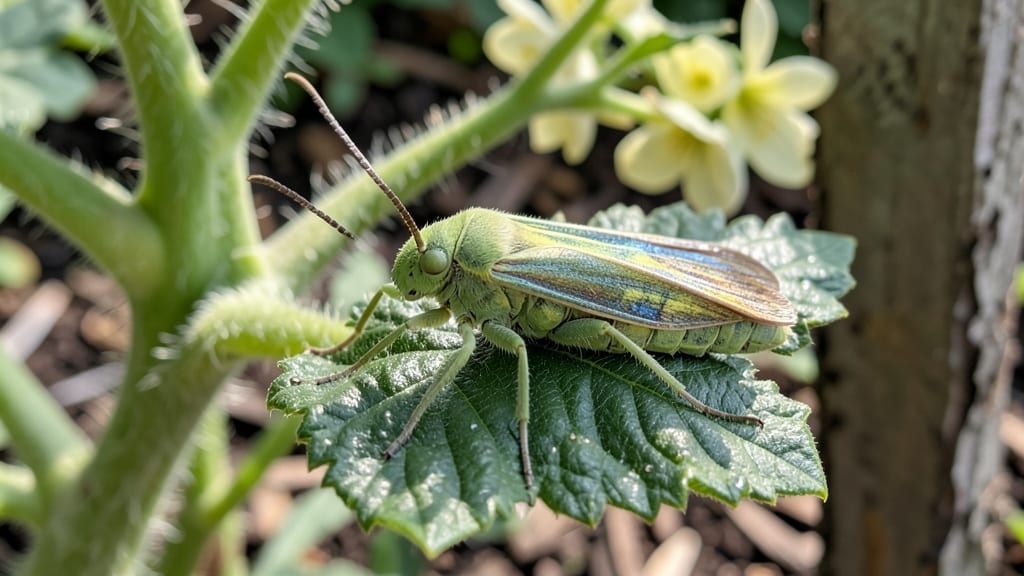
The tomato hornworm moth size measures 3 to 4 inches (7.6 to 10 cm) in wingspan, featuring a slender greenish-gray body with bold white diagonal stripes. Its camouflage skills make it hard to spot during daylight hours.
The tomato hornworm moth size makes these nocturnal fliers masters of disguise, using their muted coloration to blend seamlessly into garden foliage during the day. 🌿 The size variation between males (smaller) and females (larger) can make identification tricky, but the distinctive wing patterns remain consistent.
I've noticed that their size alone can intimidate gardeners—when you first see one up close, it's easy to underestimate how quickly they can multiply and damage tomato plants.
Understanding their full lifecycle helps explain why early detection is so critical. The caterpillar stage (the infamous tomato hornworm) can grow up to 4 inches (10 cm) long before pupating, while the adult moth's wingspan reveals its true potential for spreading.
Their nocturnal habits mean they're rarely seen until they've already laid eggs on your plants.
💡 In This Article
- Tomato Hornworm Moth Lifecycle and Physical Traits
- Early Detection Methods for Tomato Hornworm Infestations
Tomato hornworm moth lifecycle and physical traits
The tomato hornworm moth's size becomes most dramatic during its caterpillar stage, where it reaches an impressive 3 to 4 inches (7.6 to 10 cm) in length—long enough to strip a tomato plant bare in just a few days.
This larval stage is where the most visible damage occurs, but the adult moth's 3 to 4 inch (7.6 to 10 cm) wingspan reveals its true potential for garden destruction.
The moth's body is slender with a distinctive greenish-gray hue, while its wings feature subtle patterns that help it vanish against leaves during daylight hours.
The moth's size isn't uniform—males typically measure on the smaller end of the spectrum at around 2.5 to 3 inches (6.4 to 7.6 cm), while females can reach the full 3.5 to 4 inches (8.9 to 10 cm) wingspan.
This size difference isn't just about aesthetics; larger females are better equipped to lay hundreds of eggs, accelerating infestation rates. Their nocturnal habits mean they're rarely seen until they've already laid eggs on your plants, making their size even more concerning when you finally spot them.
The key to identifying these moths lies in their wing patterns: the forewings are a muted greenish-gray with faint markings, while the hindwings reveal striking white diagonal stripes when disturbed. This coloration serves as perfect camouflage among tomato leaves, where they rest motionless during the day.
Their antennae, which can reach 0.5 inches (1.3 cm) in length, are another distinguishing feature—long and feathery, they help detect pheromones from potential mates during their nighttime flights.
What makes their size particularly problematic is their reproductive cycle. A single female can lay up to 2,000 eggs in her lifetime, and with a wingspan capable of covering 1 to 2 miles (1.6 to 3.2 km) per night, they can quickly spread across gardens.
The larvae that hatch from these eggs will grow at an astonishing rate—reaching their full 4 inch (10 cm) length in just 6 weeks under ideal conditions, consuming plant material equivalent to their own body weight daily.
Their nocturnal behavior isn't just about avoiding predators—it's a survival strategy that makes early detection extremely challenging. Most gardeners only notice their presence when they hear the distinctive rustling of leaves at night or find partially eaten plants in the morning.
This delayed detection gives them ample time to establish large populations before becoming visible to human eyes.
Understanding these physical traits and behaviors helps explain why these moths are such formidable garden pests. Their size, combined with their reproductive capacity and nocturnal habits, creates a perfect storm for tomato growers.
The good news? Knowing what to look for—both in terms of size and behavior—gives you a fighting chance to catch them before they cause major damage.