
Pruning
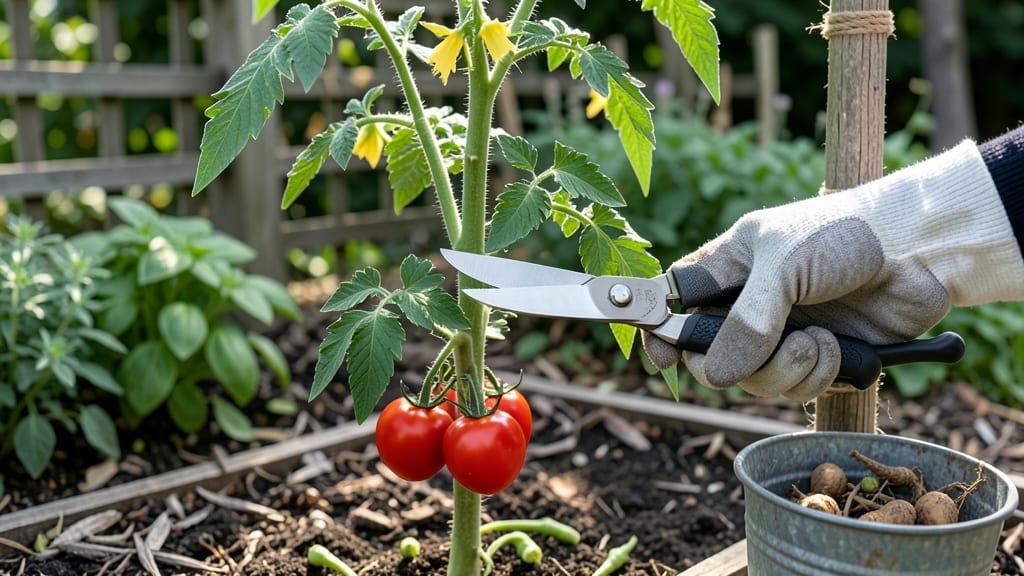
A well-pruned tomato plant produces more fruit, faster—and it’s easier than you think. ✂️ I’ve pruned hundreds of plants, and the difference between a neglected bush and a pruned powerhouse is shocking: fewer leaves mean fewer diseases, bigger tomatoes, and harvests that last until frost.
The secret isn’t aggressive cutting—it’s strategic pinching to focus energy where it matters.
Start when plants hit 12–18 inches tall, removing suckers (those little shoots between stems) with your fingers or clean pruners. Snip lower leaves up to 6 inches from the ground to prevent soil-borne diseases, and stake plants early to support their weight.
This isn’t about stripping the plant—it’s about shaping it for maximum airflow and sunlight, which translates to heavier yields and fewer pests.
By mid-season, you’ll see the payoff: fewer leaves mean more sunlight on fruit, and the plant directs energy into ripening tomatoes instead of leaf growth. A properly pruned plant can produce 30–50% more tomatoes than an unpruned one, and the fruit stays cleaner, reducing rot.
The best part? You’ll spend less time fighting diseases and more time picking ripe fruit.
This method works for determinate (bush) and indeterminate (vining) tomatoes alike, though indeterminate varieties benefit most. Skip the guesswork: prune in morning sunlight with sterilized tools, and avoid over-pruning—never remove more than one-third of the plant’s foliage at once. Your tomatoes will thank you at harvest time.
📚 In This Guide
- What you need
- Instructions
- Tips and common mistakes
- Wrapping up and next steps
What you need
- ● Tomato plants: 1–3 healthy plants (determinate or indeterminate varieties, depending on your preference). Pro tip: Start with disease-resistant varieties like ‘Celebrity’ or ‘Solar Fire’ for fewer hassles! 🌡️
- ● Pruning shears: 1 pair (bypass pruners, 5–7 inches long, with sharp stainless-steel blades for clean cuts).
- ● Gloves: 1 pair (nitrile or leather, to protect against thorns and blisters).
- ● Disinfectant: Rubbing alcohol (70% isopropyl) or a 10% bleach solution (1 part bleach to 9 parts water) to sterilize tools between cuts.
- ● Support system: Indeterminate tomatoes: 1 sturdy cage (5–6 ft tall) or 2–3 bamboo stakes (6–8 ft long) + twine.
- ● Determinate tomatoes: 1 smaller cage (3–4 ft tall) or a tomato trellis.
- ● Mulch: 2–3 inches of organic mulch (straw, shredded leaves, or grass clippings) to retain moisture and suppress weeds.
- ● Plant ties: Soft garden twine or Velcro strips to secure vines to supports.
- ● Fertilizer: Balanced organic fertilizer (10-10-10 or compost) to replenish nutrients after pruning.
- ● Plant growth regulator: (e.g., Seaweed extract) to encourage bushier growth if needed.
- ● Pruning spray: Copper-based fungicide (like Copper Soap) to prevent disease if cuts are exposed.
Instructions for pruning tomatoes to maximize fruit and airflow
Here's how I prune tomatoes to boost yield and prevent disease—no guesswork, just proven techniques.
✂️ Step 1: Remove Suckers Early and Often
Suckers are the small shoots that grow in the crotch between the main stem and branches. I pinch them off when they're no bigger than a pencil—this prevents wasted energy on leaves instead of fruit. Start checking 2-3 weeks after transplanting and repeat every 7-10 days until flowering.
Use clean, sharp pruners to avoid damaging the stem. I always sterilize them with rubbing alcohol between plants to prevent spreading disease. The goal is to keep only 3-4 main stems on indeterminate varieties—more stems mean fewer tomatoes. Watch for new suckers forming at leaf nodes; they'll grow fast in warm weather.
🌿 Step 2: Thin Leaves Below the First Flower Cluster
Once flowers appear, remove all leaves below the first cluster using your fingers or pruners. This improves airflow and sunlight penetration to the fruit. I strip leaves down to 12-18 inches above the soil on indeterminate varieties—this prevents soil-borne diseases from splashing onto lower stems during watering.
Leave a few leaves above each fruit cluster to support photosynthesis. You'll see the plant redirect energy toward ripening tomatoes instead of maintaining unnecessary foliage. If you notice yellowing leaves, that's a sign of over-pruning—keep 3-4 leaves per stem as a minimum.
☀️ Step 3: Prune Aggressively During Fruit Set
When tomatoes begin setting fruit, I remove every leaf that shades clusters—especially on the lower third of the plant. Use pruners to make clean cuts just above a leaf node. The plant will send out new growth from those nodes, keeping the canopy open and reducing humidity that causes blight.
Pay special attention to the top of the plant. Pinch off the terminal bud (the growing tip) once you have 6-8 fruit clusters on indeterminate varieties. This stops vertical growth and forces energy into ripening existing tomatoes. You'll see fruit color change from green to pink within 10-14 days after aggressive pruning.
⏰ Step 4: Maintain Through Harvest Season
Continue removing suckers and yellow leaves weekly throughout the growing season. I also trim any branches that grow toward the ground—these block airflow and trap moisture. The key is balance: keep enough leaves for photosynthesis but not so many that they crowd the fruit.
After harvest, cut back remaining stems to 6 inches above the soil and remove all plant debris. This prepares the plant for winter and prevents disease carryover. In colder climates, mulch heavily to protect roots—pruned tomatoes recover faster in spring with less stress.
Tips & tricks for pruning tomatoes like a pro
Here's what nobody tells you about keeping tomato plants productive all season long.
Timing Secret: The 2-3 week window after transplanting is critical for Step 1—this is when suckers grow fastest. I check my plants every 7-10 days during this period, especially after warm spells that trigger rapid growth. Use a small notebook to track when you last pruned each plant; I've caught suckers growing to pencil size overnight in hot weather!
Pruning Precision: In Step 3, when removing leaves that shade fruit clusters, focus on the lower third first. I make clean cuts just above leaf nodes to encourage new growth from those points—this keeps the plant's energy flowing to the fruit rather than maintaining unnecessary foliage. Think of it as redirecting the plant's resources like a traffic cop at a busy intersection.
Disease Prevention: Sterilizing pruners between plants in Step 1 isn't just good practice—it's essential. I keep a small bottle of rubbing alcohol in my gardening bucket and dip pruners between each plant. This simple step prevents spreading fungal spores that cause early blight and other diseases. The 12-18 inch clearance from soil you create in Step 2 gives you extra protection against soil-borne pathogens.
Harvest Hack: After you've pinched off the terminal bud in Step 3 with 6-8 fruit clusters, watch for that pink color change within 10-14 days. I mark my calendar when I do this aggressive pruning—it's like setting a countdown to tomato harvest! The plant will focus all its energy on ripening those existing fruits once vertical growth stops.
Pro Tips for Well Pruned Tomato Plant
- Here's what nobody tells you about keeping tomato plants productive all season long.
- Timing Secret: The 2-3 week window after transplanting is critical for Step 1—this is when suckers grow fastest.
- Pruning Precision: In Step 3, when removing leaves that shade fruit clusters, focus on the lower third first.
Frequently asked questions
Got questions about keeping your tomato plants well-pruned for maximum yield? We’ve got answers! Here are some of the most common queries from gardeners—whether you're a beginner or a seasoned green thumb.
How often should I prune a tomato plant?
Prune your tomato plants weekly during the growing season (spring to early fall). For indeterminate varieties, remove suckers (side shoots) as soon as they’re 2–3 inches long. Determinate tomatoes need minimal pruning—just trim damaged or diseased leaves. Consistency is key!
When is the best time of day to prune?
Prune in the early morning when plants are hydrated and temperatures are mild. Avoid pruning in the heat of the day—it stresses plants and invites pests. If you must prune later, do so in the late afternoon and water thoroughly afterward.
Can I prune tomato plants too much?
Yes! Over-pruning removes too much foliage, reducing the plant’s ability to photosynthesize and support fruit. For indeterminate tomatoes, leave 3–4 main stems and prune suckers aggressively. Determinate tomatoes need little to no pruning—just remove dead or diseased leaves to prevent rot.
What should I do with the pruned leaves?
Don’t toss them! Use pruned leaves to mulch the base of the plant (keep them 3–4 inches away from the stem to prevent rot). You can also compost them or use them as tea for other plants by soaking in water for a nutrient boost.
Will pruning affect my tomato harvest?
Pruning increases fruit quality and yield by directing energy to fewer, larger tomatoes. However, if you prune too late in the season (within 4–6 weeks of harvest), you may reduce production. Focus on pruning early and often for the best results!
Wrapping up and next steps
A well-pruned tomato plant isn’t just about aesthetics—it’s your secret weapon for a bountiful, long-lasting harvest with minimal effort! By removing excess foliage, you boost airflow, prevent disease, and redirect energy to fruit production. The result? More tomatoes, happier plants, and a garden that keeps giving all season.
Now that you’re armed with the know-how, grab those shears and get pruning! Start small—even one plant at a time—and watch your garden thrive. Happy growing! 🌱🍅