
Companion Plants
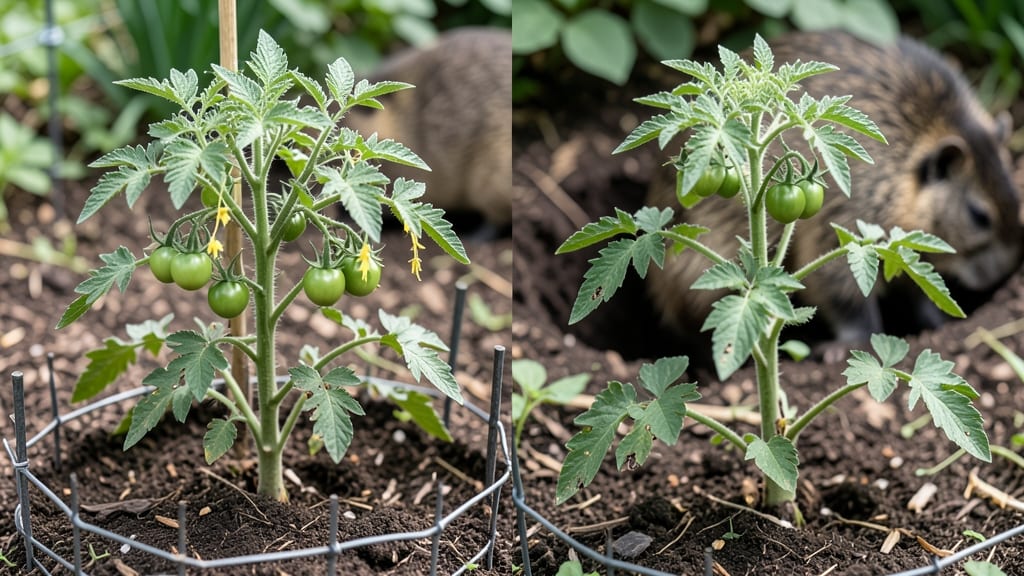
Yes, woodchucks eat tomato plants, chewing through leaves, stems, and occasionally fruits—especially in spring and summer when young growth is most tender. Their sharp teeth and strong jaws can strip a plant bare overnight, leaving gardeners with devastating damage that requires immediate action.
Woodchucks—also called groundhogs—are primarily herbivores with a particular fondness for fresh, leafy greens like tomato foliage. 🌱 Their feeding habits peak during dawn and dusk, making them especially problematic for gardeners who grow tomatoes.
Unlike deer or rabbits, woodchucks don't just nibble; they use their powerful jaws to create clean, jagged edges on stems, which can kill young plants entirely. The good news? Their taste for tomatoes isn't just about hunger—it's also about texture.
They prefer tender, new growth over mature leaves, which means early-season plants are at the highest risk.
To protect your tomato garden, focus on physical barriers like chicken wire fencing buried at least 12 inches deep—woodchucks are excellent diggers. Natural repellents such as hot pepper spray or castor oil-based products can also work, though they may need reapplication after rain.
Planting strong-smelling companions like marigolds or garlic around your tomatoes can help mask the scent of your garden, making it less appealing to these hungry pests.
💡 In This Article
- Woodchuck Diet and Tomato Plant Vulnerability
- Effective Woodchuck Deterrents for Tomato Gardens
Woodchuck diet and tomato plant vulnerability
Woodchucks are ground-dwelling rodents with a specialized herbivorous diet that includes over 50 different plant species, with a particular preference for tender, nitrogen-rich vegetation.
Their digestive system is adapted to process fibrous plant material, but they have a sweet tooth for young, succulent growth—making tomato plants a prime target. 🌱 Unlike deer that primarily browse fruit, woodchucks focus on foliage because it's easier to digest and provides the moisture they need during dry periods.
Their teeth are designed for gnawing through stems and leaves with precision, creating the characteristic jagged edges that distinguish their damage from other garden pests.
The timing of woodchuck feeding aligns perfectly with tomato plant vulnerability. Spring and early summer bring new growth that's rich in water content and low in defensive compounds like tannins, which woodchucks find irresistible.
Studies show these rodents consume up to 1 pound of vegetation per day during peak feeding seasons, and tomato plants—especially those under 2 feet tall—are particularly susceptible. The damage isn't just cosmetic; their gnawing can sever vascular bundles, causing plants to wilt and die even if leaves remain attached.
What's worse, they often return to the same feeding sites night after night, creating what gardeners call "browse lines" that can strip an entire row bare.
Woodchuck anatomy plays a crucial role in their tomato-plant predation. Their powerful jaws can exert 1,500 pounds per square inch of pressure—enough to crush stems thicker than a pencil. Their incisors grow continuously and self-sharpen against their molars, creating perfect cutting tools for plant material.
This mechanical advantage means they can chew through tomato stems with the same efficiency they'd use on clover or alfalfa. The combination of their diet, timing, and dental structure creates a perfect storm for tomato gardeners, especially in regions where woodchucks are abundant like the northeastern and midwestern United States.
What makes tomato plants particularly appealing is their chemical profile. Tomatoes contain compounds like solanine in green fruit that woodchucks find unpalatable, but the leaves and stems lack these defenses. The plant's high water content and mild flavor make it an easy meal compared to more fibrous alternatives.
Interestingly, woodchucks show a preference for determinate tomato varieties (those that grow to a fixed size) because their compact growth habit makes them easier to access and consume entirely.
This targeted feeding behavior means gardeners growing indeterminate varieties might see less damage, but they're not immune—especially when other food sources are scarce.
Seasonal behavior further complicates tomato protection. Woodchucks enter a state of torpor in winter but emerge in early spring with an insatiable appetite for fresh growth. Their feeding peaks in May and June when tomato plants are most vulnerable, coinciding with the critical flowering and fruiting stages.
This timing means gardeners must implement deterrents before woodchucks become active in their area, not after damage appears.
The challenge lies in creating barriers that woodchucks can't dig under—since they're excellent excavators capable of burrowing 4-5 feet deep—while also making the garden less appealing through scent masking and habitat modification.
Understanding these biological and ecological factors is key to protecting your tomato plants. Woodchucks don't just eat tomatoes out of hunger—they're drawn by a combination of plant chemistry, growth stage, and seasonal availability.
Their feeding patterns create a predictable cycle that gardeners can work against with the right knowledge and preparation. 🌿 The good news is that their preferences also create opportunities for deterrents that leverage their natural behaviors and sensory limitations.