
Diseases
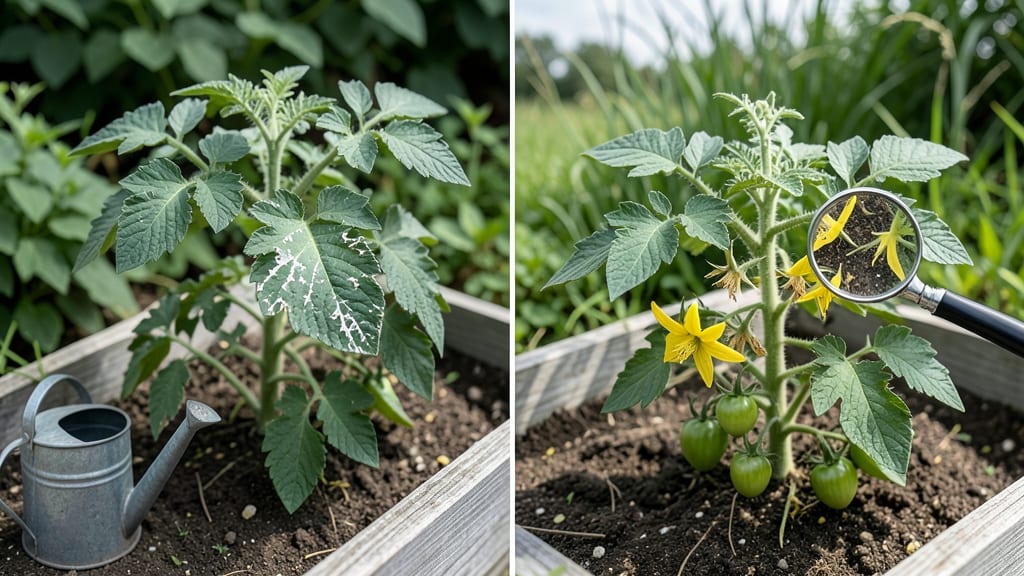
White edges on tomato leaves mean your plants are screaming for help—usually from calcium or magnesium starvation, not a virus. 🌱 I’ve seen this ruin harvests when ignored, but fixing it is simpler than you think, and the results show up in days.
The real culprit is often overwatering or poor soil balance, not disease. Yellowing between veins? Likely magnesium. Crispy edges? Calcium deficiency. Both fix with Epsom salt or crushed eggshells, but timing matters—apply when soil’s damp but not soggy. You’ll notice new leaves forming with stronger green within a week.
The fix is fast and organic, so no harsh chemicals needed. Just match the symptom to the solution, and your tomatoes will bounce back. Prevention is even easier: mulch heavily, test soil pH, and avoid heavy watering after sunset. These tweaks keep your plants thriving all season long.
Root Causes of Leaf Discoloration
When your tomato plants start showing white or yellowish edges on leaves, it’s usually a sign of stress or an underlying issue. Understanding the exact cause is the first step toward saving your crop.
Below, we break down the most common reasons—from environmental factors to nutrient deficiencies—with clear explanations and actionable insights.
Tomatoes are thirsty but sensitive to inconsistent moisture. White edges often appear when:
- Overwatering: Soggy soil cuts off oxygen to roots, causing root rot or edema (a condition where leaves develop water-soaked, white, or translucent patches along veins). Fix: Let the top inch of soil dry between waterings and improve drainage with perlite or sand.
- Underwatering: Drought stress forces leaves to conserve moisture by curling or developing dry, white-tipped edges. Fix: Water deeply at the base (1–2 inches per week) and mulch to retain moisture.
- Inconsistent watering: Plants “panic” when moisture fluctuates, leading to uneven nutrient uptake. Fix: Use a drip irrigation system or soaker hose for steady hydration.
💡 Pro Tip: Check soil moisture with your finger—if the top 2 inches are dry, it’s time to water. If it’s muddy, hold off!
Tomatoes thrive in warmth (70–85°F), but heat stress or sun scald can bleach leaf edges white. Here’s how:
- Heat Stress: Temperatures above 90°F disrupt photosynthesis, causing leaf margins to turn white or crispy. Fix: Provide afternoon shade with a shade cloth (30–50%) or grow tomatoes in cooler microclimates (e.g., near reflective surfaces or under trellises).
- Cold Damage: Frosts or nighttime temps below 50°F shock cells, leading to white, mushy edges. Fix: Use row covers or move potted tomatoes indoors if frost is forecasted.
- Sun Scald: Intense midday sun (especially on young leaves) can “cook” edges, turning them white or papery. Fix: Acclimate seedlings gradually to full sun and avoid pruning lower leaves that provide shade.
✨ Quick Fix: If leaves are already damaged, trim them off to redirect energy to healthier growth.
White edges can signal mineral deficiencies or toxicities. Here’s how to decode the clues:
| Symptom | Likely Cause | Solution |
|---|---|---|
| White/yellow edges with purple stems | Phosphorus deficiency (often paired with low phosphorus in soil) | Apply bone meal or a balanced fertilizer (10-10-10) and test soil pH (ideal: 6.0–6.8). |
| White edges with stunted growth | Nitrogen deficiency (leaves can’t produce chlorophyll) | Use compost, fish emulsion, or a high-nitrogen fertilizer (e.g., blood meal). |
| White edges with yellowing between veins | Magnesium deficiency (chlorosis) | Apply Epsom salt (1 tbsp per gallon of water, sprayed on leaves) or use dolomitic lime for soil. |
| White edges with crispy, browned tips | Excess salt or fluoride (from tap water or over-fertilizing) | Flush soil with rainwater and avoid synthetic fertilizers; use organic alternatives. |
📊 Soil Test Tip: Send a soil sample to your local extension office—it’s the fastest way to diagnose hidden nutrient issues!
While white edges are rarely caused by pathogens, certain diseases can mimic nutrient stress. Watch for these red flags:
- Early Blight (Alternaria solani): White or tan spots with concentric rings on older leaves, often spreading to stems. Fix: Remove infected leaves, space plants for airflow, and apply copper fungicide preventatively.
- Powdery Mildew (Oidium): White, powdery patches (especially on undersides) that can extend to edges. Fix: Spray with neem oil or baking soda solution (1 tsp baking soda + 1 quart water + a drop of soap).
- Bacterial Leaf Spot (Xanthomonas): White/yellow spots with water-soaked centers that may ooze. Fix: Prune and destroy infected foliage immediately; avoid overhead watering.
🔥 Prevention: Rotate crops yearly and disinfect tools with rubbing alcohol to stop pathogen spread.
Tomatoes are sensitive to drift from herbicides (like glyphosate) or overuse of systemic pesticides. Symptoms include:
- White, bleached edges or cupping of leaves.
- Stunted growth or yellowing between veins (similar to nutrient deficiencies but often one-sided).
Fix:
- Move potted tomatoes away from treated lawns or gardens.
- Flush soil with water if contamination is suspected.
- Use organic pesticides (e.g., insecticidal soap) to avoid chemical buildup.
⚠️ Warning: Never spray herbicides near tomato plants—even “safe” organic options can cause damage.
Fix White Edges on Tomato Leaves Fast
White edges on your tomato leaves don’t have to mean the end of your harvest—most issues are fixable with the right approach. Below, we break down targeted solutions for each likely cause, from quick fixes to long-term prevention.
Follow these steps to restore your plants to full, vibrant health and keep future crops thriving.
Signs: Yellowing leaves, soggy soil, white or brown crispy edges (often paired with wilting).
How to Fix It: ✅ 🔥 Adjust Your Watering Routine
- Let the top 1–2 inches of soil dry out between waterings. Stick your finger in the soil—if it’s damp, wait.
- Water deeply but less frequently (e.g., 1–2 times per week vs. daily light sprinkles).
- Morning is best—watering in the AM gives leaves time to dry, reducing fungal risks.
✅ 🏗️ Improve Drainage
- If your pots lack drainage holes, add 2–3 inches of gravel or perlite to the bottom before repotting.
- For garden beds, amend soil with compost or sand to loosen it (aim for a mix that drains in 1–2 hours).
- Raise containers slightly off the ground to prevent water pooling.
✅ 🌡️ Check Humidity Levels
- Tomatoes hate soggy roots and high humidity. Use a fan on low near plants to improve airflow.
- Prune lower leaves touching wet soil to reduce fungal spores.
💡 Prevention Tip: Use a moisture meter to avoid guesswork—overwatering is the #1 killer of tomato plants!
Signs: White, papery edges (like scalded skin), often on upper leaves exposed to harsh sun.
How to Fix It: ✅ 🌿 Provide Shade Cloth
- If temps hit above 90°F (32°C), drape 30–50% shade cloth over plants for 2–4 hours daily.
- Drip irrigation (watering at soil level) keeps leaves cool without wetting foliage.
✅ 🍳 Mulch Like a Pro
- Apply 2–3 inches of straw or wood chips around the base to insulate roots and retain moisture.
- Avoid dark mulch (like black plastic)—it absorbs heat and can scorch leaves.
✅ 🌅 Adjust Plant Placement
- Move potted tomatoes to partial shade (e.g., under a pergola or east-facing window) during peak heat.
- Reflective surfaces? If your garden has white walls or gravel, plant tomatoes 2–3 feet away to reduce glare.
💡 Prevention Tip: Harvest ripe tomatoes early in hot climates—stressed plants drop fruit faster!
Signs: White/yellow spots with concentric rings, spreading to edges; often paired with black dots (spores).
How to Fix It: ✅ 🧴 Apply Fungicide Immediately
- Baking soda spray (1 tsp baking soda + 1 quart water + few drops of dish soap) every 7–10 days.
- Copper fungicide (like Bonide Copper Fungicide) for severe cases—spray at dawn to avoid leaf burn.
- Neem oil (1 tbsp per quart of water) disrupts fungal spores (reapply every 5–7 days).
✅ 🔪 Prune and Clean Up
- Remove all infected leaves (don’t compost them—bag and trash them!).
- Sterilize pruners with rubbing alcohol between cuts to prevent spread.
✅ 🌡️ Boost Airflow
- Space plants 18–24 inches apart and prune suckers to improve circulation.
- Avoid overhead watering—use a soaker hose at the base instead.
💡 Prevention Tip: Rotate crops—never plant tomatoes (or nightshades like peppers) in the same spot two years in a row.
Signs: White or crinkled edges, often with yellowing between veins (magnesium) or blossom-end rot (calcium).
How to Fix It: ✅ 📊 Test Your Soil
- Use a DIY soil test kit (or send a sample to a local extension office) to check pH and nutrient levels.
- Ideal pH for tomatoes: 6.0–6.8. If too high (alkaline), add sulfur or peat moss.
✅ 🍎 Feed with the Right Fertilizer - For calcium: Sprinkle crushed eggshells or gypsum around the base (or use calcium nitrate fertilizer). - For magnesium: Apply Epsom salt (1 tbsp per gallon of water) every 2–3 weeks as a foliar spray. - Avoid high-nitrogen fertilizers—they worsen deficiencies.
Use a balanced 10-10-10 or 5-10-10 instead.
✅ 💧 Flush the Soil
- If you’ve over-fertilized, leach the soil by watering heavily for 10 minutes to remove excess salts.
💡 Prevention Tip: Add compost annually—healthy soil naturally balances nutrients!
Signs: White webbing, tiny specks on leaves, or sticky residue (honeydew) on edges.
How to Fix It: ✅ 🚿 Blast Off Pests
- Spray plants with water (especially undersides of leaves) to knock off mites/aphids.
- Insecticidal soap (like Safer’s) or neem oil (1% solution) works in 24–48 hours.
✅ 🕷️ Introduce Beneficial Insects
- Release ladybugs or lacewings (available at garden centers) to eat pests naturally.
- Companion plants like marigolds or basil repel mites.
✅ 🌿 Isolate Infested Plants
- Move affected tomatoes away from healthy plants to prevent spread.
💡 Prevention Tip: Mist plants daily in dry climates—mites thrive in arid conditions!
If your tomato plant is severely stunted, wilting despite fixes, or covered in disease, it may be beyond saving. Don’t waste energy on it—focus on:
- Repotting healthy starts into fresh, sterile soil.
- Starting new seeds if the season allows.
- Disinfecting containers with 1 part bleach to 9 parts water before reuse.
🎯 Key Takeaway: Most white-edged tomato leaves recover in 1–2 weeks with the right care. Act fast—the sooner you address the root cause, the better your harvest will be! 🍅✨
Frequently asked questions about tomato leaf edges turning white
Are white edges on tomato leaves always a sign of disease?
No, they're rarely caused by disease! Most cases stem from environmental stress like overwatering or nutrient deficiencies (calcium/magnesium). Only check for disease if you see powdery white patches (powdery mildew) or concentric rings (early blight). Start by adjusting watering habits first.
How quickly can I expect to see improvement after fixing the problem?
With proper care, you'll often see new growth with normal green edges within 7-14 days. For nutrient deficiencies, foliar sprays (like Epsom salt) show results in 3-5 days, while soil amendments take slightly longer. The key is consistency—don't stop treatments too soon!
Can I still harvest tomatoes if the leaves have white edges?
Yes! The fruit itself won't be affected by leaf discoloration. Focus on fixing the leaves while harvesting ripe tomatoes normally. Just avoid eating leaves with white edges—they're safe but not tasty. The plant will redirect energy to fruit production once the stress is resolved.
What's the difference between white edges from heat stress vs. nutrient deficiency?
Heat stress causes white, papery edges (like sunburn) on upper leaves, while nutrient deficiencies show yellowing between veins (magnesium) or crispy brown tips (calcium). Check the plant's location—if it's in hot afternoon sun, it's likely heat. If older leaves are affected first, it's probably nutrients.
Will my tomato plants recover if I only see white edges on older leaves?
Older leaves are sacrificial—they show symptoms first while the plant protects new growth. Simply focus on fixing the root cause (water, nutrients, or environment) and the plant will produce healthy new leaves. Just remove the affected older leaves to redirect energy to fruit production.